
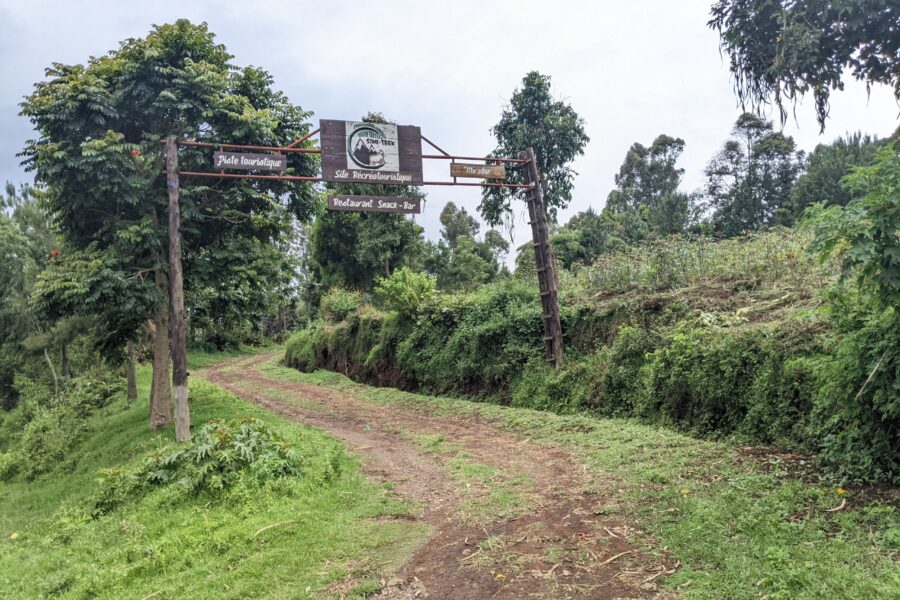
Kahuzi-Biega National Park
Kahuzi-Biega National Park : Primates destination in africa
Kahuzi-Biega National Park is one of Africa’s most important and least-known primate destinations, renowned globally as the stronghold of the endangered eastern lowland gorilla, also known as Grauer’s gorilla. Located in the eastern Democratic Republic of Congo (DRC), this vast protected area represents one of the largest expanses of tropical rainforest in Africa and is a UNESCO World Heritage Site of outstanding universal value. Its immense biodiversity, dramatic landscapes, and critical conservation role make Kahuzi-Biega National Park a cornerstone of primate conservation in Africa.
Unlike more commercialized primate destinations, Kahuzi-Biega offers a raw and authentic wilderness experience. The park’s dense lowland rainforests, misty highland zones, volcanic mountains, and remote valleys create ideal habitats for a wide range of primates and other forest-dependent species. For researchers, conservationists, and adventurous travelers, Kahuzi-Biega National Park stands as one of the most significant primate destinations on the African continent.
This comprehensive article explores Kahuzi-Biega National Park in depth, covering its location, history, landscapes, ecosystems, primate diversity, eastern lowland gorillas, conservation importance, activities, best time to visit, accommodation options, and practical travel considerations. Together, these elements explain why Kahuzi-Biega National Park is one of Africa’s most critical primates destinations.
Location and Geographic Setting
Kahuzi-Biega National Park is situated in eastern Democratic Republic of Congo, west of the city of Bukavu and near the western shores of Lake Kivu. The park lies within the Albertine Rift, one of Africa’s most biodiverse regions, which stretches from Uganda through Rwanda, Burundi, and eastern DRC.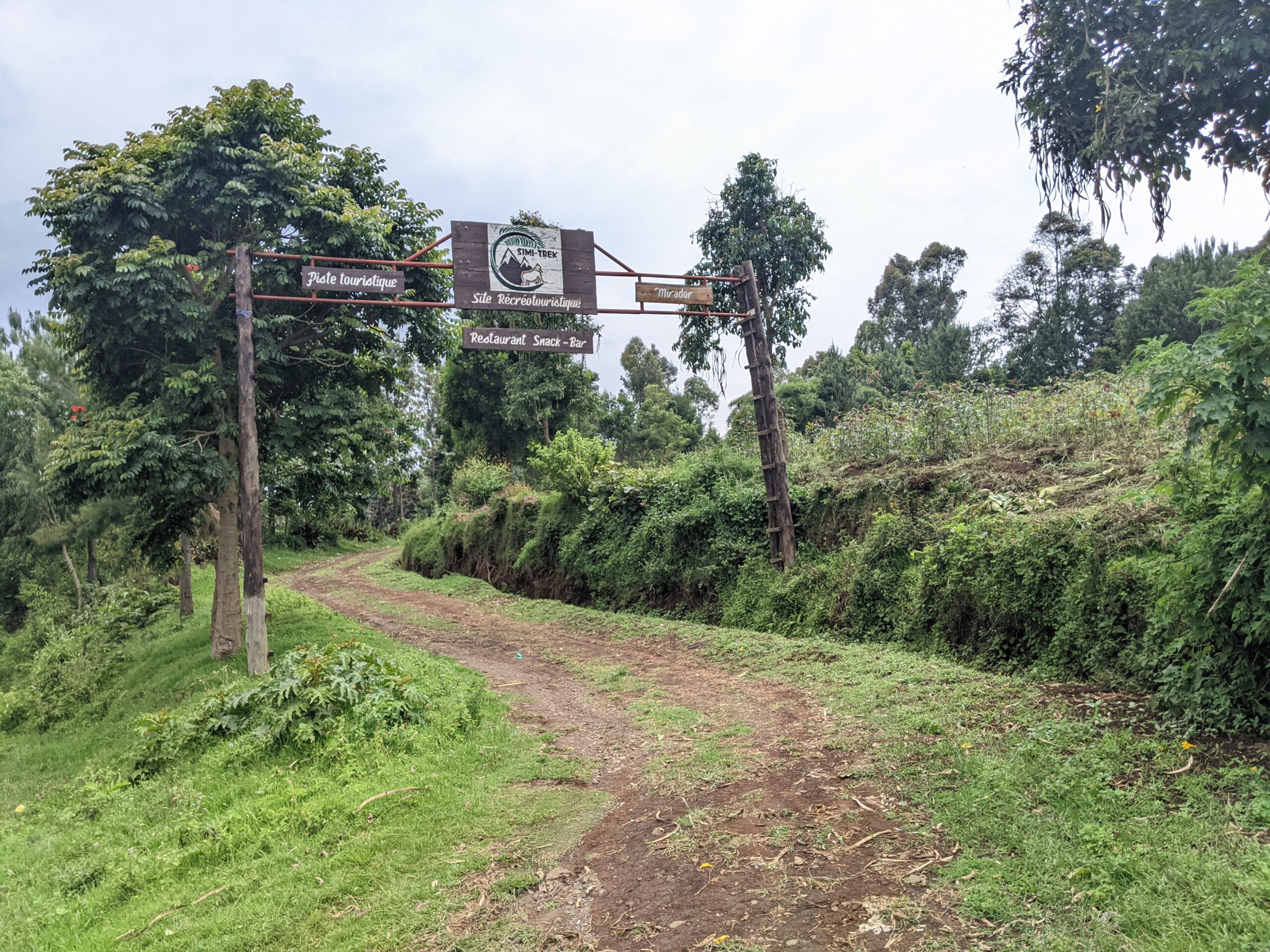
The park covers approximately 6,000 square kilometers, making it one of the largest national parks in Africa. It consists of two distinct sections: a highland sector dominated by montane forest and volcanic mountains, and a lowland sector characterized by vast, dense tropical rainforest. These two zones are connected by a narrow forest corridor, allowing wildlife movement between ecosystems.
Altitude within the park ranges from about 600 meters in the lowland forests to over 3,300 meters at the summit of Mount Kahuzi, creating a wide variety of habitats and climatic conditions.
History and Establishment
Kahuzi-Biega National Park was established in 1970 to protect the eastern lowland gorilla and the unique ecosystems of the Albertine Rift. In 1980, the park was designated a UNESCO World Heritage Site in recognition of its exceptional biodiversity and ecological importance.
The park takes its name from two extinct volcanoes: Mount Kahuzi and Mount Biega, which dominate the highland sector. Over the decades, Kahuzi-Biega has been a focal point for primate research and conservation, although periods of political instability and armed conflict in eastern DRC have posed significant challenges to effective management.
Despite these challenges, conservation efforts led by the Congolese Institute for Nature Conservation (ICCN), in partnership with international organizations, continue to protect the park’s wildlife and support local communities.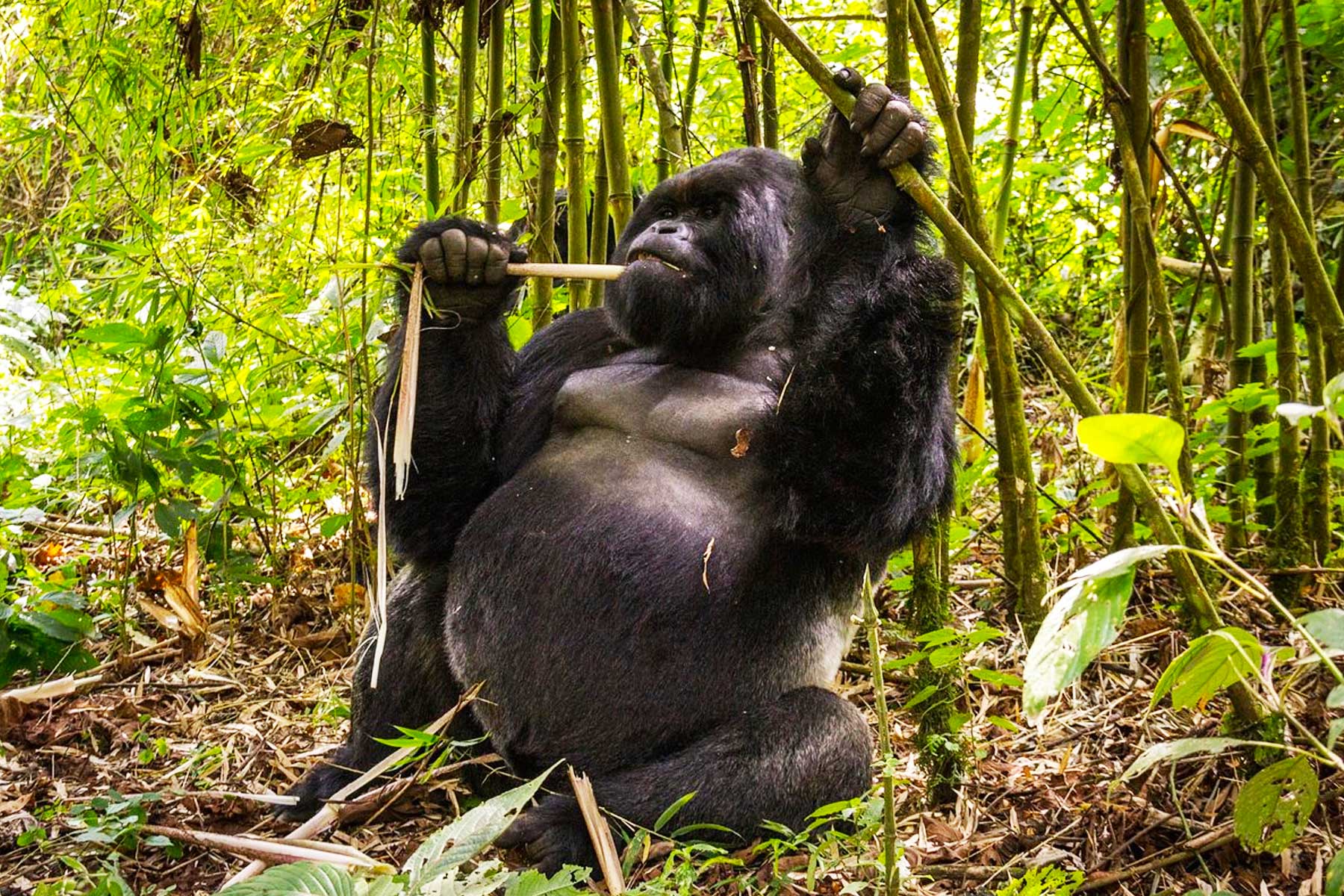
Landscape and Ecosystems
Kahuzi-Biega National Park encompasses a remarkable range of landscapes and ecosystems rarely found within a single protected area.
Lowland Tropical Rainforest
The lowland sector of the park consists of vast tracts of primary tropical rainforest, among the largest remaining in Africa. Towering trees, dense understory, and complex canopy layers provide ideal habitat for primates, forest elephants, and countless other species.
Montane Forest
At higher elevations, lowland rainforest transitions into montane forest, characterized by cooler temperatures, frequent mist, and different plant communities. This zone supports specialized wildlife adapted to higher altitudes.
Bamboo and Afro-Montane Zones
Bamboo forests and afro-montane vegetation occur in transitional zones and higher slopes, providing seasonal food sources for gorillas and other herbivores.
Volcanic Mountains and Grasslands
The extinct volcanoes of Mount Kahuzi and Mount Biega rise above the forest, surrounded by montane grasslands and heath. These high-altitude areas offer stunning views and unique ecological niches.
Primate Diversity in Kahuzi-Biega National Park
Kahuzi-Biega National Park is a premier primates destination due to its exceptional diversity and the presence of globally significant species.
Eastern Lowland Gorillas (Grauer’s Gorillas)
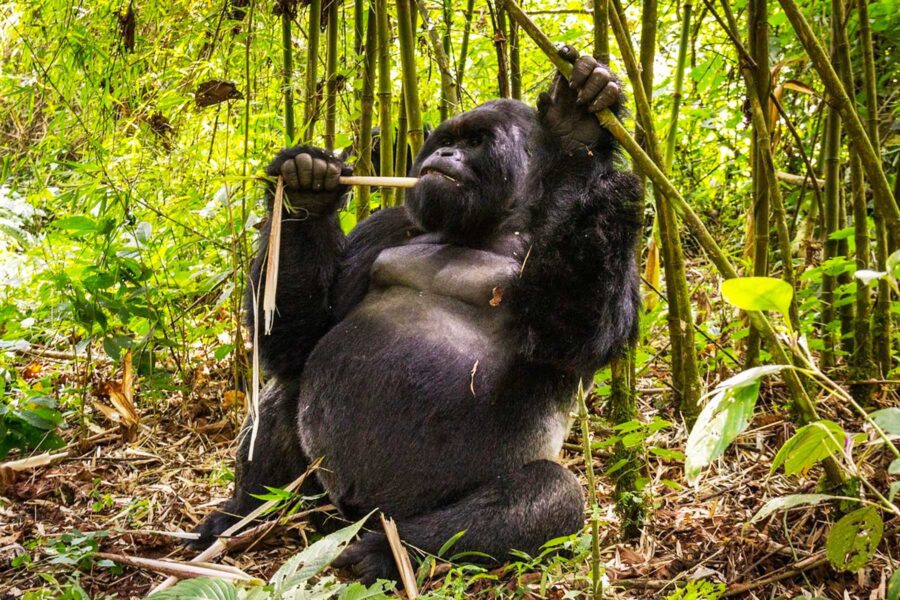
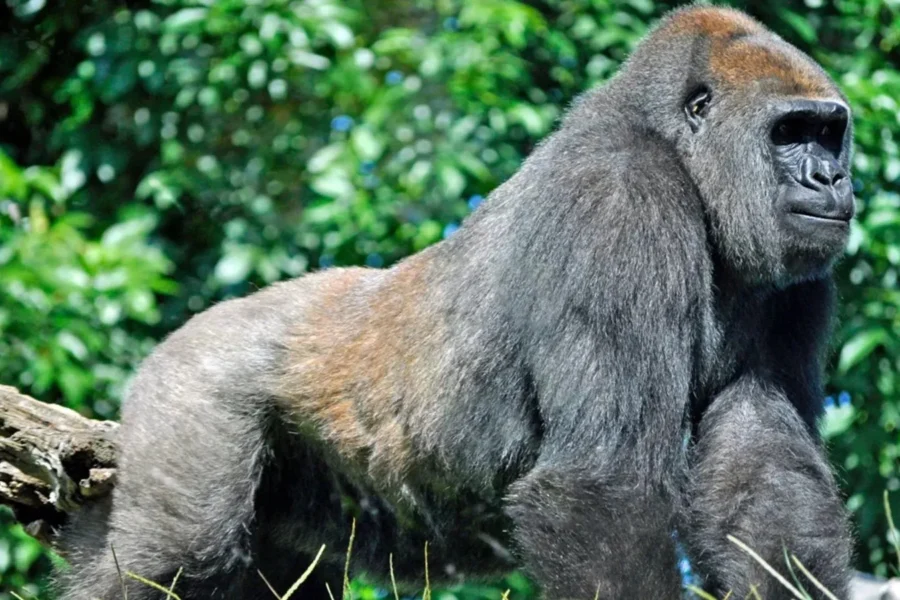
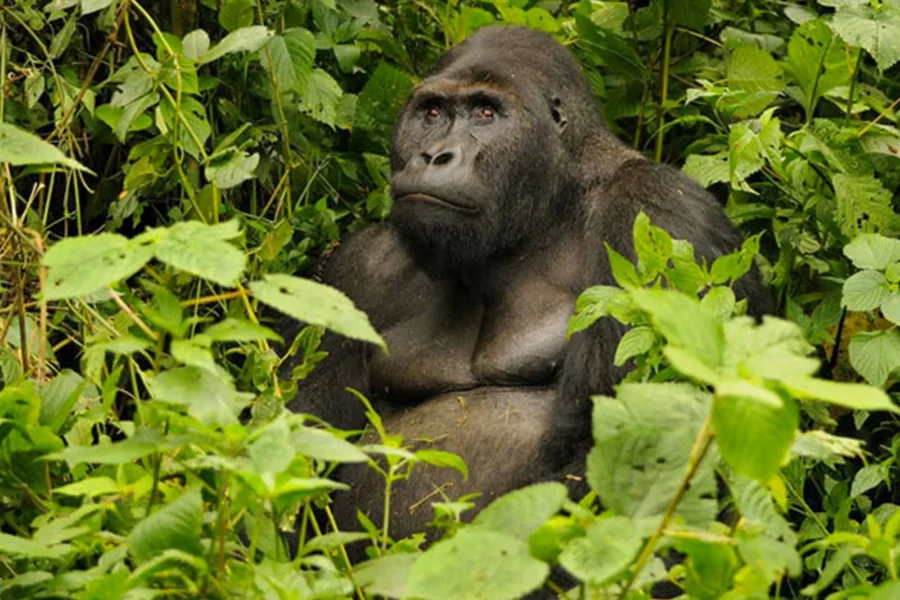
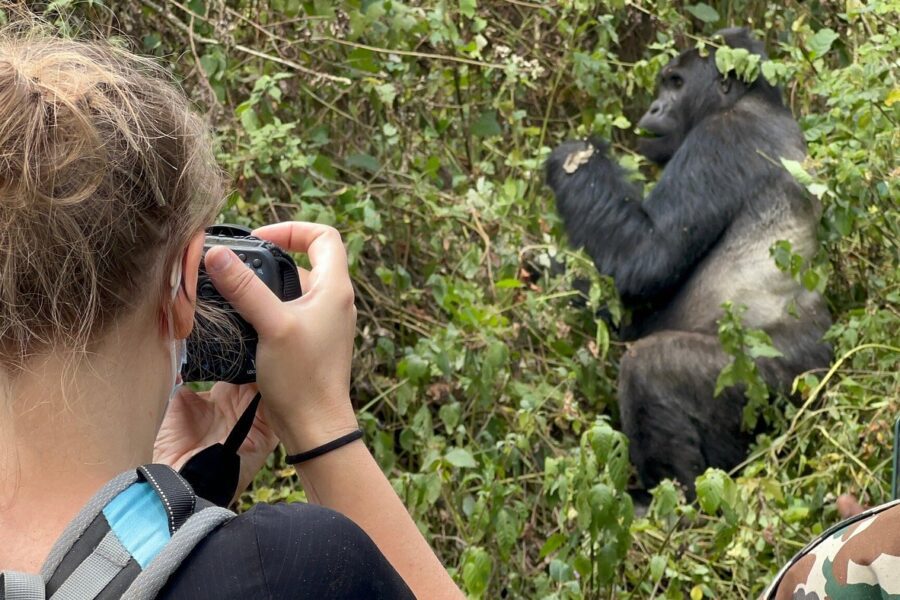
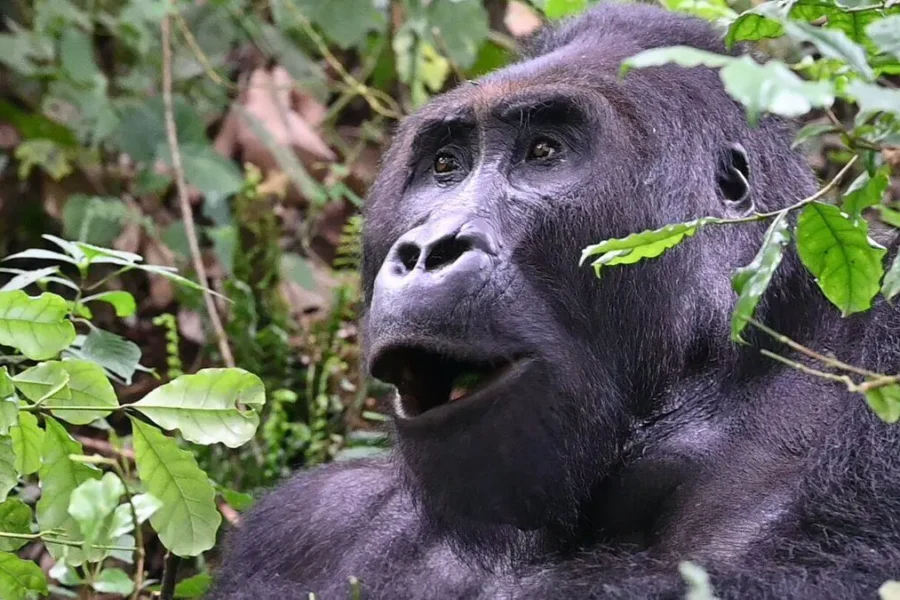
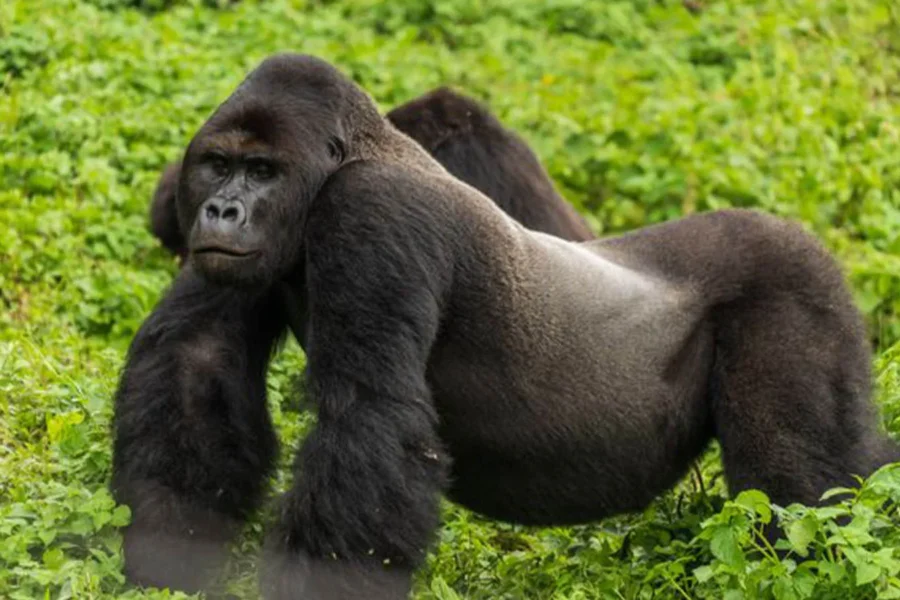
The eastern lowland gorilla is the park’s flagship species and the largest subspecies of gorilla. These gorillas inhabit the lowland forests of eastern DRC and are critically endangered due to habitat loss, poaching, and years of regional conflict.
Kahuzi-Biega represents one of the last strongholds for this subspecies. Several gorilla groups have been habituated for tourism and research, allowing visitors to observe their behavior under strict regulations. Encounters with eastern lowland gorillas provide rare insight into a species that differs noticeably from mountain gorillas in size, habitat use, and social behavior.
Chimpanzees
Chimpanzees are also present in Kahuzi-Biega, particularly in the lowland forests. Although less frequently observed than gorillas, their presence adds to the park’s primate richness.
Other Primate Species
The park hosts at least 13 primate species, including:
- Black-and-white colobus monkeys
- Red colobus monkeys
- Blue monkeys
- Owl-faced monkeys
- L’Hoest’s monkeys
- Olive baboons
This diversity places Kahuzi-Biega among the most important primate conservation areas in Africa.
Gorilla Trekking Experience
Trekking Overview
Gorilla trekking in Kahuzi-Biega National Park is focused on the eastern lowland gorillas in the highland sector near Bukavu. Treks begin with a briefing at park headquarters, where visitors learn about gorilla behavior, safety protocols, and conservation guidelines.
Accompanied by experienced ICCN rangers and trackers, visitors hike through montane forest to locate a habituated gorilla group. Trek durations vary depending on gorilla movements and terrain but are generally moderate compared to trekking in some other forests.
Once the gorillas are located, visitors are allowed one hour to observe them, maintaining a safe distance to minimize stress and disease transmission.
Visitor Experience
Encounters with eastern lowland gorillas are often described as quieter and more relaxed than with mountain gorillas, as these gorillas inhabit less steep terrain and larger home ranges. The experience offers exceptional opportunities for photography and behavioral observation.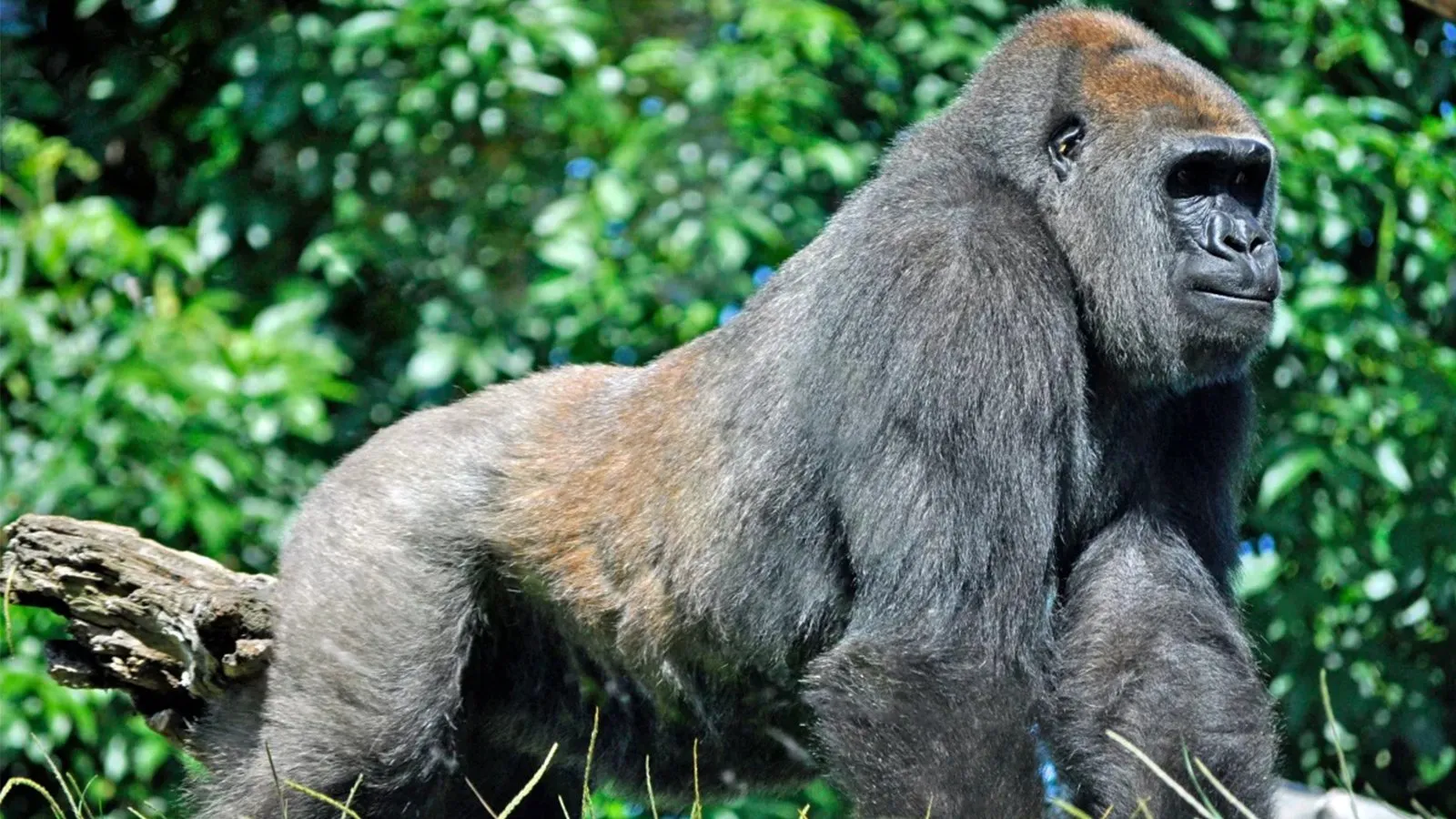
Conservation Importance
Kahuzi-Biega National Park plays a critical role in conserving the eastern lowland gorilla and the broader biodiversity of the Albertine Rift.
Key conservation challenges include:
- Poaching and illegal hunting
- Habitat encroachment and mining
- Armed conflict and insecurity
In response, conservation initiatives focus on:
- Anti-poaching patrols and ranger training
- Gorilla monitoring and veterinary support
- Community-based conservation and alternative livelihoods
- Environmental education and awareness programs
Tourism, though limited, provides essential revenue and international attention that supports long-term conservation goals.
Other Wildlife and Birdlife
Beyond primates, Kahuzi-Biega supports an impressive array of wildlife.
Mammals
- Forest elephants
- Forest buffalo
- Giant forest hogs
- Leopards (rare)
- Duikers
Birdlife
The park is home to over 350 bird species, including many Albertine Rift endemics. Notable species include Grauer’s swamp warbler, Rockefeller’s sunbird, and various turacos and hornbills.
Activities in Kahuzi-Biega National Park
- Eastern lowland gorilla trekking
- Guided nature walks
- Birdwatching
- Hiking Mount Kahuzi
- Environmental education visits
These activities are conducted under strict regulations to minimize environmental impact.
Best Time to Visit
Kahuzi-Biega National Park can be visited throughout the year, but conditions vary by season.
- Dry Seasons (June to September and December to February): Best trekking conditions with drier trails.
- Wet Seasons (March to May and October to November): Lush vegetation but more challenging travel and hiking.
Accommodation Options
Accommodation options are mainly located near Bukavu.
- Eco-Lodges: Small lodges supporting conservation initiatives.
- Hotels in Bukavu: Range of mid-range to budget options.
- Research Facilities: Limited options for researchers and conservation partners.
Practical Travel Information
- Access: Via Bukavu, reached by air from major cities in DRC or overland from Rwanda.
- Permits: Gorilla trekking permits are required and must be arranged in advance.
- Packing Essentials: Hiking boots, rain gear, warm clothing, insect repellent, and camera equipment.
- Health and Safety: Visitors should follow ICCN guidance and stay informed about local conditions.


Why Kahuzi-Biega National Park Is a Premier Primates Destination in Africa
Kahuzi-Biega National Park stands apart as one of Africa’s most important primate conservation areas. Its role as a refuge for the endangered eastern lowland gorilla, combined with exceptional primate diversity and vast, intact rainforest, gives it global significance.
For travelers and conservationists seeking a deeper understanding of Africa’s primates and the challenges they face, Kahuzi-Biega offers a powerful and meaningful experience. Its protection is essential not only for primates but for the ecological integrity of the entire Albertine Rift.