Wildebeest Migration Masai Mara Kenya: The Ultimate Guide to Africa’s Greatest Wildlife Spectacle
Wildebeest migration Masai Mara Kenya is one of the most breathtaking natural events on Earth, a phenomenon that defines African safaris and captures the imagination of travelers worldwide. Each year, millions of wildebeest, accompanied by zebras and gazelles, surge into Kenya’s Masai Mara in an ancient cycle driven by survival and rainfall. This dramatic movement transforms the Mara into the epicenter of wildlife action, where life, death, and resilience unfold on an unparalleled scale.
The wildebeest migration Masai Mara Kenya is not simply a safari highlight; it is a living ecological process that sustains predators, shapes landscapes, and supports local communities. This in-depth guide explores everything you need to know about the migration in the Masai Mara, including why it happens, when and where to experience it, what makes the Mara unique, and why this spectacle remains one of the most important wildlife events in the world.
Understanding Wildebeest Migration Masai Mara Kenya
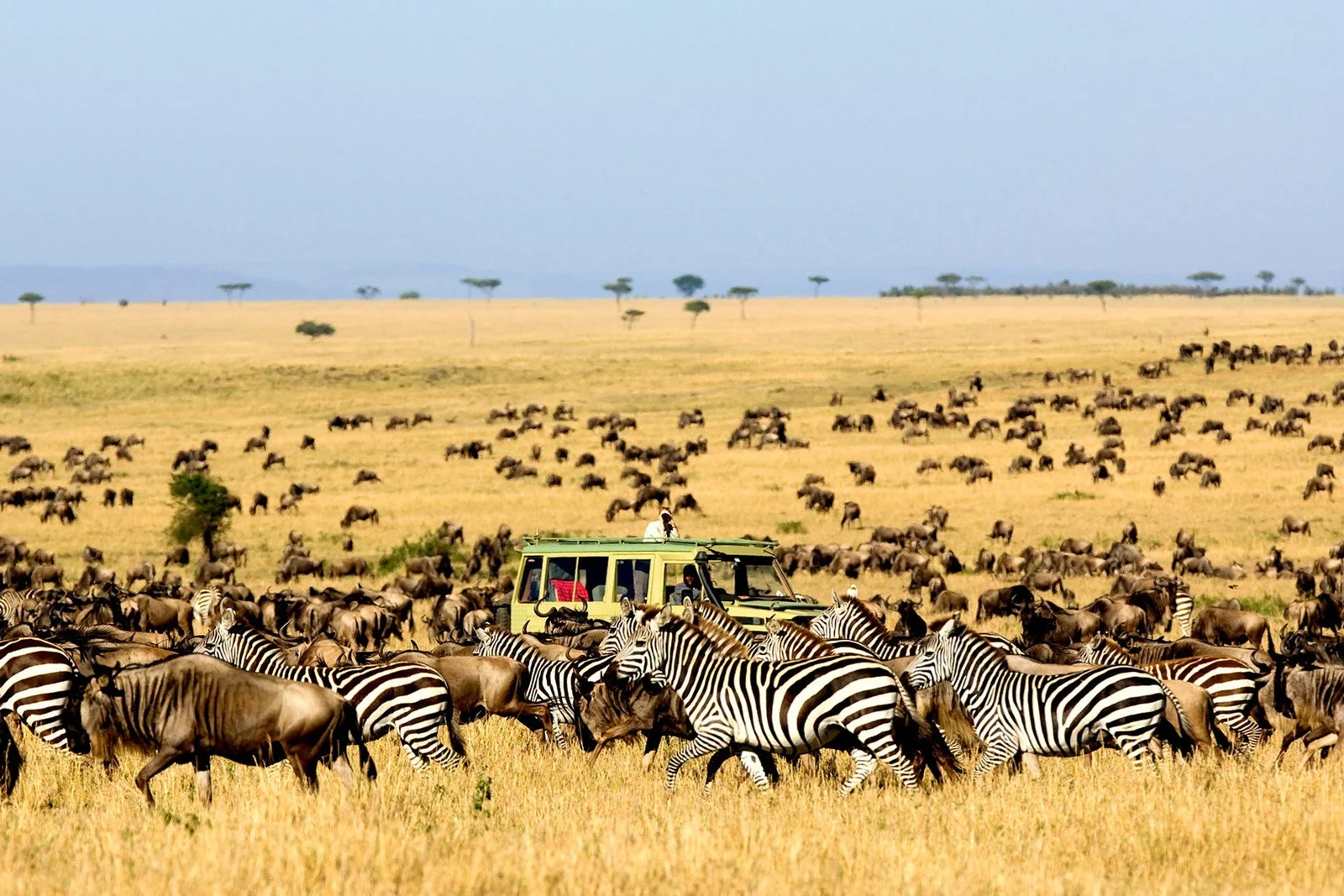
Wildebeest migration Masai Mara Kenya refers to the northern phase of the Great Wildebeest Migration, a continuous, circular movement of over 1.5 million wildebeest and hundreds of thousands of zebras and gazelles across the Serengeti-Mara ecosystem. Unlike seasonal migrations with fixed start and end points, this migration is an ongoing journey guided by rainfall and the search for fresh grazing.
When the southern Serengeti plains in Tanzania begin to dry out, the herds instinctively move north, eventually crossing into Kenya. The Masai Mara offers lush grasslands and permanent water sources, making it a critical refuge during the dry season. For several months, the Mara becomes the stage for some of the most intense and iconic moments of the entire migration.
Wildebeest migration Masai Mara Kenya is the culmination of a journey that spans thousands of kilometers and thousands of years. It represents one of the last intact large-scale animal migrations on the planet, making it globally significant for biodiversity and conservation.
Why Wildebeest Migration Masai Mara Kenya Is So Important
The importance of wildebeest migration Masai Mara Kenya extends far beyond tourism. Ecologically, the migration plays a central role in maintaining the health of the savannah ecosystem. As millions of animals graze, trample vegetation, and fertilize the soil, they stimulate grass regrowth and prevent overgrowth of woody plants.
This process supports a complex web of life. Predators such as lions, leopards, cheetahs, hyenas, and crocodiles depend heavily on the migration for survival. The Masai Mara is renowned for its high density of predators precisely because of the abundance created by wildebeest migration Masai Mara Kenya.
Culturally and economically, the migration is equally significant. It underpins Kenya’s safari industry and supports local Maasai communities through tourism revenue, employment, and conservation partnerships. Protecting the migration means protecting livelihoods, ecosystems, and a natural heritage of global importance.
The Role of the Masai Mara in the Great Migration
While the Great Migration spans both Tanzania and Kenya, wildebeest migration Masai Mara Kenya is widely regarded as the most dramatic and celebrated stage of the cycle. The Masai Mara’s rolling plains, river systems, and open visibility create ideal conditions for observing large herds and intense predator activity.
The Mara River, in particular, has become synonymous with the migration. Its steep banks and crocodile-infested waters present one of the greatest challenges of the journey. The river crossings that occur here are among the most iconic wildlife scenes ever documented, symbolizing the raw struggle for survival.
Unlike the Serengeti, where herds may be spread across vast distances, the Masai Mara often concentrates animals into relatively compact areas. This concentration amplifies the intensity of wildlife encounters, making wildebeest migration Masai Mara Kenya a once-in-a-lifetime experience for many travelers.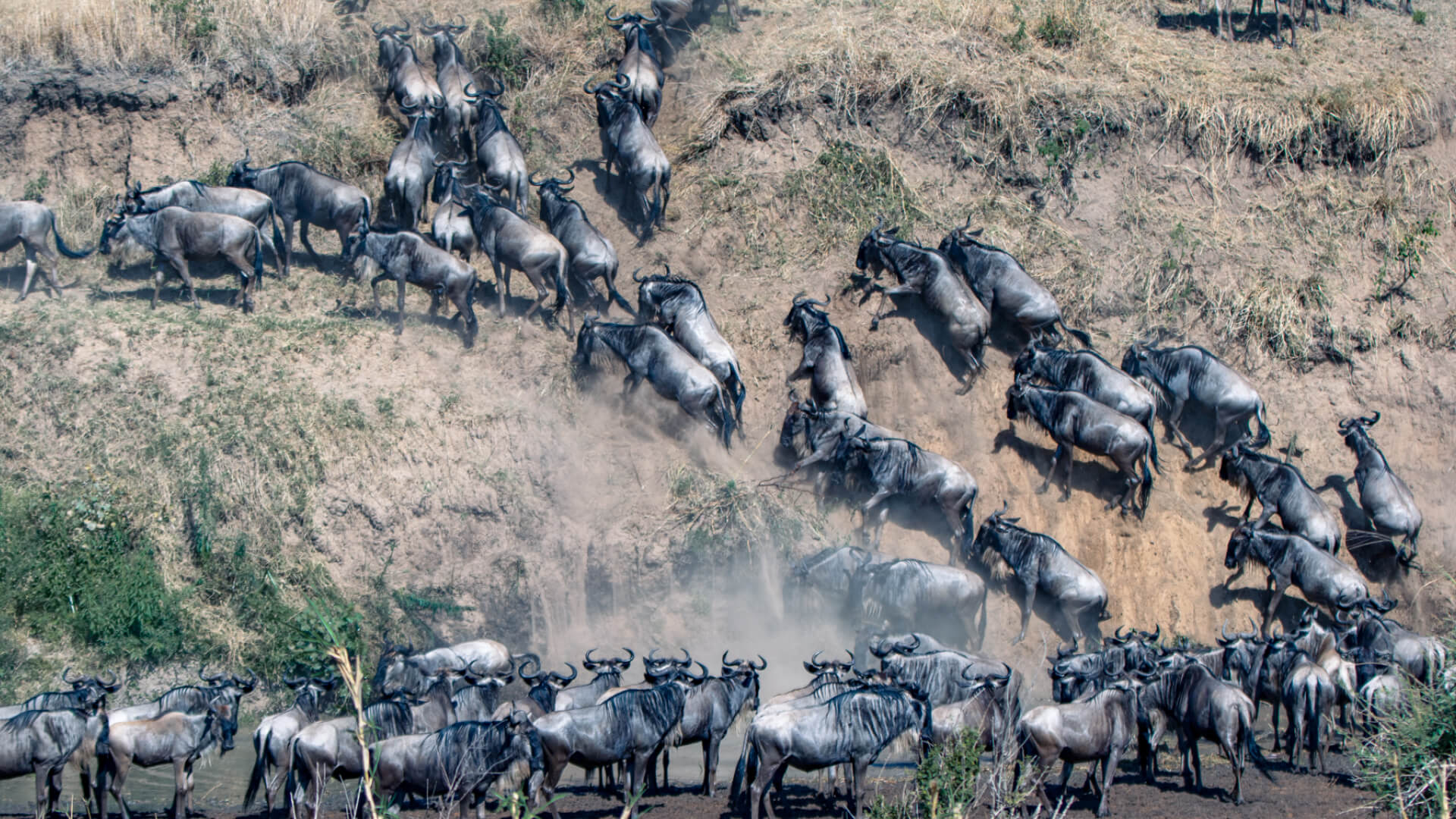
When to Experience Wildebeest Migration Masai Mara Kenya
Timing is crucial when planning a safari focused on wildebeest migration Masai Mara Kenya. While nature never follows an exact schedule, the migration typically reaches the Masai Mara between late July and October. This period coincides with the dry season, when grazing becomes scarce in the Serengeti and more abundant in Kenya.
August and September are often considered peak months for wildebeest migration Masai Mara Kenya. During this time, large herds are usually present, and Mara River crossings are most frequent. However, rainfall patterns can cause variations, and the herds may arrive earlier or later in some years.
It is important to understand that the migration is not a single event. Wildebeest may cross the Mara River multiple times, sometimes moving back and forth between Kenya and Tanzania. This unpredictability adds excitement and authenticity to the experience.
Where to See Wildebeest Migration Masai Mara Kenya
The Masai Mara National Reserve is the heart of wildebeest migration Masai Mara Kenya. Its expansive plains and river corridors provide excellent vantage points for observing herds and predators. Areas along the Mara River, such as the northern and western sections of the reserve, are particularly famous for river crossings.
In addition to the main reserve, private conservancies surrounding the Masai Mara play a vital role in supporting the migration. These conservancies often host significant numbers of wildebeest while offering a more exclusive safari experience with fewer vehicles.
Including conservancies in a wildebeest migration Masai Mara Kenya itinerary provides greater flexibility. Many conservancies allow off-road driving, night safaris, and walking safaris, offering deeper engagement with the ecosystem while still benefiting from the presence of the migration.
The Drama of the Mara River Crossings
No aspect of wildebeest migration Masai Mara Kenya captures the imagination quite like the Mara River crossings. These crossings are moments of intense drama, as thousands of animals gather at the riverbanks, unsure when or where to cross.
When the crossing finally begins, the scene unfolds with astonishing power. Wildebeest plunge into fast-flowing water, battling strong currents, steep muddy banks, and lurking Nile crocodiles. Some make it across safely, while others are swept away or fall prey to predators.
From a safari perspective, witnessing a river crossing during wildebeest migration Masai Mara Kenya is unforgettable. However, patience is essential. Crossings are unpredictable and may not happen for days, even when large herds are present. The reward, when it comes, is one of nature’s most powerful spectacles.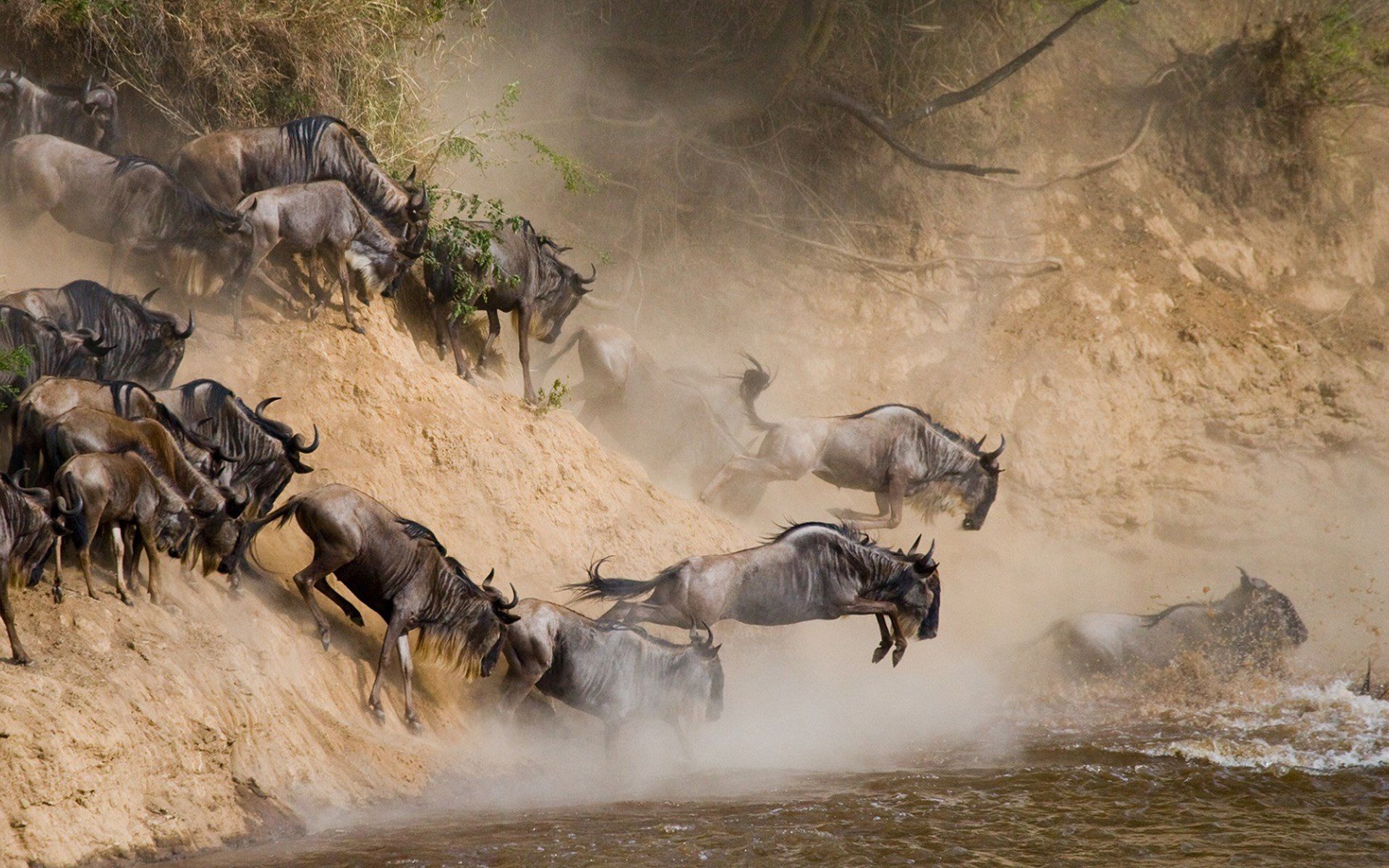
Wildlife Beyond the Wildebeest in the Masai Mara
While wildebeest are the stars, wildebeest migration Masai Mara Kenya is about far more than one species. Zebras often lead the herds, using their memory to locate water and grazing. Gazelles follow behind, feeding on shorter grasses left by larger herbivores.
Predators thrive during migration season. Lions in the Masai Mara are particularly active, often hunting at night or ambushing wildebeest near riverbanks. Cheetahs take advantage of open plains to chase young or weakened animals, while hyenas scavenge and hunt opportunistically.
Birdlife also flourishes during wildebeest migration Masai Mara Kenya. Vultures, eagles, marabou storks, and other scavengers gather in large numbers, drawn by the abundance of food. This makes migration season one of the best times for birdwatching in the Mara.
Safari Experiences During Wildebeest Migration Masai Mara Kenya
Wildebeest migration Masai Mara Kenya offers a wide range of safari experiences to suit different interests. Classic game drives remain the most popular way to witness the migration, with early morning and late afternoon outings providing optimal light and animal activity.
Hot air balloon safaris over the Masai Mara offer a unique perspective on the migration. From the air, the scale of wildebeest migration Masai Mara Kenya becomes truly apparent, with herds stretching across the plains as far as the eye can see.
Photography safaris are especially popular during migration season. The combination of dramatic action, dust-filled skies, golden light, and dense wildlife concentrations creates ideal conditions for capturing iconic images that define African wildlife photography.
Best Time of Day for Wildebeest Migration Viewing
Light and animal behavior play a significant role in the quality of a wildebeest migration Masai Mara Kenya experience. Early mornings often bring cooler temperatures and increased predator activity, offering opportunities to witness hunts and interactions.
Late afternoons are equally rewarding, as herds move toward water sources and predators prepare for evening hunts. River crossings can occur at any time of day, but many happen during daylight hours, often in the late morning or early afternoon.
Understanding these rhythms allows guides and travelers to maximize their chances of witnessing the most dynamic moments of the migration.
Conservation and Wildebeest Migration Masai Mara Kenya
Wildebeest migration Masai Mara Kenya is a conservation success story, but it is also fragile. The migration depends on open landscapes and free movement across borders. Threats such as habitat fragmentation, fencing, agriculture, and climate change pose serious risks to this ancient journey.
Kenya has made significant efforts to protect the Masai Mara ecosystem through national park management, community conservancies, and wildlife corridors. Tourism revenue from wildebeest migration Masai Mara Kenya plays a critical role in funding conservation initiatives, anti-poaching patrols, and habitat protection.
Responsible travel is essential to the future of the migration. Supporting ethical safari operators and community-based conservation ensures that wildebeest migration Masai Mara Kenya continues for generations to come.
The Role of Maasai Communities in the Migration
Local Maasai communities are deeply connected to wildebeest migration Masai Mara Kenya. For centuries, the Maasai have practiced pastoralism that allows wildlife and livestock to coexist, maintaining open rangelands essential for migration.
Community conservancies surrounding the Masai Mara now provide additional habitat and protection for migrating herds. Revenue from tourism supports education, healthcare, and sustainable livelihoods, creating incentives for wildlife conservation.
This partnership between people and wildlife demonstrates that protecting wildebeest migration Masai Mara Kenya is not only an environmental priority but a social and economic one as well.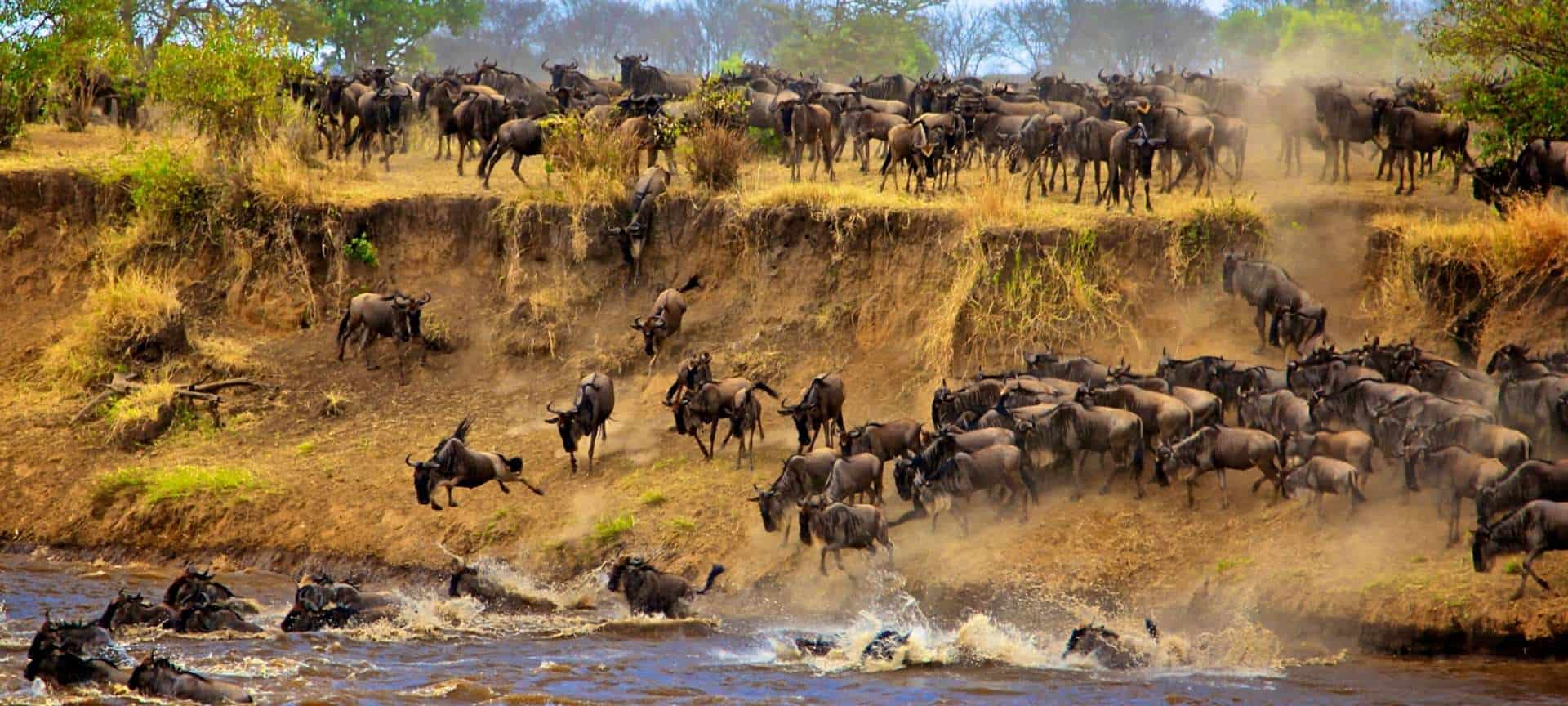
Planning a Wildebeest Migration Masai Mara Kenya Safari
Planning a successful wildebeest migration Masai Mara Kenya safari requires careful consideration of timing, location, and accommodation. Due to high demand during peak months, early booking is essential, especially for lodges near the Mara River.
Choosing experienced guides is equally important. Knowledgeable guides understand herd behavior, river crossing patterns, and predator movements, greatly enhancing the safari experience.
A well-planned itinerary balances time spent near the migration with exploration of other areas of the Masai Mara, ensuring a diverse and enriching journey.
The Emotional Impact of Wildebeest Migration Masai Mara Kenya
Witnessing wildebeest migration Masai Mara Kenya is often described as a deeply emotional experience. The thunder of hooves, the sheer number of animals, and the intensity of survival moments create a powerful connection to nature.
Many travelers report feelings of humility and awe when confronted with such raw natural processes. The migration offers perspective on resilience, cooperation, and the interconnectedness of life on Earth.
For photographers, conservationists, and first-time safari-goers alike, wildebeest migration Masai Mara Kenya often becomes a defining life experience.
The Future of Wildebeest Migration Masai Mara Kenya
The future of wildebeest migration Masai Mara Kenya depends on continued conservation, responsible tourism, and cross-border cooperation between Kenya and Tanzania. Climate change presents new challenges, altering rainfall patterns and potentially affecting migration timing.
Despite these threats, there is hope. Strong conservation frameworks, community involvement, and global awareness continue to safeguard this natural wonder. Protecting wildebeest migration Masai Mara Kenya means preserving one of the last great wildlife spectacles on Earth.
Final Thoughts on Wildebeest Migration Masai Mara Kenya
Wildebeest migration Masai Mara Kenya stands as one of nature’s most powerful and inspiring events. It is a living testament to the resilience of wildlife and the importance of preserving open, connected landscapes.
Experiencing wildebeest migration Masai Mara Kenya offers more than exceptional wildlife viewing; it provides insight into the delicate balance of ecosystems and humanity’s role in protecting them. From dramatic river crossings to endless plains filled with life, every moment tells a story of survival and renewal.
For travelers seeking an authentic, awe-inspiring African safari, wildebeest migration Masai Mara Kenya remains unmatched, a timeless journey that continues to define the wild heart of Africa.