Wildebeest Migration Serengeti
The wildebeest migration Serengeti is one of the most awe-inspiring natural events on Earth, a timeless spectacle that defines the very soul of Africa’s wilderness. Every year, more than 1.5 million wildebeest, accompanied by hundreds of thousands of zebras and gazelles, move in an endless circular journey across Tanzania’s Serengeti ecosystem. This migration is not a single event bound to one season, but a year-round process driven by rainfall, grass regeneration, and instinct refined over thousands of years.
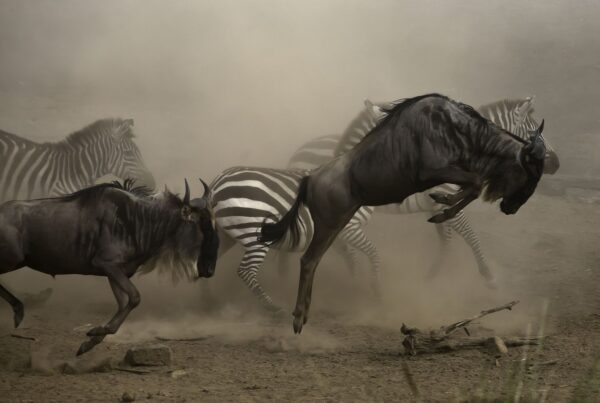
To witness the wildebeest migration Serengeti is to observe nature functioning at its most powerful and unfiltered. The thunder of hooves, the dust-filled horizons, and the ever-present predators create a dynamic environment where survival, renewal, and balance coexist. As the heart of the Great Migration, the Serengeti hosts the most critical stages of this journey, making it one of the most important wildlife landscapes on the planet.
Understanding the Wildebeest Migration Serengeti
The wildebeest migration Serengeti takes place within the vast Serengeti ecosystem, a UNESCO World Heritage Site covering approximately 30,000 square kilometers. Unlike linear migrations seen elsewhere in the world, this movement is circular and continuous. Wildebeest do not migrate from one fixed point to another and stop; instead, they are almost always on the move, responding to seasonal rainfall patterns that determine where fresh grazing is available.
The Serengeti’s volcanic soils play a crucial role in sustaining this migration. These soils produce short, nutrient-rich grasses that provide essential minerals for wildebeest, especially during calving season. Because of this unique ecological combination, the Serengeti remains the backbone of the migration, hosting nearly 70 percent of the entire journey within Tanzania.
Why the Serengeti Is the Heart of the Migration
The wildebeest migration Serengeti is unmatched in scale and ecological significance. While parts of the migration extend into Kenya’s Maasai Mara, the Serengeti contains the starting point, the majority of the route, and the most biologically critical stages of the cycle. Without the Serengeti, the Great Migration as we know it would not exist.
The region’s vast open plains allow herds to move freely without human barriers. Strict conservation policies, limited infrastructure, and low population density within protected areas have preserved ancient migration routes. This makes the Serengeti not only a stage for the migration but also its lifeline.
The Annual Cycle of the Wildebeest Migration Serengeti
The wildebeest migration Serengeti follows a broadly predictable annual cycle shaped by rainfall rather than fixed dates. Each phase of the year brings different wildlife behaviors, landscapes, and viewing opportunities, making the Serengeti a year-round safari destination.
From the birth of new life in the south to perilous river crossings in the west and north, every chapter of the migration plays a vital role in maintaining ecological balance.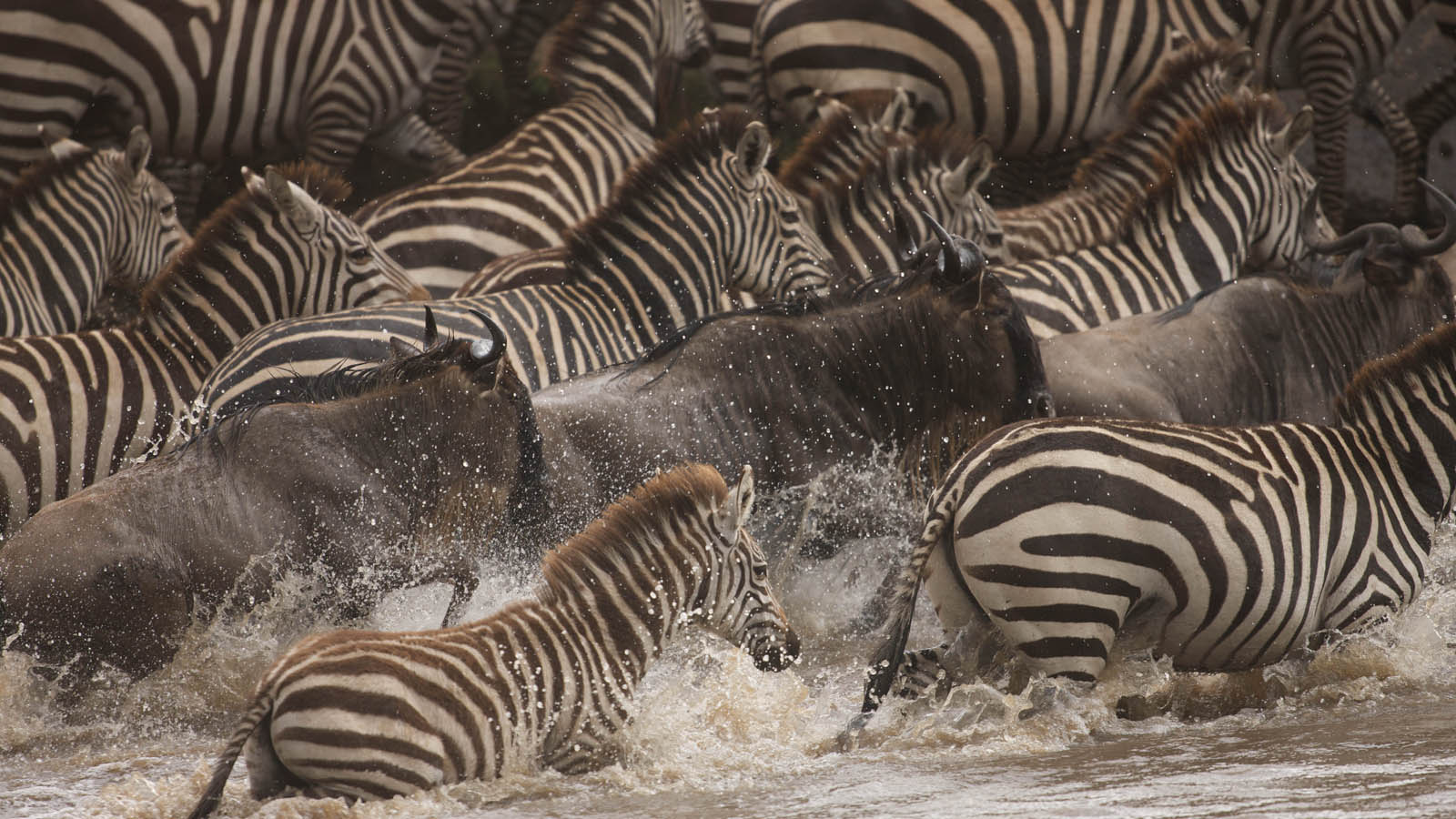
Calving Season in the Southern Serengeti
One of the most dramatic and biologically important phases of the wildebeest migration Serengeti occurs between January and March. During this time, the herds congregate on the short-grass plains of the southern Serengeti and Ndutu region. These plains, enriched by volcanic ash, provide the ideal conditions for calving.
In a remarkable display of synchronization, over 400,000 wildebeest calves are born within a span of just a few weeks. This mass birthing strategy overwhelms predators, increasing the survival rate of newborns. Calves are able to stand and run within minutes of birth, an essential adaptation in an environment where predators are always nearby.
This period attracts intense predator activity. Lions, cheetahs, leopards, and hyenas take advantage of the abundance of vulnerable young, creating powerful predator-prey interactions that define the raw reality of life in the Serengeti.
Transition Through the Central Serengeti
As the southern plains begin to dry out around April and May, the wildebeest migration Serengeti shifts northward into the central Serengeti. This region acts as a vital corridor, offering permanent water sources such as the Seronera River and a mix of grasslands and woodlands.
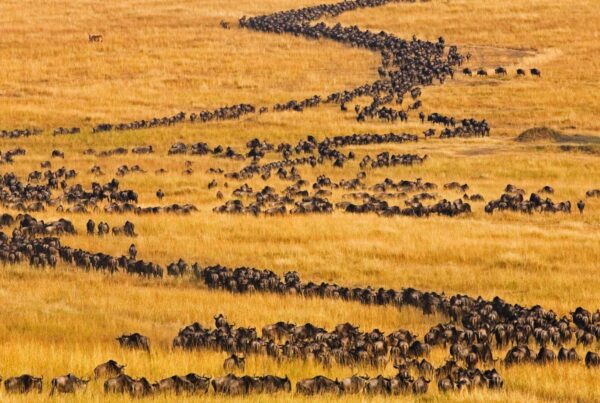
The central Serengeti is home to a high density of resident predators, making this phase particularly dynamic. Long lines of wildebeest move steadily across the plains, often accompanied by zebras that use their strong memory to locate water. This stage emphasizes endurance and scale, highlighting the immense distances covered by the herds.
The Western Serengeti and Grumeti River Crossings
Between May and June, the wildebeest migration Serengeti reaches the western corridor, where the Grumeti River presents the first major obstacle of the year. Although less famous than the Mara River, the Grumeti River crossings are equally dramatic and often less crowded, offering a more intimate safari experience.
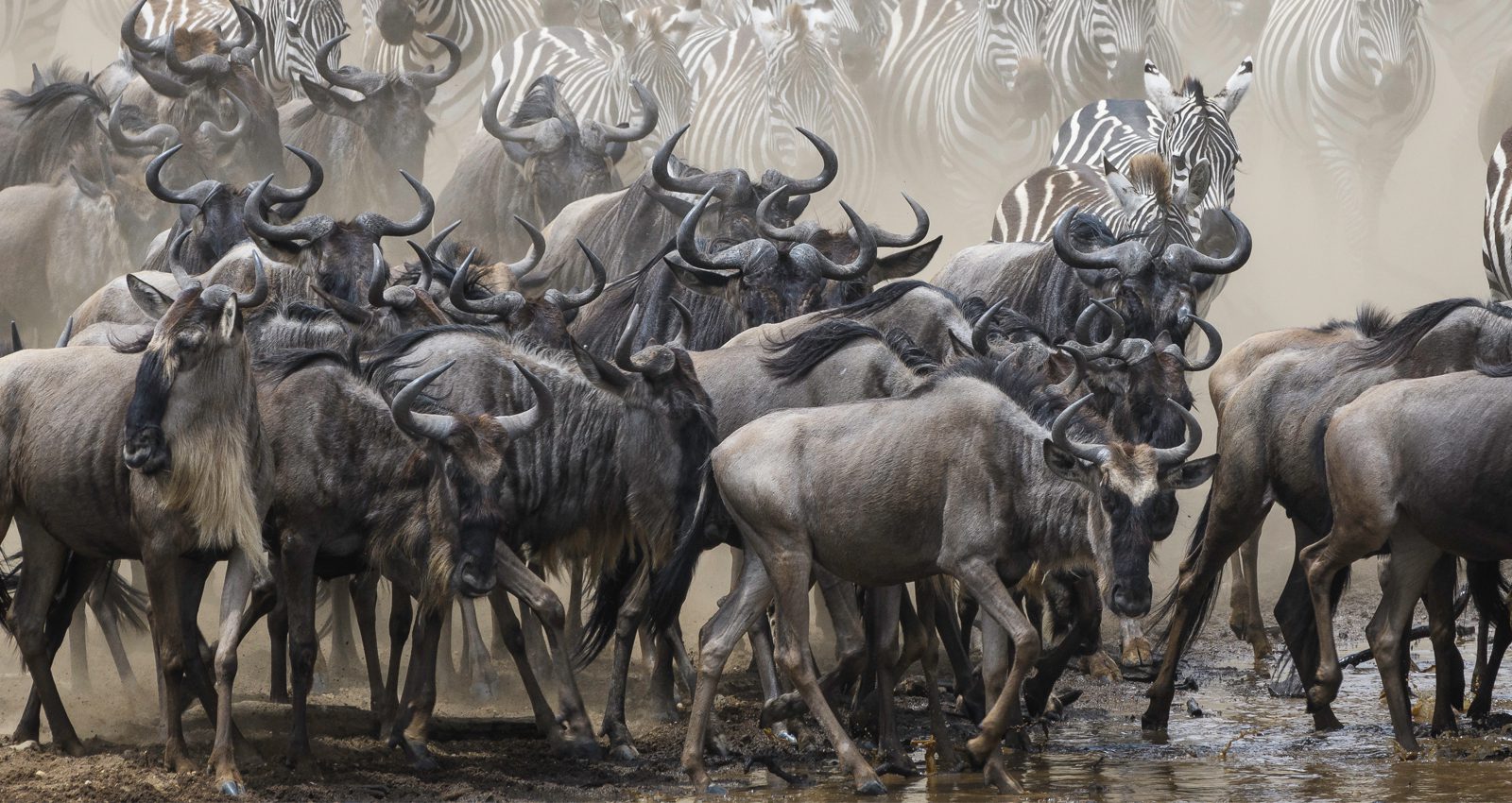
The Grumeti River is home to some of the largest Nile crocodiles in Africa, many of which have adapted to the annual arrival of the migration. Crossings are unpredictable, with herds sometimes waiting for days before attempting to cross. These moments showcase the tension and uncertainty that define the migration.
Northern Serengeti and the Iconic Mara River
By July and August, the wildebeest migration Serengeti moves into the northern regions near the Kenyan border. This area is characterized by rolling hills, open plains, and the formidable Mara River. While many associate Mara River crossings with Kenya, some of the most spectacular crossings occur on the Tanzanian side.
The northern Serengeti offers fewer vehicles and a more remote feel, allowing visitors to witness crossings in a quieter, more natural setting. Wildebeest gather at steep riverbanks, hesitating before plunging into crocodile-infested waters. These crossings symbolize both the danger and determination that make the migration legendary.
The Return Journey South
As short rains begin around October and November, the wildebeest migration Serengeti gradually turns southward. The herds leave the northern regions and move back through the central Serengeti toward the southern plains, completing the annual cycle.
This return journey allows grazed areas in the north to recover while preparing the southern Serengeti for the next calving season. The cyclical nature of the migration ensures that no single region is overused, maintaining long-term ecosystem health.
Predators and the Circle of Life
The wildebeest migration Serengeti supports one of the most balanced predator ecosystems in the world. Lions time their breeding cycles to coincide with peak prey availability, while cheetahs rely on open plains to execute high-speed hunts. Leopards take advantage of riverine forests, and hyenas display remarkable intelligence in cooperative hunting and scavenging.
These interactions are essential for maintaining healthy wildebeest populations. Predation removes weak and injured animals, strengthening future generations and reinforcing natural selection. This intricate balance is one of the reasons the Serengeti remains such a resilient ecosystem.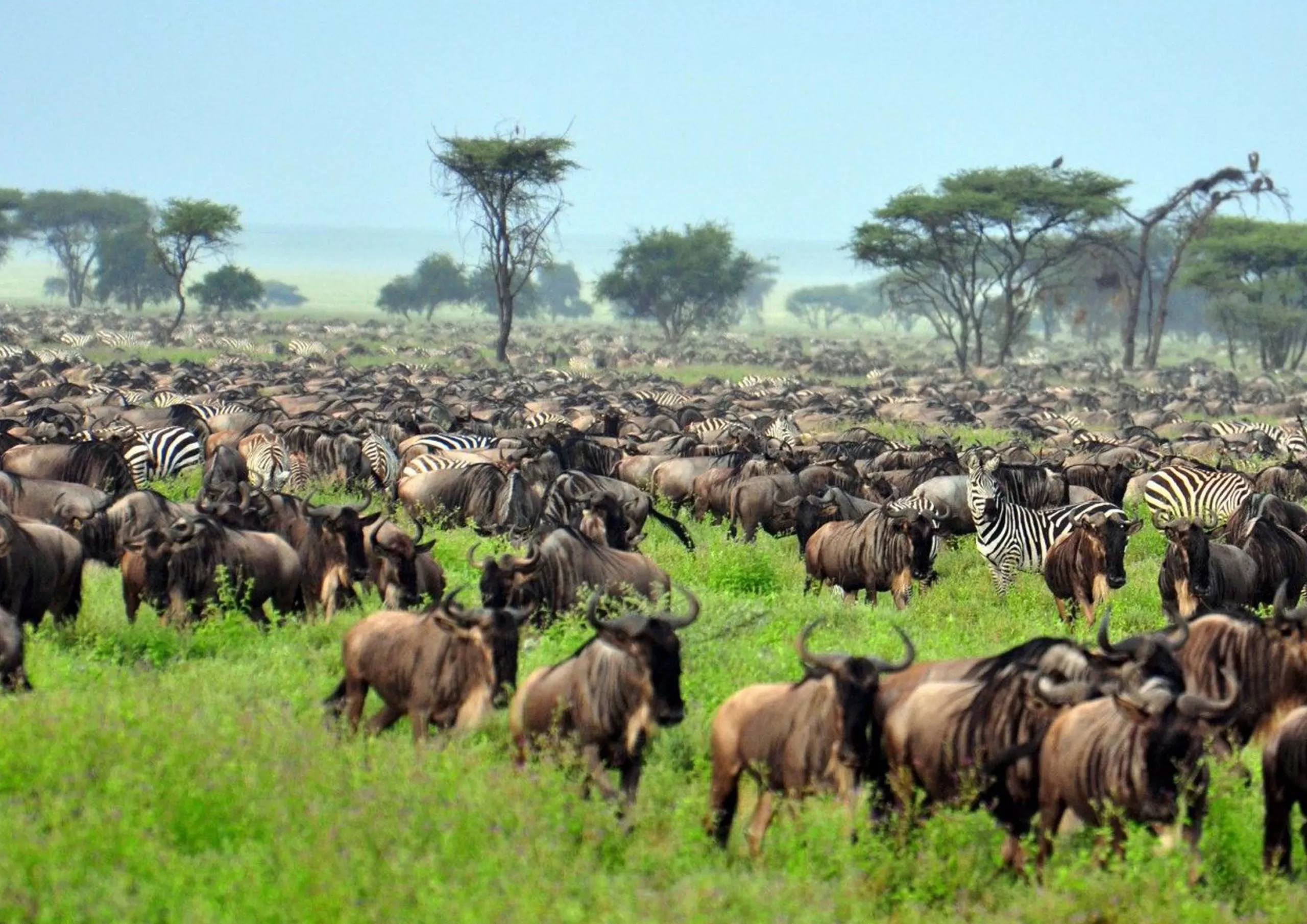
Ecological Importance of the Wildebeest Migration Serengeti
The wildebeest migration Serengeti is a keystone ecological process. As millions of animals graze and move across the land, they prevent bush encroachment, stimulate new grass growth, and fertilize the soil through dung and urine.
Carcasses left behind during river crossings and predator hunts enrich rivers and plains, supporting insects, fish, birds, and scavengers. This nutrient cycling sustains biodiversity at every level, from microorganisms to apex predators.
Cultural and Community Significance
For communities living around the Serengeti, the wildebeest migration Serengeti has long held cultural and economic importance. Indigenous knowledge systems recognize the rhythms of wildlife movement and have historically adapted grazing and settlement patterns accordingly.
Today, community-based conservation initiatives protect critical migration corridors outside the park boundaries. Sustainable tourism linked to the migration provides employment, education, and healthcare opportunities, ensuring that local people benefit directly from conservation.
Best Time to Experience the Wildebeest Migration Serengeti
The best time to experience the wildebeest migration Serengeti depends on which phase visitors wish to witness. January to March is ideal for calving and intense predator activity. May to June offers dramatic Grumeti River crossings in the west. July to October provides opportunities to see northern Serengeti crossings and massive herd concentrations.
Because the migration remains within the Serengeti ecosystem year-round, exceptional wildlife viewing is possible in every season with the right planning and location.
Safari Experiences in the Serengeti
Safari experiences during the wildebeest migration Serengeti range from luxury lodges overlooking rivers to mobile tented camps that follow the herds’ movements. Early morning and late afternoon game drives offer the best light and wildlife activity.
Hot air balloon safaris provide breathtaking aerial views of the migration, revealing its immense scale. Walking safaris and cultural visits add depth, allowing visitors to connect more deeply with the land and its people.
Photography and Filmmaking Opportunities
The wildebeest migration Serengeti is a dream destination for wildlife photographers and documentary filmmakers. Dust-filled plains, dramatic skies, and intense predator interactions create endless creative possibilities. Capturing a river crossing or a hunt requires patience, anticipation, and respect for wildlife behavior.
Strict park regulations and experienced guides ensure that photography and filming are conducted ethically, preserving the integrity of the migration for future generations.
Threats Facing the Wildebeest Migration Serengeti
Despite its resilience, the wildebeest migration Serengeti faces growing threats. Climate change is altering rainfall patterns, affecting grass availability and migration timing. Human population growth, agriculture, fencing, and infrastructure development threaten to fragment traditional migration routes.
Protecting open corridors and maintaining ecosystem connectivity are essential to ensuring the future of the migration. Without coordinated conservation efforts, this ancient journey could be disrupted with far-reaching consequences.
Conservation Efforts and the Future
Tanzania has a long history of wildlife conservation, and ongoing efforts continue to safeguard the wildebeest migration Serengeti. National parks, conservation areas, and wildlife management zones work together to protect critical habitats.
Research, anti-poaching initiatives, and community engagement play key roles in conservation success. Sustainable tourism provides vital funding, reinforcing the link between wildlife protection and economic development.
Why the Wildebeest Migration Serengeti Matters
The wildebeest migration Serengeti matters because it represents one of the last remaining large-scale natural migrations on Earth. It is a symbol of ecological integrity, resilience, and the power of intact ecosystems.
For humanity, the migration offers inspiration and perspective, reminding us of the importance of protecting natural processes that cannot be recreated once lost.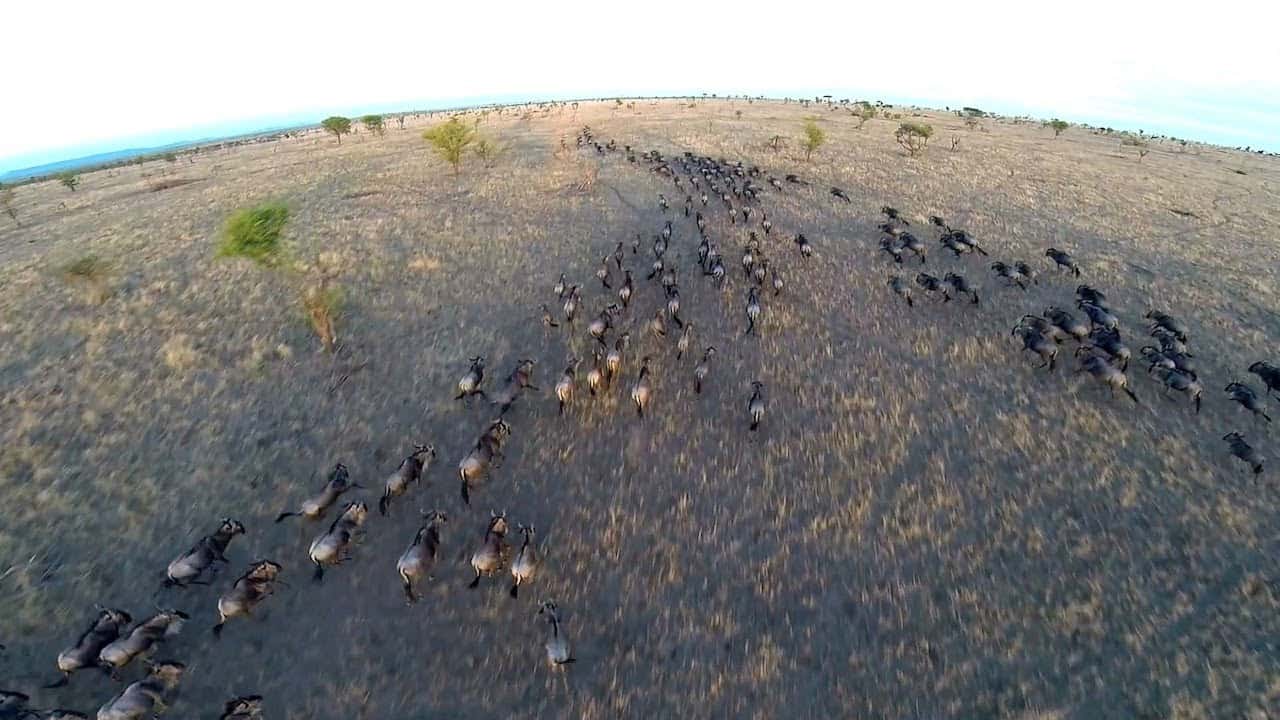
The Serengeti as a Living Migration Landscape
The wildebeest migration Serengeti is not simply a wildlife attraction but a living system that sustains landscapes, species, and communities. From the birth of thousands of calves on the southern plains to the perilous river crossings in the north, the Serengeti hosts the most vital chapters of this epic journey.
As pressures on wild spaces increase worldwide, preserving the Serengeti and its migration becomes a global responsibility. Experiencing the wildebeest migration Serengeti is a privilege that leaves a lasting impression, reminding us that nature’s greatest wonders still exist when given space to thrive.