Just Gorillas in Volcanoes National Park: An Immersive Journey into Rwanda’s Mountain Gorilla Sanctuary
Just gorillas in Volcanoes National Park is more than a phrase; it is a declaration of intent for travelers who want to strip African wildlife experiences down to their most intimate and powerful essence. In a continent celebrated for vast savannahs, sweeping migrations, and dramatic predator encounters, Volcanoes National Park in Rwanda offers something profoundly different. Here, the focus narrows from spectacle to connection, from scale to depth, and from movement to presence. It is a place where the entire journey revolves around a single species, the mountain gorilla, and the fragile ecosystem that sustains it.
Volcanoes National Park is not about ticking boxes or chasing variety. It is about slowing down, stepping into ancient rainforest, and meeting one of humanity’s closest relatives on their own terms. For travelers seeking meaning, conservation impact, and emotional resonance, just gorillas in Volcanoes National Park represents one of the most refined and transformative wildlife experiences on Earth.
This in-depth exploration examines what it truly means to focus on just gorillas in Volcanoes National Park, why this destination stands apart globally, how the experience unfolds, and why limiting the scope to gorillas alone often results in the most powerful African journey of all.
Volcanoes National Park as a Gorilla-Only Destination
Understanding just gorillas in Volcanoes National Park begins with recognizing the park’s unique identity. Located in northwestern Rwanda, Volcanoes National Park forms part of the Virunga Massif, a chain of extinct and dormant volcanoes shared with Uganda and the Democratic Republic of Congo. This region is one of only two places on Earth where mountain gorillas survive in the wild.
Unlike multi-purpose safari parks, Volcanoes National Park is singular in its mission. While other wildlife exists within its boundaries, tourism here is intentionally centered almost entirely on gorilla trekking. This deliberate focus ensures minimal disturbance, maximum protection, and an experience designed around conservation rather than entertainment.
Choosing just gorillas in Volcanoes National Park means entering a space where every rule, trail, and policy exists for one reason: the survival and well-being of mountain gorillas.
The Mountain Gorilla and Its Global Significance
At the heart of just gorillas in Volcanoes National Park is the mountain gorilla itself. Mountain gorillas are a subspecies of eastern gorilla, critically endangered and found only in the high-altitude forests of the Virunga Mountains and Bwindi Impenetrable Forest.
What makes mountain gorillas so compelling is not just their rarity, but their proximity to humans in evolutionary terms. Sharing approximately 98 percent of human DNA, gorillas exhibit social behaviors, emotional expression, and family structures that feel deeply familiar. Observing them is not merely wildlife viewing; it is a mirror into our own origins.
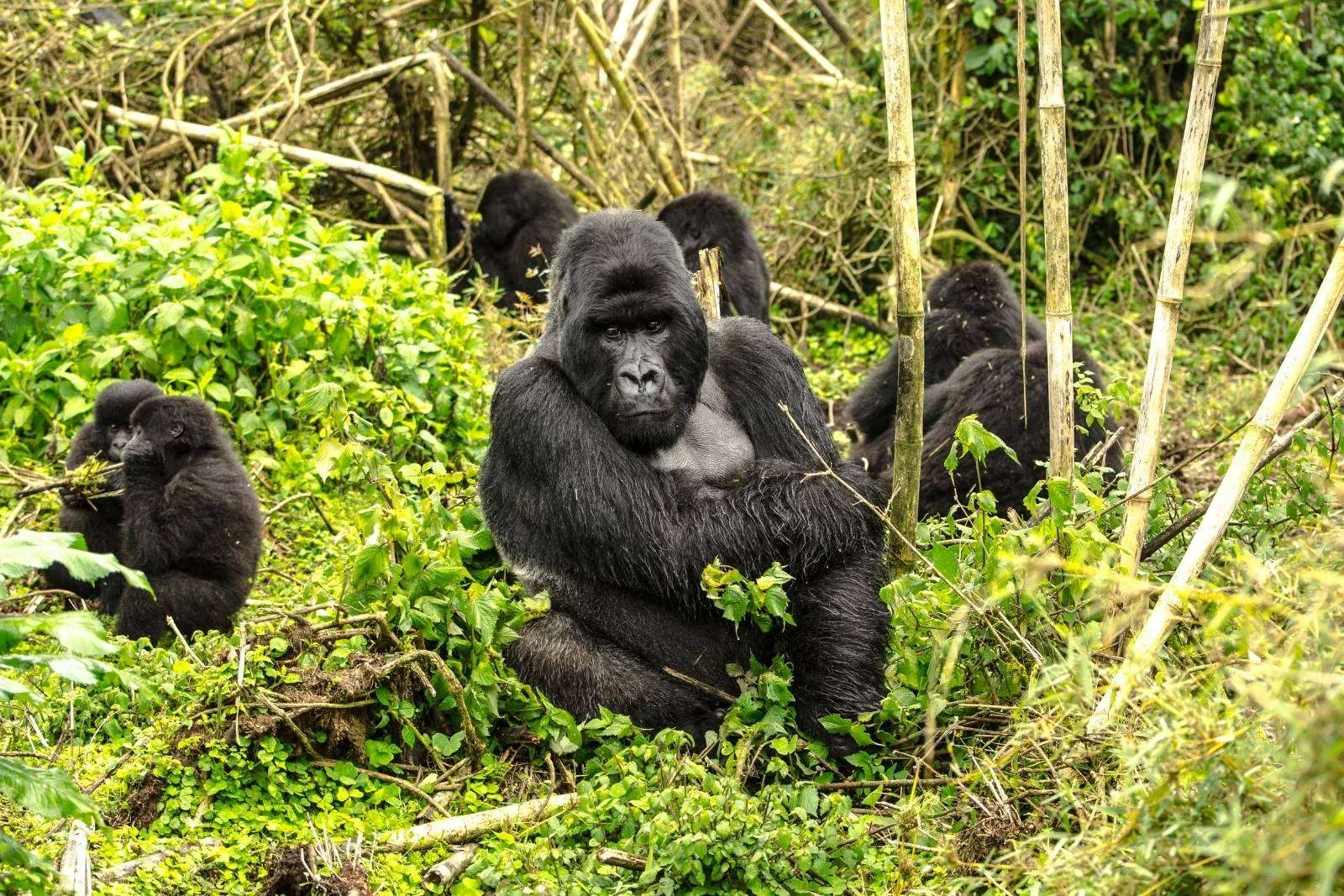
Volcanoes National Park protects several habituated gorilla families, each with distinct personalities, hierarchies, and histories. Focusing on just gorillas allows visitors to appreciate these nuances rather than seeing gorillas as interchangeable subjects.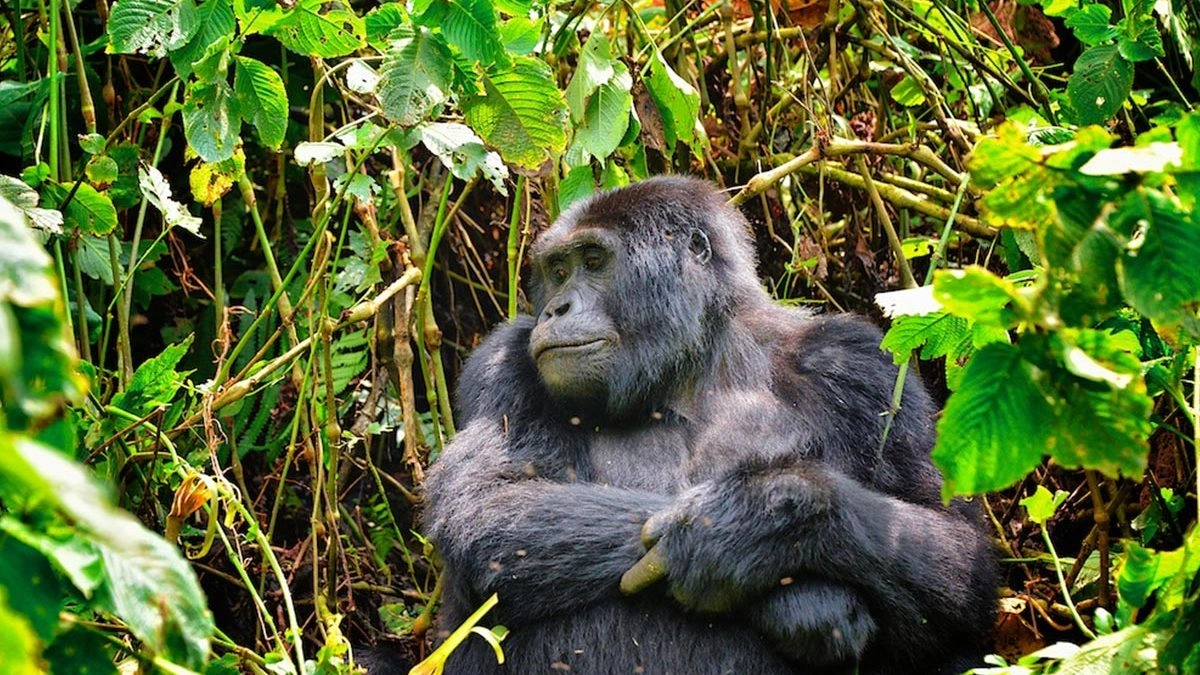
The Philosophy Behind “Just Gorillas”
Just gorillas in Volcanoes National Park reflects a broader shift in modern travel philosophy. As travelers become more experienced and conscious, there is growing demand for depth over breadth. Rather than seeing many animals briefly, travelers increasingly seek to understand one species deeply.
This approach aligns perfectly with gorilla trekking. Encounters are limited to one hour per visit, group sizes are restricted, and trekking permits are capped daily. These limitations are not obstacles but enhancements, creating exclusivity, focus, and respect.
By choosing just gorillas, travelers engage in a form of slow wildlife travel, where anticipation, effort, and mindfulness replace rush and accumulation.
Gorilla Trekking as the Core Experience
The essence of just gorillas in Volcanoes National Park is the gorilla trekking experience itself. Trekking begins early in the morning with a briefing at park headquarters, where visitors are assigned to specific gorilla families based on fitness levels and gorilla location.
Accompanied by expert rangers and trackers, visitors hike into dense rainforest, following subtle signs such as broken branches, footprints, and vocalizations. The trek can take anywhere from one to several hours, depending on where the gorillas nested the previous night.
The moment of encounter is often sudden and quiet. One step through foliage, and the forest opens to reveal gorillas feeding, resting, grooming, or playing. For one hour, visitors share space with these animals, observing their lives at close but controlled distance.
This hour defines the power of just gorillas in Volcanoes National Park. It is not rushed, staged, or predictable. It unfolds naturally, shaped by gorilla behavior rather than human expectations.
Emotional Depth and Human Connection
What distinguishes just gorillas in Volcanoes National Park from any other wildlife experience is its emotional intensity. Gorillas do not perform for visitors. They exist fully in their own world, indifferent to observation yet aware of presence.
Eye contact with a silverback, the gentle care of a mother toward her infant, or the playful curiosity of juveniles creates an emotional response that is often described as humbling or transformative. Many visitors struggle to articulate the experience because it operates on a deeply personal level.
This emotional depth is amplified by the decision to focus on just gorillas. Without the distraction of game drives, species checklists, or competing activities, visitors remain mentally present, allowing the experience to resonate fully.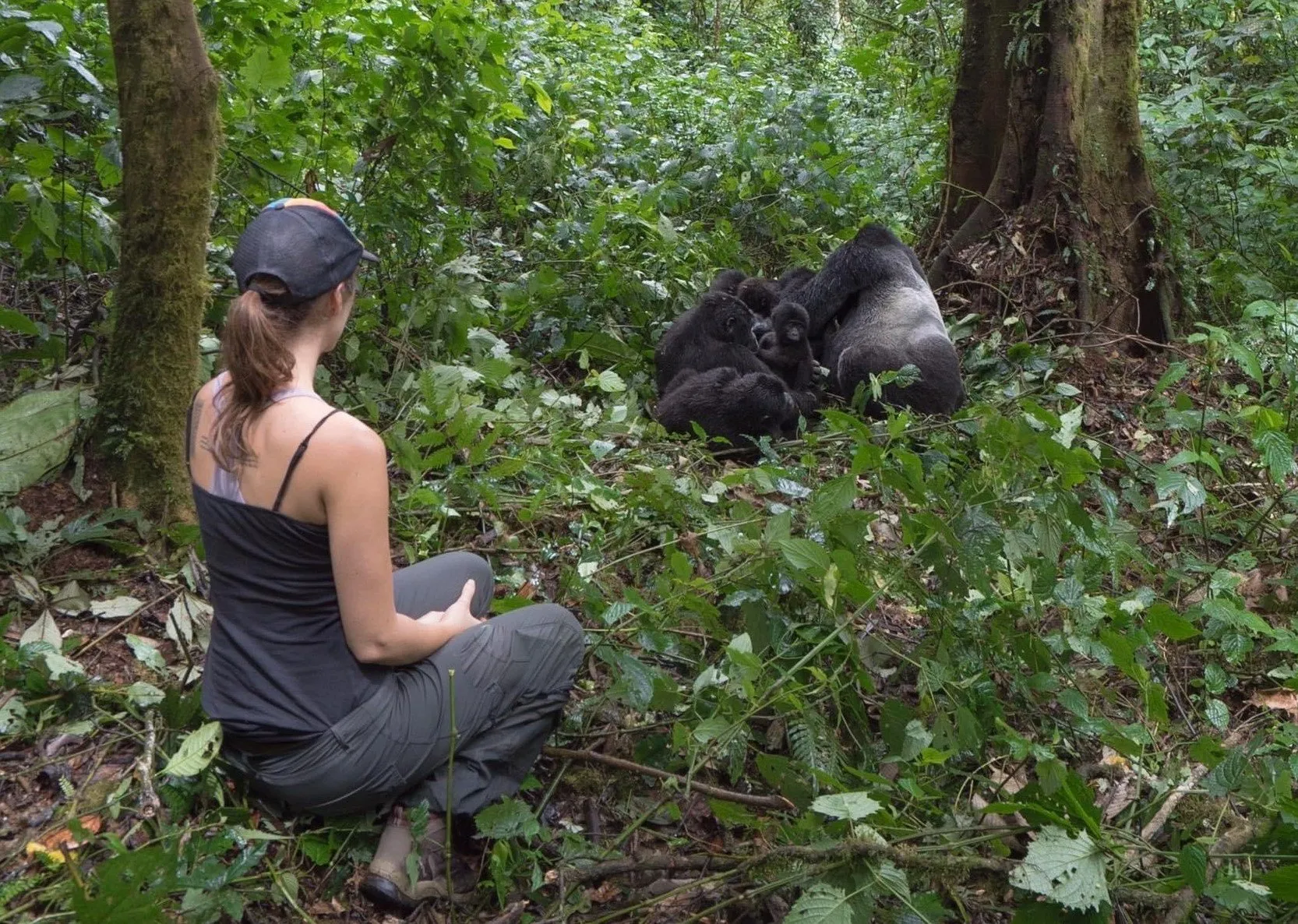
Conservation at the Center of the Experience
Just gorillas in Volcanoes National Park cannot be separated from conservation. Gorilla trekking exists only because of decades of protection, scientific research, and community involvement. Rwanda has become a global leader in conservation-based tourism by demonstrating that wildlife protection and economic development can coexist.
Permit fees contribute directly to park management, veterinary care, and community projects. Local communities receive tangible benefits from gorilla tourism, including employment, infrastructure, and healthcare support. This revenue-sharing model reduces poaching and fosters local stewardship of gorilla habitat.
By choosing just gorillas, travelers actively support one of the most successful conservation stories in modern history.
Health and Safety Protocols Focused on Gorillas
Another defining aspect of just gorillas in Volcanoes National Park is the strict health and safety framework designed primarily to protect gorillas. Because gorillas are highly susceptible to human diseases, trekking rules are enforced with exceptional rigor.
Visitors must be healthy on the day of trekking. Distancing rules, hygiene protocols, and behavioral guidelines are mandatory. These measures protect gorillas from illness and stress, ensuring that tourism does not compromise their survival.
From a visitor perspective, these rules also enhance safety by creating calm, controlled encounters guided by professionals trained in gorilla behavior and forest navigation.
The Landscape That Shapes the Experience
Volcanoes National Park’s landscape plays a subtle yet crucial role in just gorillas in Volcanoes National Park. The park is defined by mist-covered volcanoes, bamboo forests, and montane rainforest. This environment creates a sense of enclosure and mystery absent from open savannahs.
The forest absorbs sound, filters light, and limits visibility, heightening sensory awareness. Every step feels intentional, every movement meaningful. This atmosphere reinforces the feeling that gorilla trekking is not a spectacle to be consumed but a world to be entered respectfully.
The volcanic soil and high-altitude climate support lush vegetation, which sustains gorilla populations and shapes their daily routines.
Accommodation Designed Around Gorilla Experiences
Just gorillas in Volcanoes National Park extends beyond the trek itself into accommodation choices. Lodges near the park are designed to complement the gorilla experience rather than compete with it.
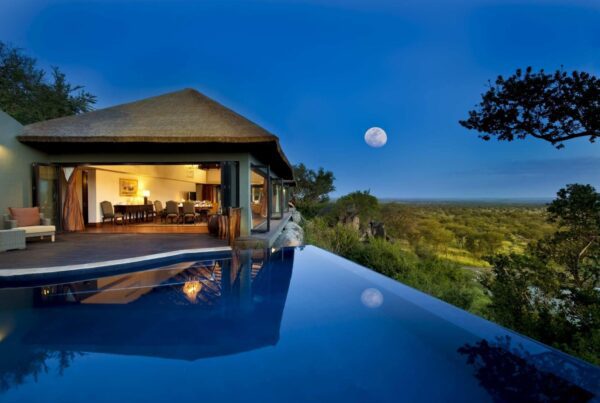
Many lodges emphasize tranquility, privacy, and immersion in nature. Design elements often incorporate local materials, conservation principles, and panoramic views of the Virunga volcanoes. The pace of lodge life mirrors the rhythm of the forest, encouraging rest, reflection, and anticipation.
By focusing on just gorillas, accommodations avoid overprogramming guests, allowing the trek to remain the emotional centerpiece of the journey.
Photography and Storytelling with Purpose
Photography in the context of just gorillas in Volcanoes National Park is guided by ethics and restraint. Flash photography is prohibited, and photographers are encouraged to prioritize behavior over composition.
This approach shifts photography from trophy-taking to storytelling. Images captured during gorilla trekking often reflect emotion, interaction, and environment rather than dramatic action. These photographs serve as reminders of connection rather than conquest.
Focusing on just gorillas allows photographers to develop patience and sensitivity, resulting in more meaningful visual narratives.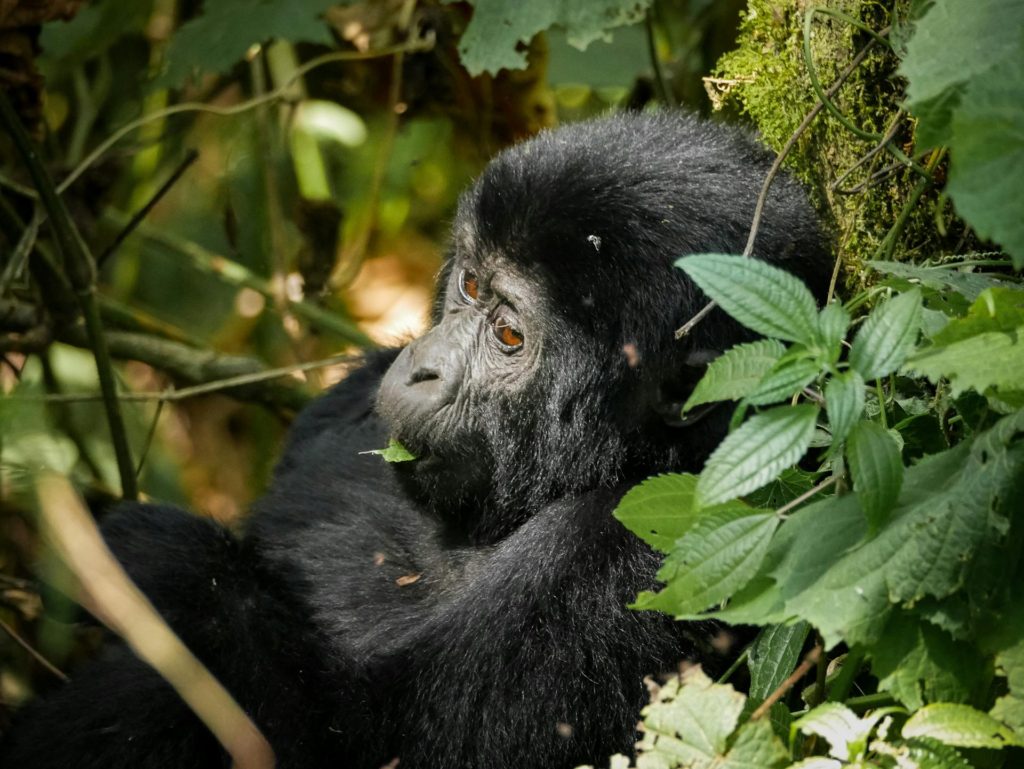
Comparing Gorilla-Only Travel to Traditional Safaris
Just gorillas in Volcanoes National Park contrasts sharply with traditional safari experiences. Where savannah safaris emphasize distance, vehicles, and multiple species, gorilla trekking emphasizes proximity, walking, and singular focus.
Neither approach is superior, but they serve different traveler intentions. Gorilla-only travel appeals to those seeking introspection, conservation engagement, and emotional depth rather than volume of sightings.
Many experienced safari travelers describe gorilla trekking as the most memorable wildlife encounter of their lives, precisely because of its focused and intimate nature.
Cultural Context and Human Stories
Just gorillas in Volcanoes National Park is also shaped by human history. The park is famously associated with Dian Fossey, whose research and activism brought global attention to mountain gorillas and their plight.
Today, local communities continue this legacy through conservation work, guiding, and hospitality. Interactions with rangers and staff often reveal personal stories of transformation through conservation employment.
This human dimension adds depth to the gorilla experience, reminding visitors that conservation is a shared effort with real social impact.
Who Should Choose Just Gorillas in Volcanoes National Park
Just gorillas in Volcanoes National Park is ideal for travelers who value meaning over variety, depth over speed, and ethics over excess. It appeals to couples, solo travelers, photographers, conservation-minded visitors, and those seeking a profound connection with nature.
It is also well-suited to travelers with limited time who want one extraordinary experience rather than many brief ones. The accessibility of Volcanoes National Park from Kigali makes it possible to have a world-class wildlife encounter within a short itinerary.
Final Reflections on Just Gorillas in Volcanoes National Park
Just gorillas in Volcanoes National Park represents one of the purest expressions of modern wildlife travel. It strips away distraction and focuses entirely on one of Earth’s most endangered and extraordinary species.
In doing so, it delivers not just sightings, but understanding. Not just memories, but perspective. The experience lingers long after departure, shaping how travelers think about nature, conservation, and humanity’s place within the natural world.
For those willing to slow down, focus deeply, and engage respectfully, just gorillas in Volcanoes National Park offers something rare and enduring: a genuine encounter with life at its most vulnerable and most powerful.