Amboseli National Park
Amboseli National Park: Safari Destinations Africa
Few places in Africa capture the imagination quite like Amboseli National Park. Set against the breathtaking backdrop of Mount Kilimanjaro, Africa’s highest mountain, Amboseli is one of the most visually striking and emotionally powerful safari destinations on the continent. Known worldwide for its large herds of free-roaming elephants, sweeping open plains, shimmering wetlands, and dramatic skies, Amboseli offers a safari experience that is both intimate and iconic.
Located in southern Kenya near the Tanzanian border, Amboseli National Park is a cornerstone of safari destinations Africa, celebrated by photographers, wildlife enthusiasts, conservationists, and first-time safari travelers alike. The park’s unique ecosystem, shaped by underground water flowing from Kilimanjaro’s melting glaciers, sustains life in an otherwise dry landscape and creates an extraordinary concentration of wildlife.
This comprehensive article explores Amboseli National Park in depth, covering its location, history, landscapes, wildlife, safari experiences, cultural significance, accommodation options, best time to visit, conservation importance, and why it remains one of Africa’s most cherished safari destinations.
Where Is Amboseli National Park Located?
Amboseli National Park is situated in Kajiado County, in southern Kenya, approximately 240 kilometers southeast of Nairobi. The park lies directly along the Kenya–Tanzania border, with uninterrupted views of Mount Kilimanjaro, which rises majestically just across the border in Tanzania.
Covering an area of about 392 square kilometers, Amboseli is relatively small compared to other African parks, but its compact size allows for excellent wildlife viewing and close encounters with animals.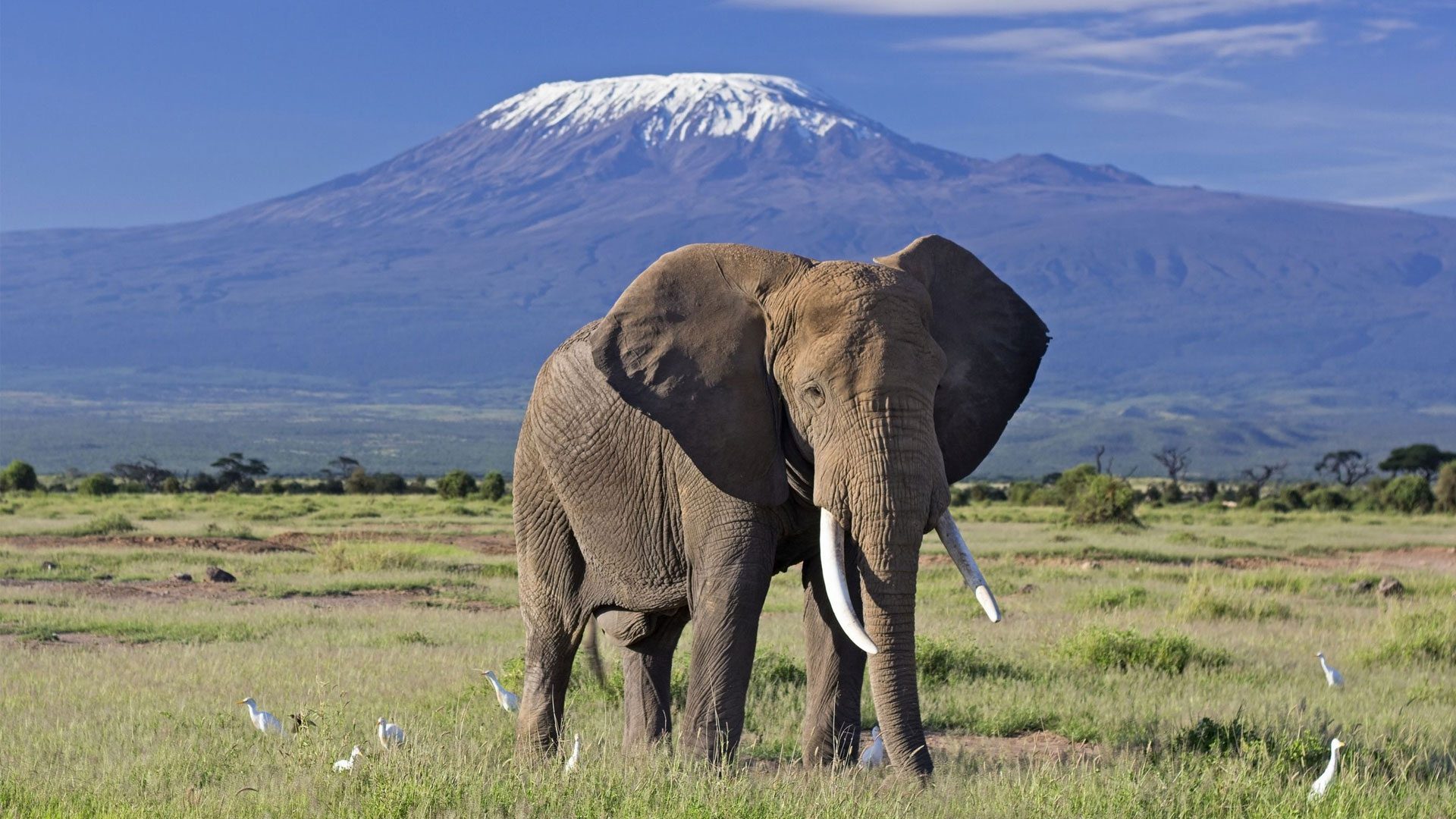
A Brief History of Amboseli National Park
Early Inhabitants and Protection
The Amboseli ecosystem has long been home to the Maasai people, whose semi-nomadic pastoral lifestyle coexisted with wildlife for centuries. The name Amboseli comes from a Maasai word meaning “salty dust”, reflecting the region’s dry, alkaline soils.
Amboseli was first designated a national reserve in 1948 to protect its wildlife and water sources. In 1974, it was officially gazetted as a national park, bringing it under Kenya Wildlife Service management.
Scientific and Global Recognition
Amboseli gained international prominence through long-term elephant research projects, most notably the Amboseli Elephant Research Project, one of the longest-running wildlife studies in the world. This research has helped shape global elephant conservation policies.
Landscapes and Ecosystems of Amboseli National Park
Amboseli’s landscapes are among the most diverse and visually dramatic in East Africa.
Open Plains
Vast grasslands dominate much of the park, providing classic safari scenery and ideal conditions for observing wildlife behavior.
Swamps and Wetlands
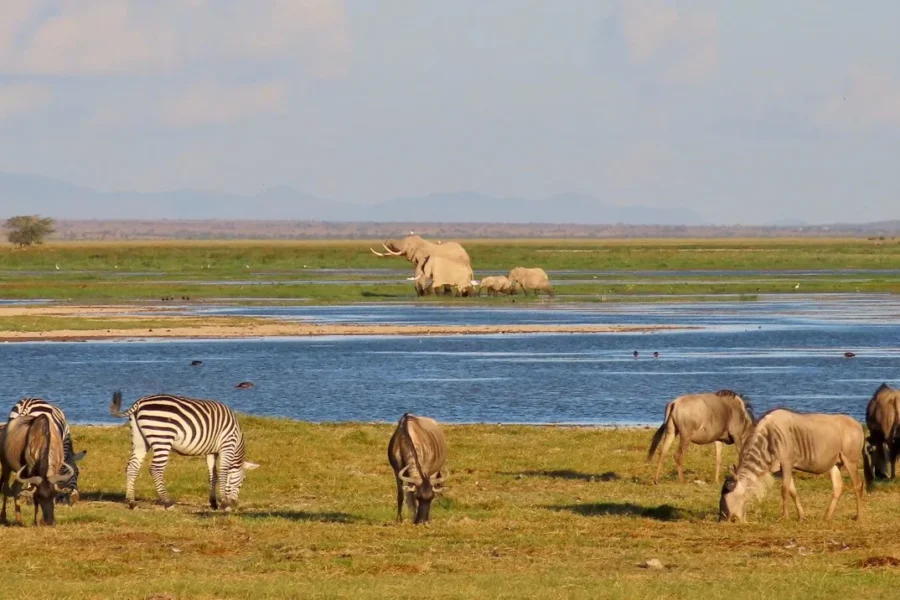
The lifeblood of Amboseli is its permanent swamps, fed by underground rivers originating from Mount Kilimanjaro’s snowmelt. These wetlands attract wildlife year-round, even during severe droughts.
Dry Lake Beds
Seasonal lake beds, including the remains of Lake Amboseli, create stark, open landscapes that contrast beautifully with the green swamps.
Acacia Woodlands
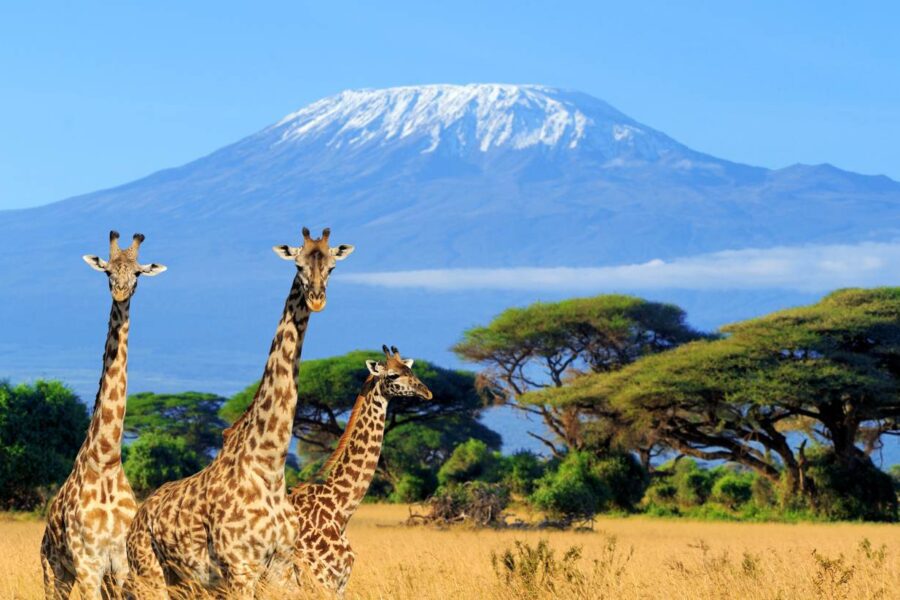
Scattered acacia trees provide shade, nesting sites for birds, and shelter for animals such as giraffes and leopards.
Mount Kilimanjaro: The Iconic Backdrop
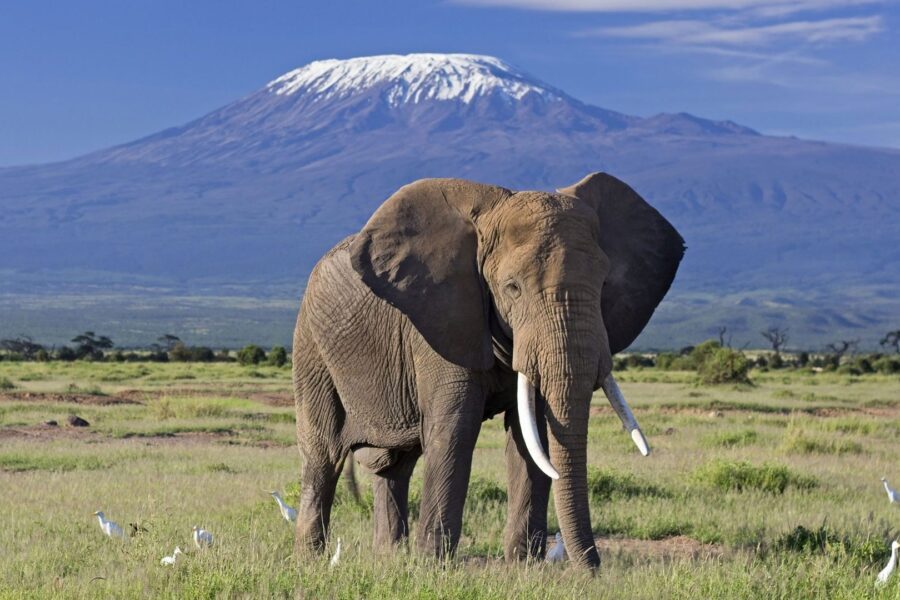
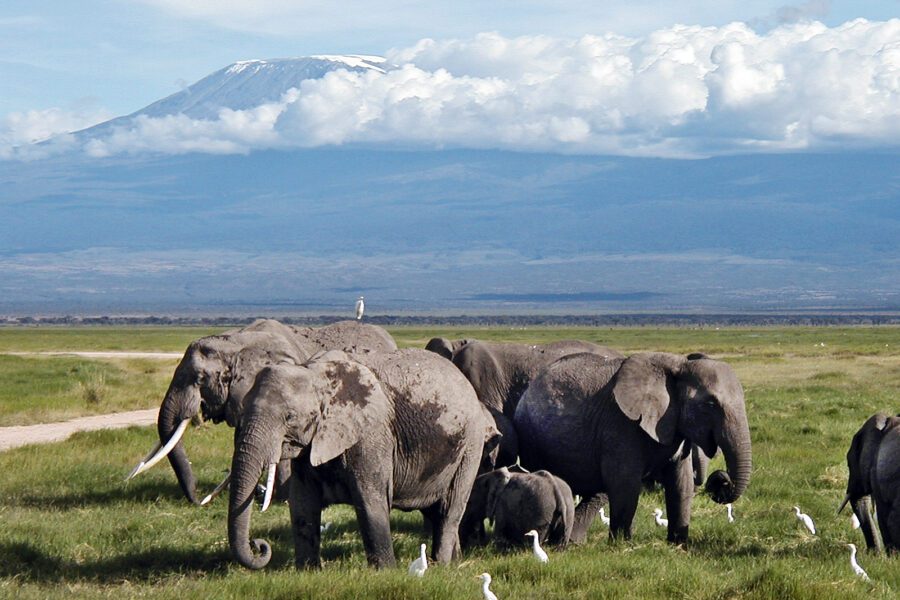
No feature defines Amboseli more than Mount Kilimanjaro. Rising to 5,895 meters, Kilimanjaro dominates the southern horizon and provides one of the most photographed safari scenes in Africa.
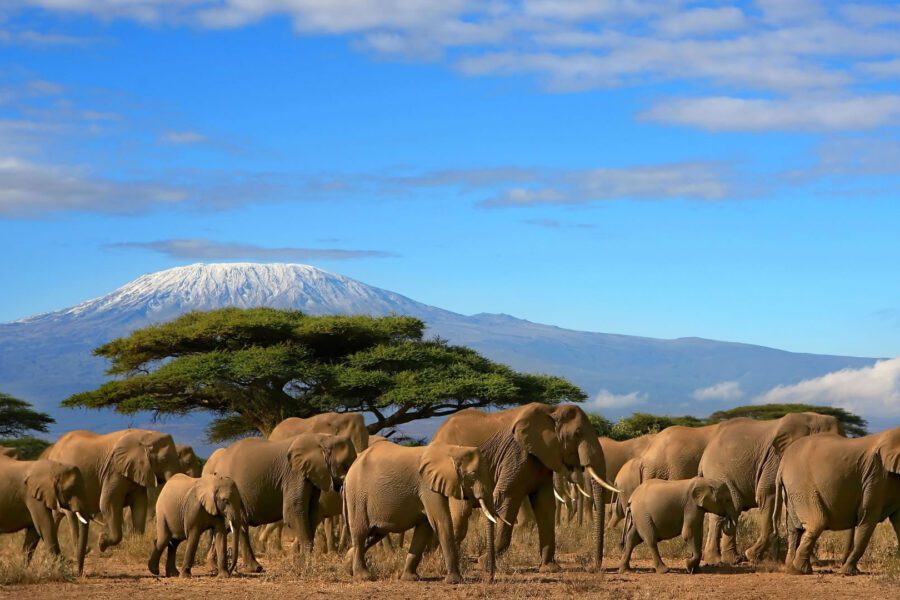
Early mornings often reveal Kilimanjaro’s snow-capped peak glowing in the soft light, while elephants and giraffes move across the plains below. This combination of wildlife and dramatic scenery is unique to Amboseli and a major reason for its global appeal.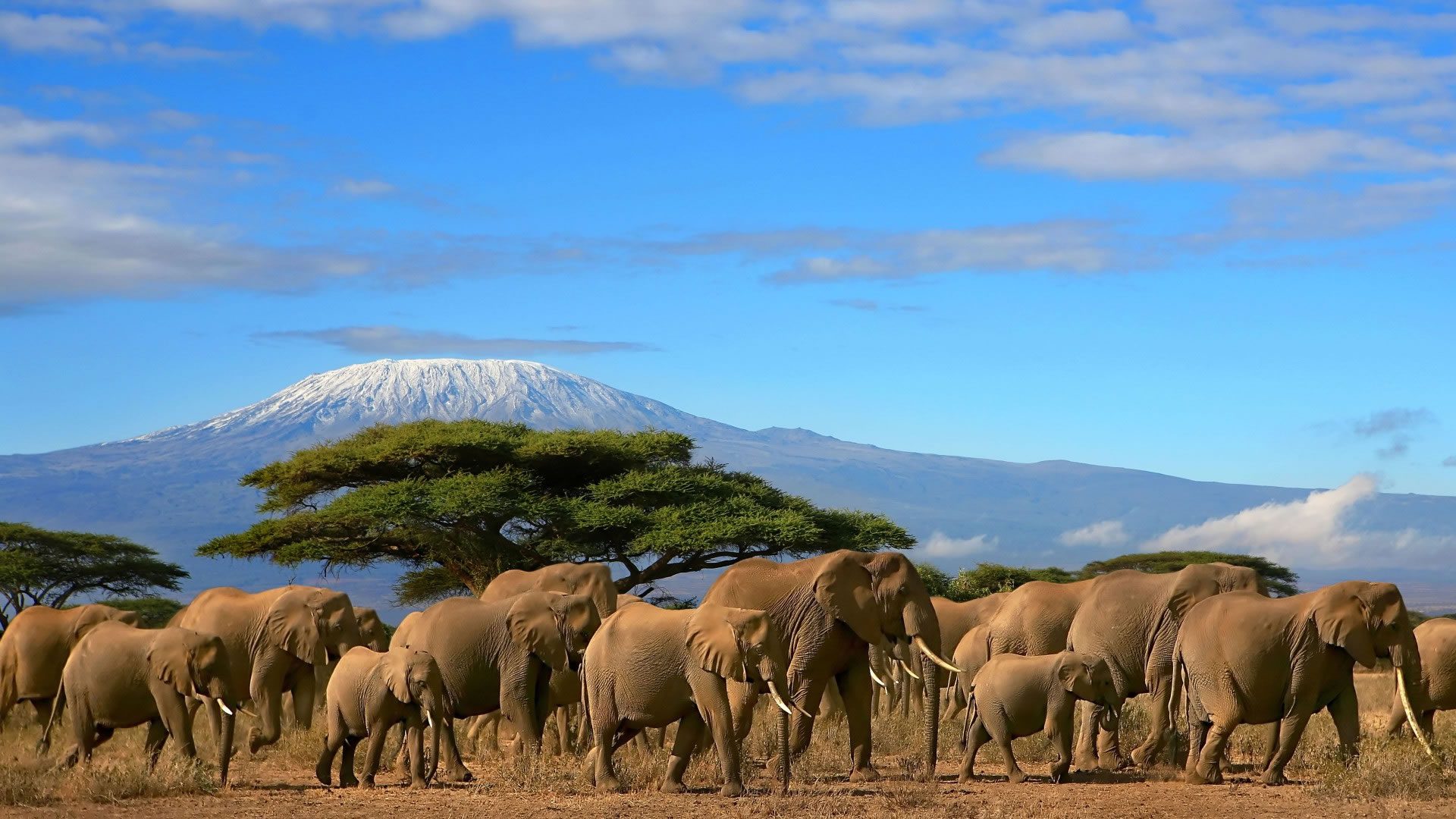
Wildlife of Amboseli National Park
Elephants: The Giants of Amboseli
Amboseli is world-famous for its large elephant herds, many of which consist of individuals with exceptionally large tusks. These elephants are among the most studied in Africa and are known for their relaxed behavior around vehicles, allowing for close observation.
Other Large Mammals
Amboseli supports a wide variety of wildlife, including:
-
African buffalo
-
Plains zebra
-
Blue wildebeest
-
Maasai giraffe
-
Common eland
-
Warthog
Predators
Predators are present but more elusive, including:
-
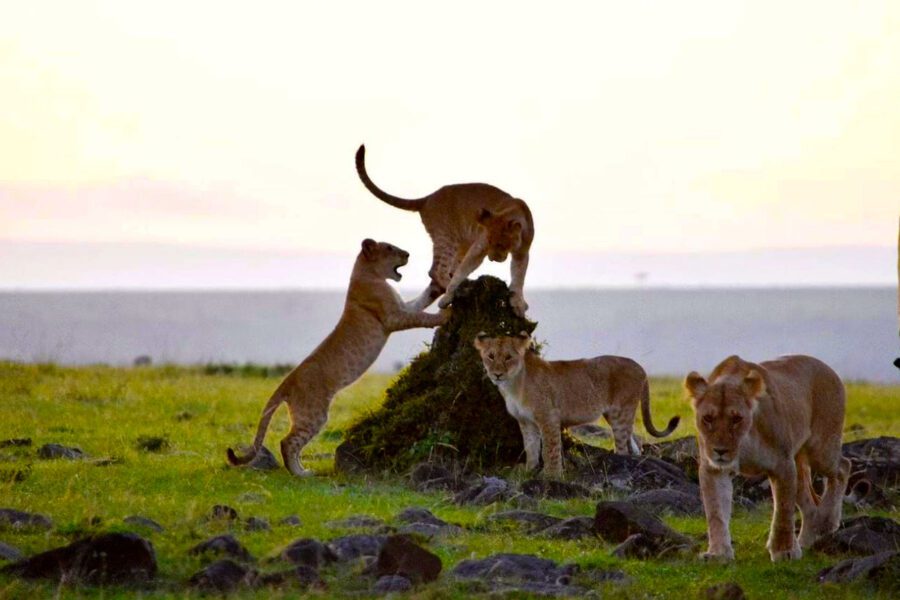
Lions
-
Spotted hyenas
-
Cheetahs
-
Jackals
Leopards are present but rarely seen due to the park’s open terrain.
Birdlife in Amboseli National Park
With over 400 recorded bird species, Amboseli is an excellent destination for birdwatching.
Notable Bird Species
-
African fish eagle
-
Grey crowned crane
-
Pelicans and flamingos (seasonal)
-
Secretary bird
-
Kori bustard
-
Kingfishers and herons
The swamps are particularly rich birding areas, attracting both resident and migratory species.
Safari Experiences in Amboseli National Park
Game Drives
Game drives are the primary safari activity, offering excellent opportunities to observe elephants, herbivores, and predators against the backdrop of Kilimanjaro.
Guided Nature Walks
In designated areas and nearby conservancies, guided walks provide insights into the ecosystem, plants, tracks, and smaller wildlife.
Cultural Encounters
Visits to Maasai villages allow travelers to learn about traditional customs, dances, beadwork, and the close relationship between the Maasai people and the land.
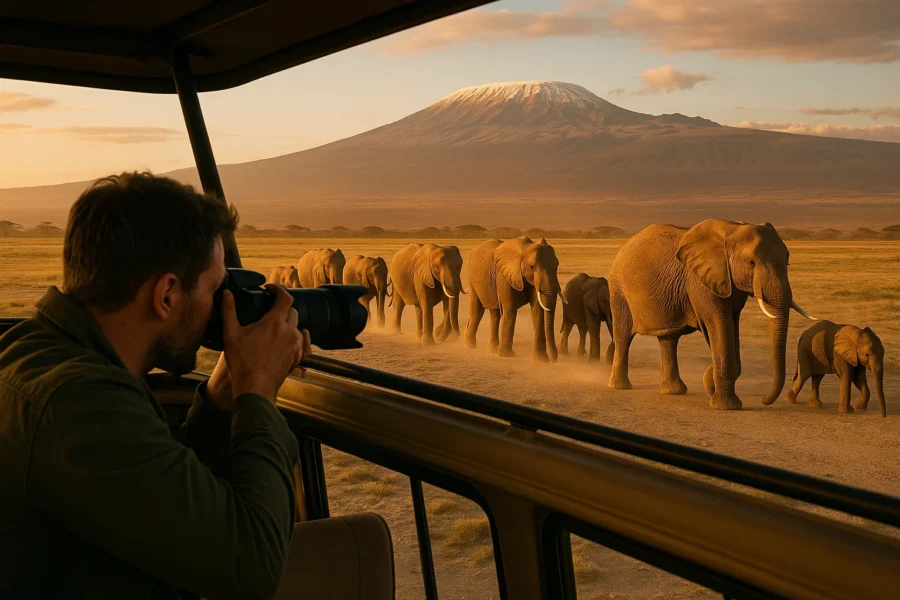
Photography Safaris
Amboseli is considered one of the best photographic safari destinations in Africa, thanks to its open landscapes, abundant wildlife, and dramatic lighting.
Accommodation in Amboseli National Park
Luxury Lodges
Luxury lodges offer:
-
Spacious rooms or tented suites
-
Panoramic views of Mount Kilimanjaro
-
Fine dining and spa services
-
Expert-guided safaris
Mid-Range Camps
Mid-range tented camps provide comfortable accommodation with authentic safari ambiance and excellent value.
Budget Options
Budget lodges and campsites are available for travelers seeking affordable safari experiences.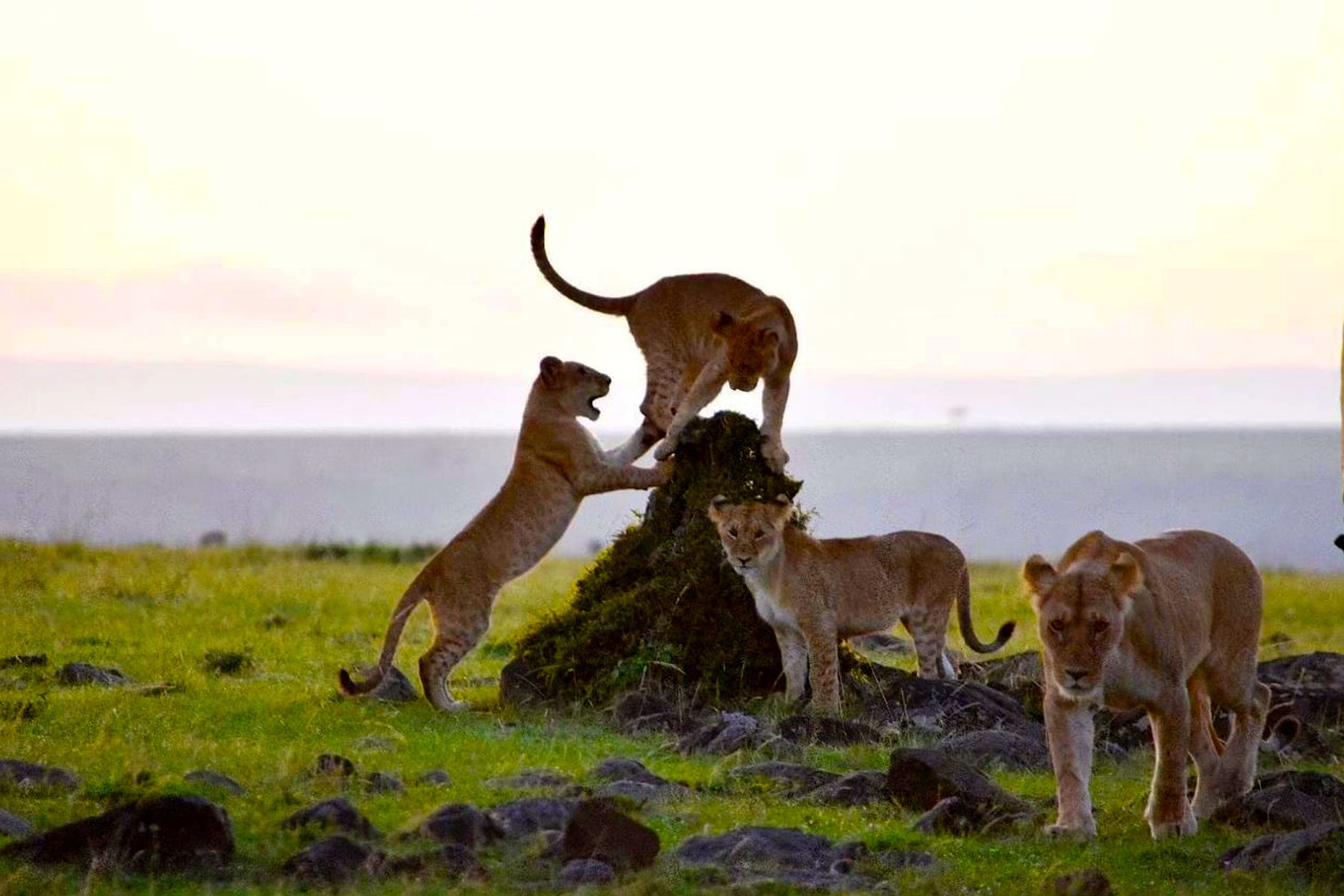
Best Time to Visit Amboseli National Park
Amboseli is a year-round safari destination, but conditions vary by season.
Dry Seasons (June to October & January to February)
-
Best wildlife viewing
-
Clear views of Kilimanjaro
-
Animals congregate around swamps
Wet Seasons (March to May & November)
-
Lush landscapes
-
Excellent birding
-
Occasional afternoon rains
The best overall time to visit is during the dry seasons, especially for photography.
Conservation and Community Involvement
Elephant Conservation
Amboseli plays a crucial role in elephant conservation, serving as a refuge for elephants that migrate across the Kenya–Tanzania border.
Human–Wildlife Coexistence
Community-based conservation initiatives work with Maasai landowners to protect wildlife corridors while supporting livelihoods through tourism revenue.
Amboseli National Park in the Context of Safari Destinations Africa
Among Africa’s safari destinations, Amboseli stands out for:
-
Iconic Mount Kilimanjaro scenery
-
Unparalleled elephant encounters
-
Accessible location
-
Strong conservation legacy
-
Cultural richness
It complements other famous parks such as the Masai Mara, Serengeti, Ngorongoro Crater, and Kruger National Park.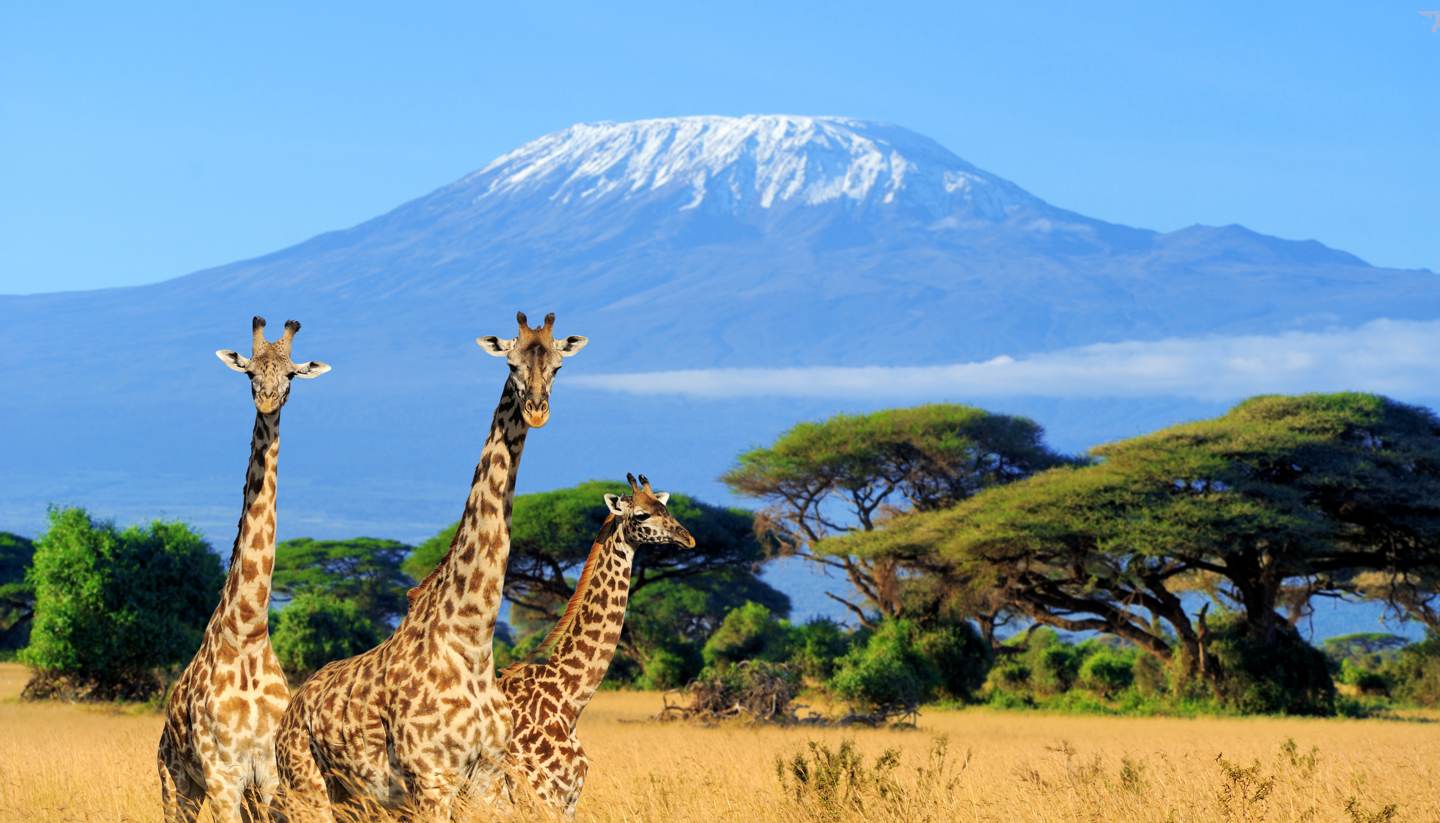
Who Should Visit Amboseli National Park?
Amboseli is ideal for:
-
First-time safari travelers
-
Wildlife photographers
-
Elephant enthusiasts
-
Honeymooners and couples
-
Families
-
Cultural travelers
Why Amboseli National Park Is a Jewel of Safari Destinations Africa
Amboseli National Park is a place of powerful contrasts—dry plains nourished by hidden waters, massive elephants framed by Africa’s highest mountain, and ancient cultures thriving alongside modern conservation. Its beauty lies not only in its scenery but in the intimate wildlife encounters and sense of timelessness it offers.
As one of the most recognizable and beloved safari destinations in Africa, Amboseli National Park delivers an experience that is both deeply moving and endlessly inspiring. For travelers seeking the essence of the African safari, Amboseli remains an unforgettable destination.