
Bwindi Impenetrable Forest National Park
Bwindi Impenetrable Forest National Park : Primates destination in africa
Bwindi Impenetrable Forest National Park is one of Africa’s most extraordinary primate destinations and a globally celebrated center for mountain gorilla conservation. Located in southwestern Uganda, this ancient rainforest is a UNESCO World Heritage Site and one of the most biologically diverse forests on the continent. Bwindi is best known as home to nearly half of the world’s remaining mountain gorillas, making it one of the most important wildlife conservation areas in Africa and a bucket-list destination for travelers seeking meaningful primate encounters.
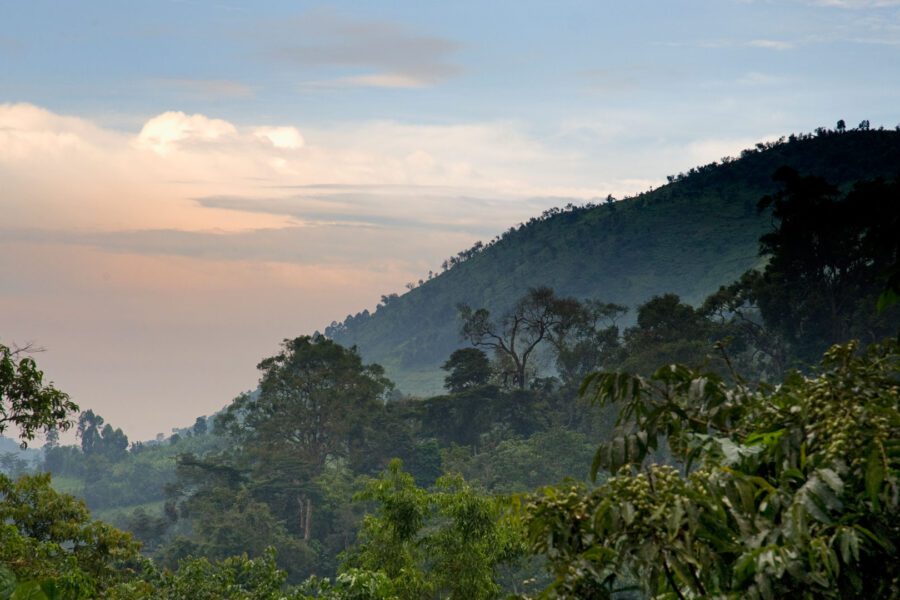
Covering approximately 331 square kilometers, Bwindi’s dense vegetation, steep ridges, and deep valleys form a dramatic landscape that has remained largely untouched for thousands of years. The forest’s impenetrable nature has preserved its rich biodiversity, supporting a remarkable variety of primates, mammals, birds, butterflies, and plant species. For visitors, Bwindi offers a rare opportunity to trek through ancient rainforest and come face to face with endangered mountain gorillas in their natural habitat.
This comprehensive article explores Bwindi Impenetrable Forest National Park in detail, including its location, history, landscapes, ecosystems, primate diversity, gorilla trekking experiences, conservation significance, cultural connections, activities, best time to visit, accommodation options, and practical travel information. Together, these elements explain why Bwindi stands as one of Africa’s premier primates destinations.
Location and Geographic Setting
Bwindi Impenetrable Forest National Park is situated in southwestern Uganda, along the edge of the Albertine Rift Valley, near the borders with Rwanda and the Democratic Republic of Congo. The park lies approximately 530 kilometers from Kampala and is commonly accessed via road travel or domestic flights to nearby airstrips.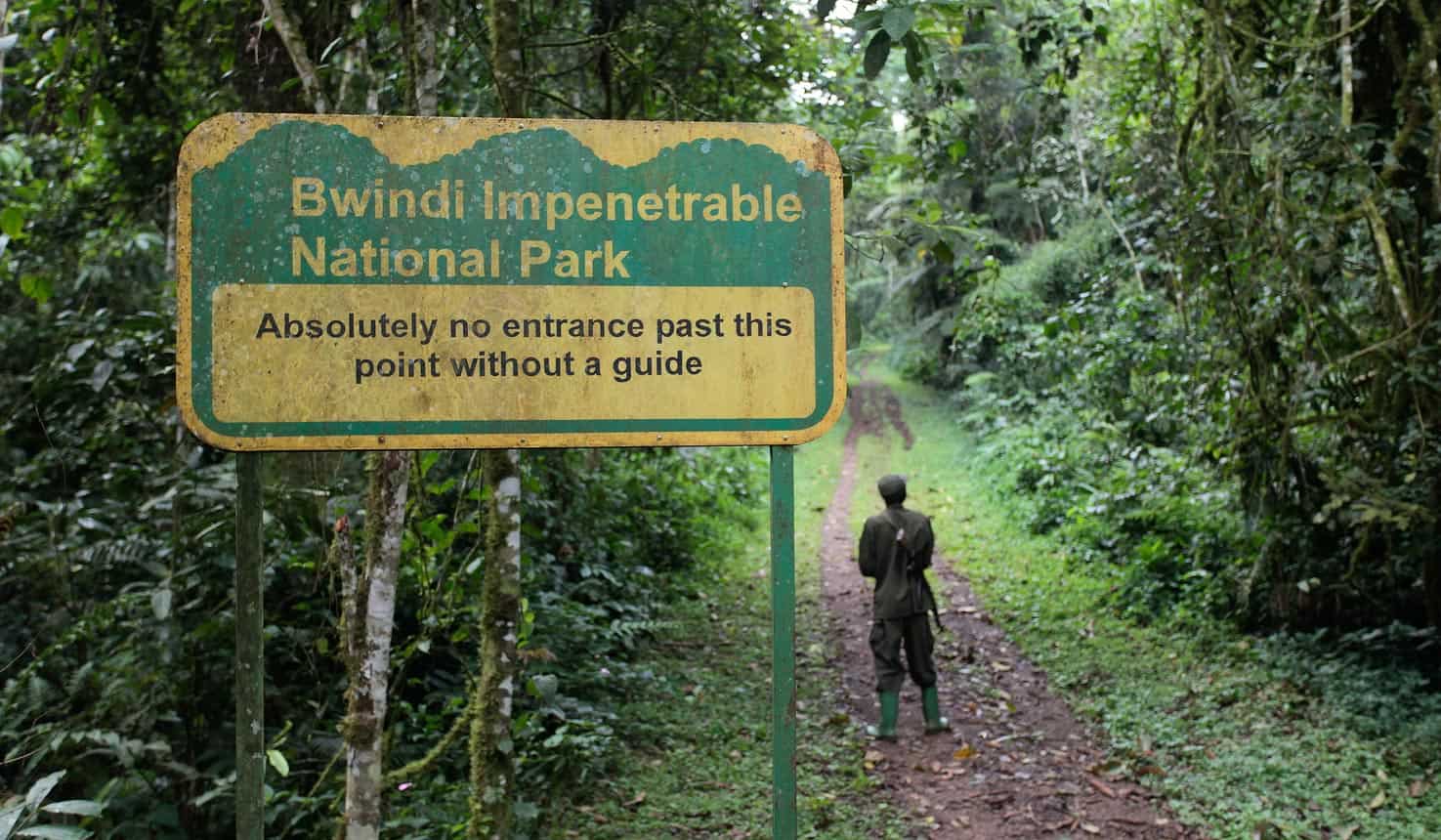
The park’s elevation ranges from about 1,160 to 2,607 meters above sea level, creating a cool and misty climate that supports montane and lowland forest ecosystems. Its rugged terrain is characterized by narrow valleys, sharp ridges, and fast-flowing streams, contributing to both its ecological richness and the physical challenge of trekking within the park.
Bwindi is divided into four main tourism sectors: Buhoma, Ruhija, Rushaga, and Nkuringo. Each sector offers unique gorilla trekking experiences and access to different gorilla families, while also supporting surrounding communities.
History and Establishment
Bwindi Forest is estimated to be over 25,000 years old, making it one of Africa’s most ancient rainforests. Historically, the forest served as a refuge for wildlife during climatic changes that affected much of East Africa. Local communities have long depended on the forest for cultural, medicinal, and spiritual purposes.
In 1991, Bwindi was gazetted as a national park to protect its exceptional biodiversity, particularly the endangered mountain gorillas. In 1994, it was designated a UNESCO World Heritage Site in recognition of its outstanding universal value.
Today, Bwindi is managed by the Uganda Wildlife Authority (UWA), which works in collaboration with conservation organizations, researchers, and local communities to balance tourism, research, and conservation.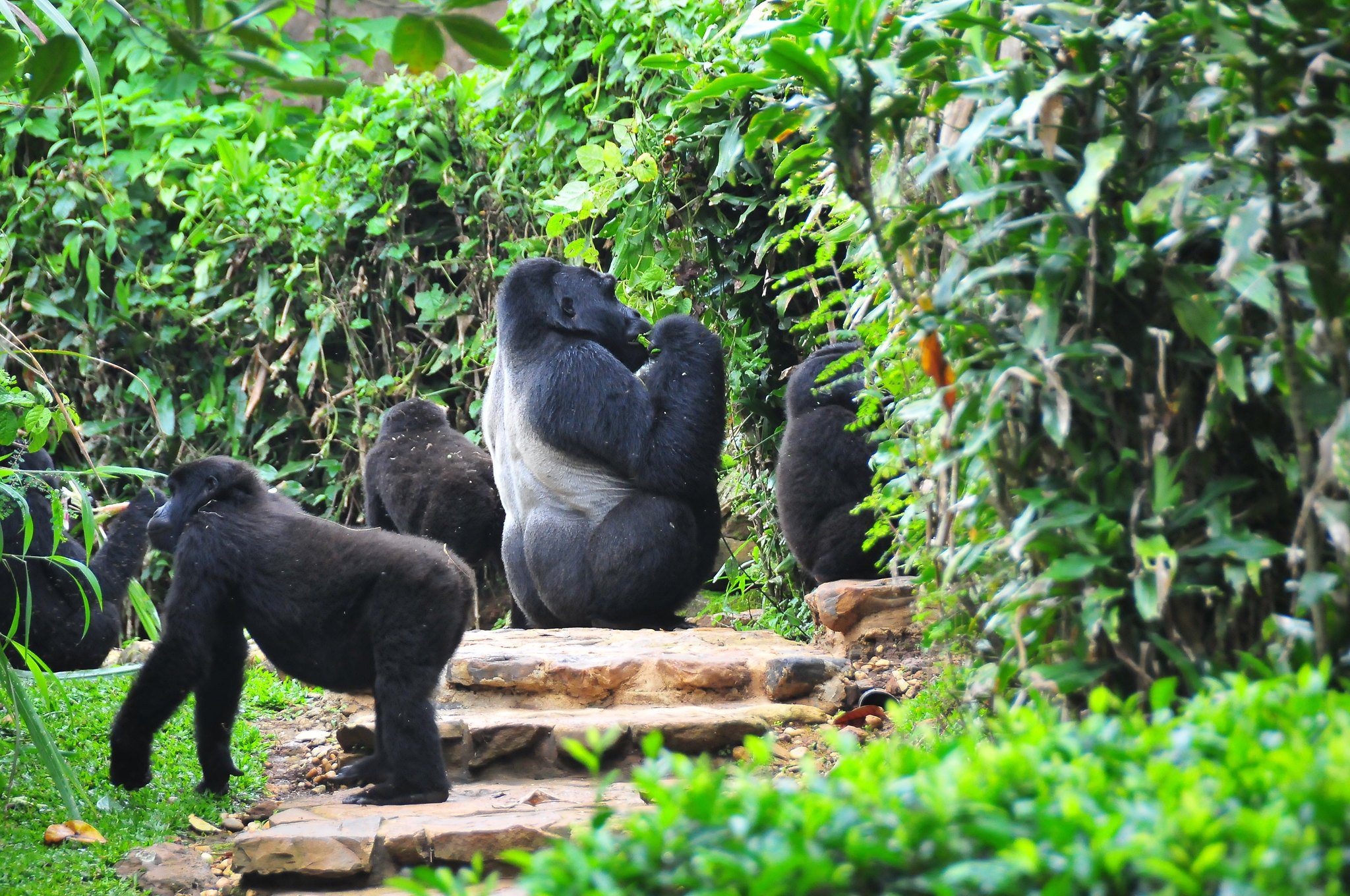
Landscape and Ecosystems
Bwindi Impenetrable Forest National Park contains a remarkable range of ecosystems compressed into a relatively small area.
Montane and Lowland Forest
The park’s forests range from lowland evergreen forest to montane forest at higher elevations. Towering trees, thick undergrowth, vines, and moss-covered branches create a lush and complex environment ideal for arboreal primates and forest-dwelling species.
Bamboo Zones
Certain areas of Bwindi feature bamboo forests, which provide seasonal food sources for mountain gorillas and other wildlife. These zones are particularly important during specific times of the year when bamboo shoots are abundant.
Rivers and Valleys
Numerous rivers and streams flow through Bwindi, feeding into major river systems in the region. These waterways support amphibians, insects, and riparian vegetation, contributing to the forest’s overall biodiversity.
Primate Diversity in Bwindi Impenetrable Forest
Bwindi is one of Africa’s richest forests in terms of primate diversity, hosting at least 10 primate species.
Mountain Gorillas
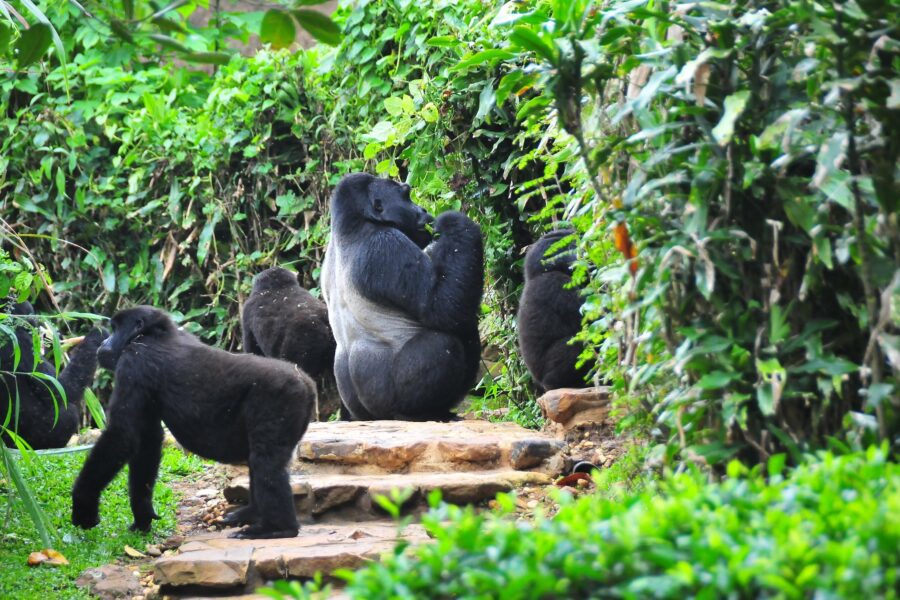
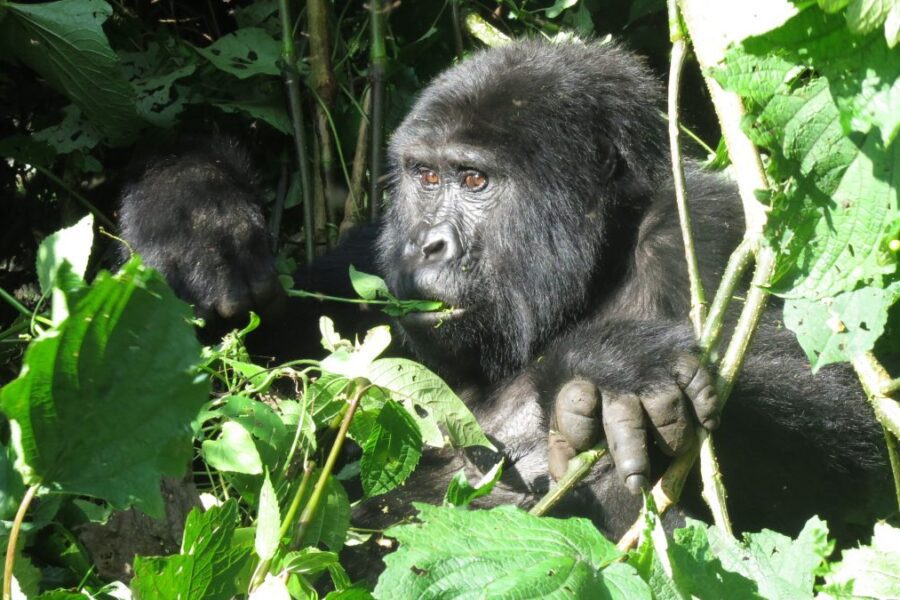
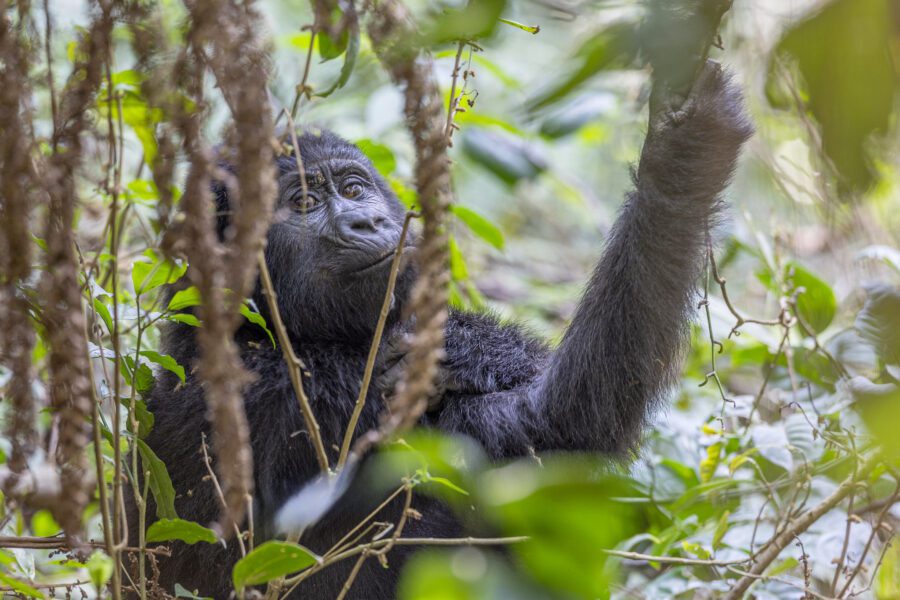
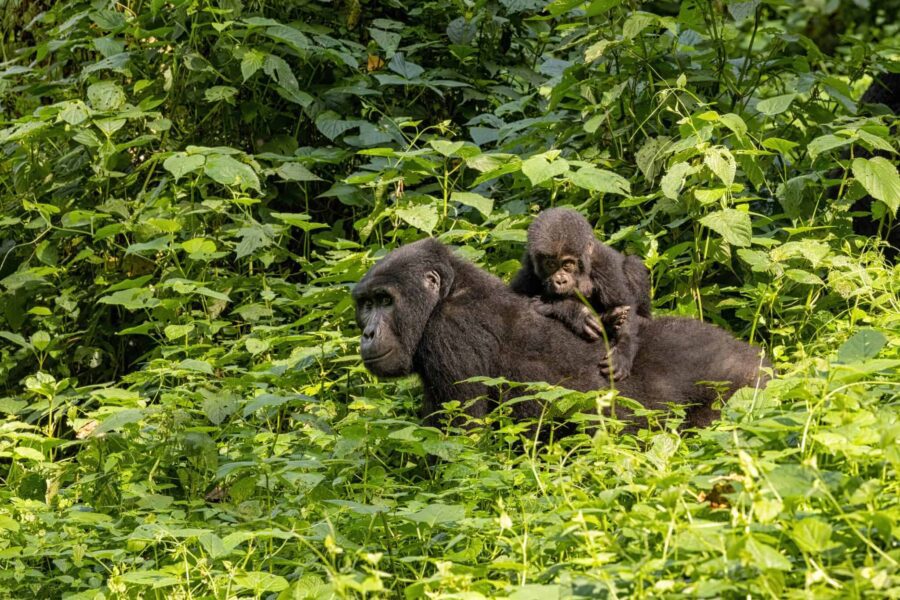
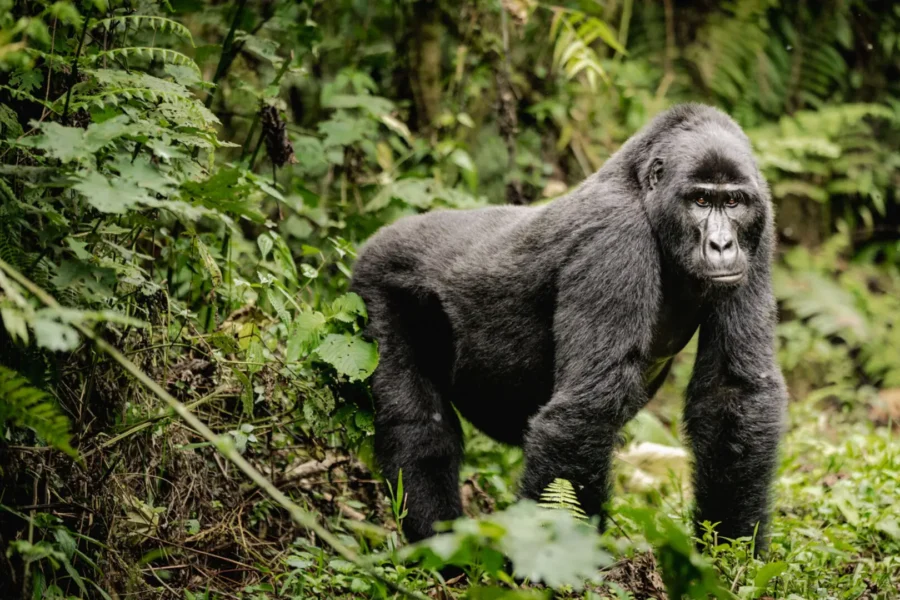
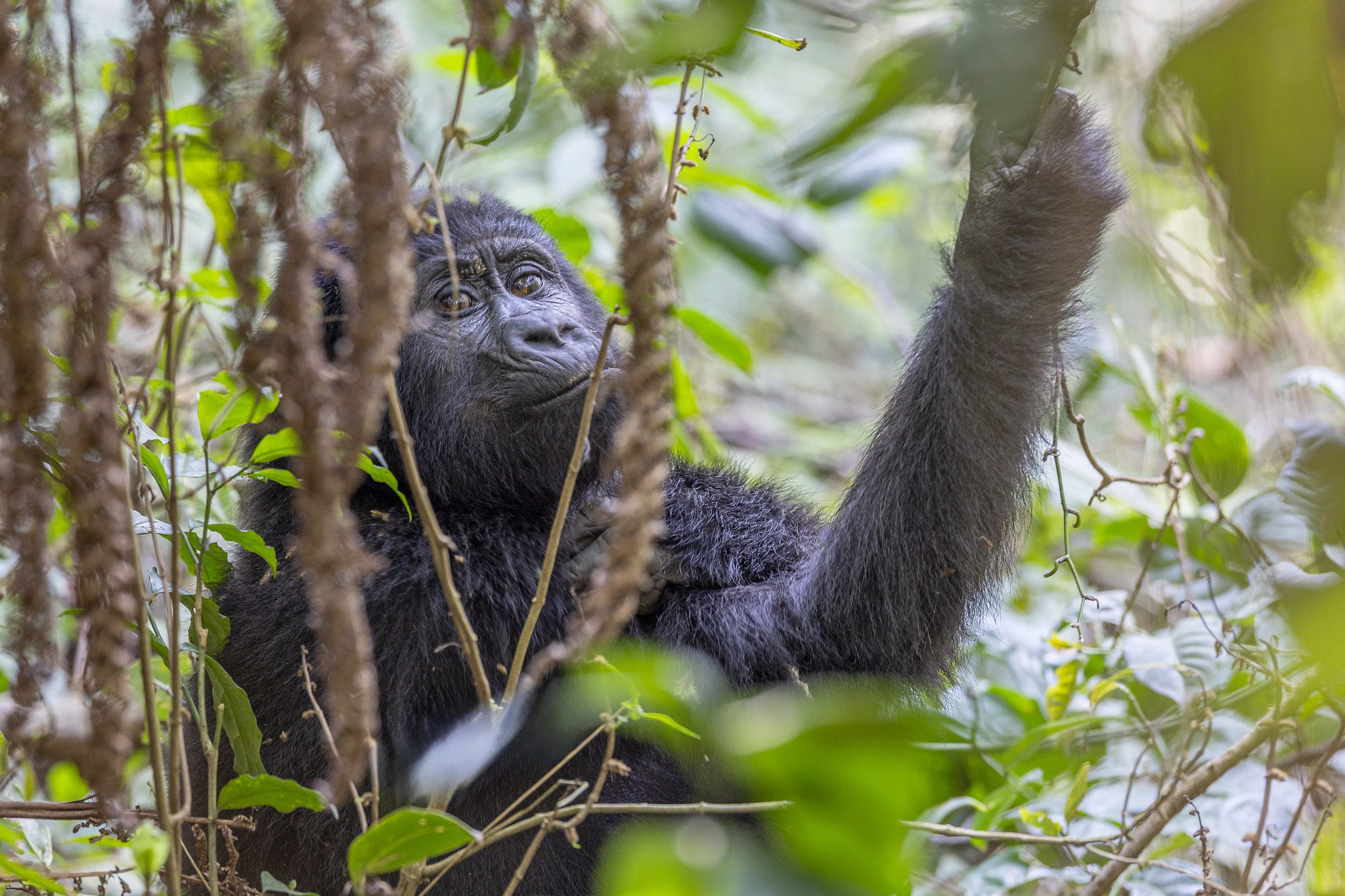
Mountain gorillas are the park’s flagship species and primary attraction. Bwindi is home to nearly half of the world’s remaining mountain gorilla population, making it one of the most critical sites for their survival. Several gorilla families have been habituated for tourism and research, allowing visitors to observe these gentle giants in the wild.
Gorilla behavior commonly observed during treks includes feeding, grooming, resting, playing, and social interaction within family groups. The presence of a dominant silverback, females, juveniles, and infants offers insight into complex social structures and family bonds.
Chimpanzees
Although less frequently seen than in Kibale Forest, chimpanzees are present in Bwindi and contribute to its primate diversity. Their calls are often heard echoing through the forest.
Other Primate Species
Additional primates found in Bwindi include:
- Black-and-white colobus monkeys
- Blue monkeys
- L’Hoest’s monkeys
- Red-tailed monkeys
- Olive baboons
This diversity reinforces Bwindi’s status as a key primates destination in Africa.
Gorilla Trekking Experience
Trekking Overview
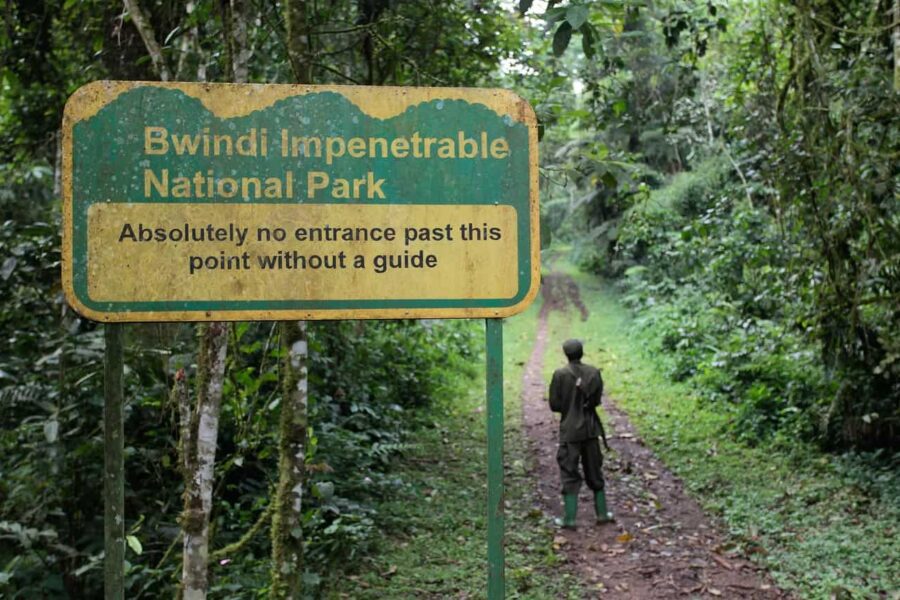
Gorilla trekking is the highlight of any visit to Bwindi Impenetrable Forest National Park. Treks begin early in the morning with a briefing at the park headquarters, where visitors are assigned to a gorilla family and briefed on safety and conservation rules.
Accompanied by experienced rangers and trackers, visitors hike through dense forest to locate the gorillas. Treks can last from one to six hours or more, depending on the gorillas’ location and terrain.
Once the gorillas are found, visitors are allowed a maximum of one hour in their presence, offering an unforgettable and deeply moving wildlife experience.
Gorilla Habituation Experience
Bwindi also offers a gorilla habituation experience in select sectors. This full-day activity allows visitors to spend extended time with gorillas as researchers gradually accustom them to human presence. The experience provides deeper insight into gorilla behavior, conservation, and research methods.
Conservation Importance
Bwindi Impenetrable Forest National Park plays a crucial role in global conservation efforts, particularly for mountain gorillas.
Key conservation initiatives include:
- Anti-poaching patrols and law enforcement
- Veterinary interventions through partnerships with conservation organizations
- Habitat protection and monitoring
- Community-based conservation and revenue-sharing programs
Tourism revenue from gorilla trekking directly supports conservation activities and provides tangible benefits to surrounding communities, creating incentives for long-term protection of the forest.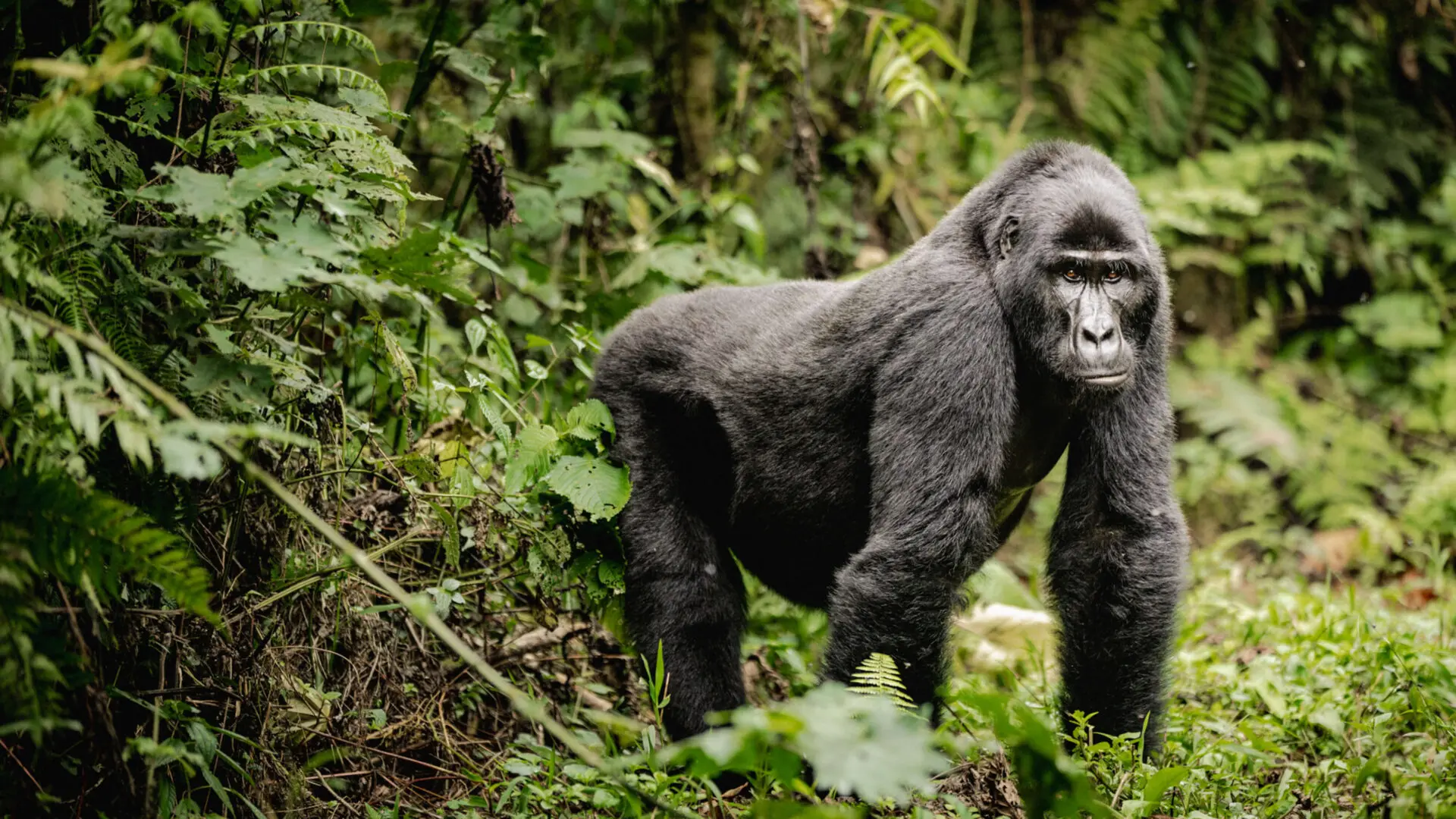
Cultural Connections and Community Involvement
The communities surrounding Bwindi, including the Batwa people, have deep cultural ties to the forest. Community tourism initiatives offer visitors opportunities to learn about traditional forest lifestyles, music, dance, and crafts.
Revenue-sharing programs and employment opportunities in tourism have improved livelihoods while fostering positive relationships between local communities and conservation authorities.
Other Wildlife and Birdlife
Bwindi supports a wide range of wildlife beyond primates.
Mammals
- Forest elephants
- Bush pigs
- Duikers
- Giant forest hogs
Birdlife
With over 350 bird species recorded, Bwindi is one of Uganda’s top birding destinations. It is particularly important for Albertine Rift endemics such as the African green broadbill, Shelley’s crimsonwing, and various sunbird species.
Activities in Bwindi Impenetrable Forest National Park
- Gorilla trekking and habituation experiences
- Guided nature walks
- Birdwatching tours
- Cultural and community visits
- Scenic hikes and forest exploration
Best Time to Visit
Bwindi can be visited year-round, but trekking conditions vary by season.
- Dry Seasons (June to September and December to February): Best trekking conditions with less muddy trails.
- Wet Seasons (March to May and October to November): Lush scenery and fewer visitors, but more challenging hikes.
Accommodation Options
Bwindi offers a wide range of accommodation options across its four sectors.
- Luxury Lodges: High-end eco-lodges with premium services and forest views.
- Mid-range Lodges: Comfortable lodges close to trekking starting points.
- Budget Lodges and Camps: Affordable options for travelers on a budget.

Practical Travel Information
- Access: By road from Kampala or via domestic flights to nearby airstrips.
- Permits: Gorilla trekking permits are required and must be booked well in advance.
- Packing Essentials: Sturdy hiking boots, rain jacket, gloves, insect repellent, and warm clothing.
- Health and Safety: Follow ranger instructions and maintain required distances from gorillas.
Why Bwindi Impenetrable Forest National Park Is a Premier Primates Destination in Africa
Bwindi Impenetrable Forest National Park offers one of the most profound wildlife experiences on Earth. The chance to encounter endangered mountain gorillas in an ancient rainforest, combined with exceptional primate diversity, strong conservation success, and meaningful community involvement, makes Bwindi a standout destination.
For travelers seeking an authentic, conservation-driven primate safari, Bwindi Impenetrable Forest National Park remains unmatched as one of Africa’s finest primates destinations.