Murchison Falls National Park
Murchison Falls National Park: Safari Destinations Africa
Africa is the heartland of the safari, a continent where ancient landscapes and extraordinary wildlife converge to create some of the most memorable travel experiences on Earth. From sweeping savannahs and dense forests to vast wetlands and mighty rivers, Africa’s national parks showcase nature in its rawest and most inspiring form. Among these exceptional destinations stands Murchison Falls National Park, Uganda’s largest and oldest conservation area and one of the most dramatic safari destinations in Africa.
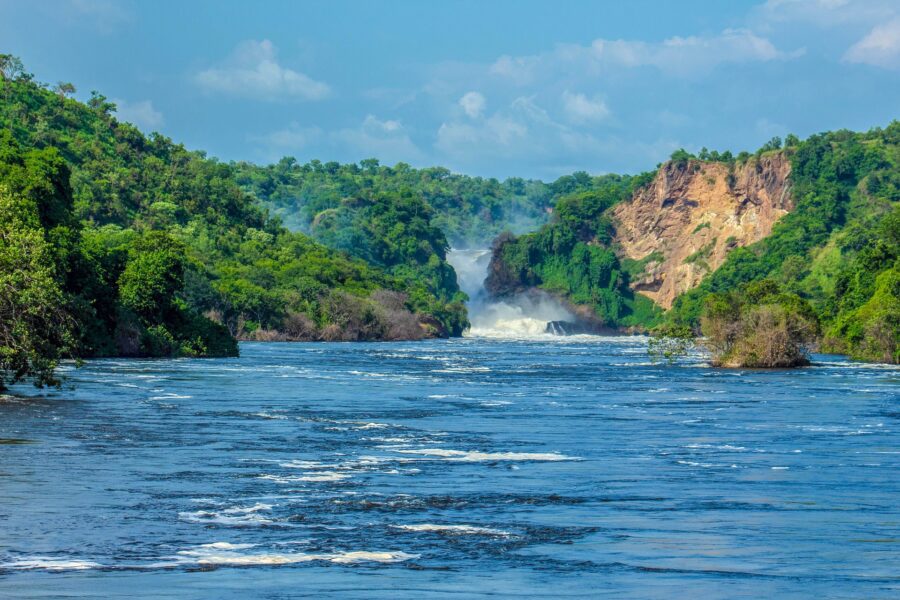
Famous for the thunderous Murchison Falls, where the Nile River is forced through a narrow gorge before plunging into the Devil’s Cauldron, the park offers far more than a single spectacle. Murchison Falls National Park combines classic savannah safaris, river-based wildlife viewing, forest primates, rich birdlife, and breathtaking scenery into one remarkable destination.
This comprehensive article explores why Murchison Falls National Park is one of Africa’s premier safari destinations, examining its location, history, landscapes, wildlife, safari activities, accommodation, best time to visit, conservation importance, and its place within the broader African safari circuit.
Where Is Murchison Falls National Park Located?
Murchison Falls National Park is located in northwestern Uganda, spanning several districts including Masindi, Buliisa, and Nwoya. The park lies approximately 305 kilometers northwest of Kampala, Uganda’s capital, and is easily accessible by road or domestic flight.
The park is bisected by the Victoria Nile, which flows from Lake Victoria toward Lake Albert, creating two distinct sections: the northern savannah plains and the southern forested areas. This division plays a significant role in the park’s ecological diversity and safari experiences.
A Brief History of Murchison Falls National Park
Early Exploration and Protection
Murchison Falls National Park was established in 1952, making it Uganda’s oldest national park. Early explorers and conservationists, including Winston Churchill and Theodore Roosevelt, were captivated by the park’s dramatic landscapes and abundant wildlife.
The park was named after Sir Roderick Murchison, a prominent British geologist and former president of the Royal Geographical Society.
Challenges and Recovery
Like many African parks, Murchison Falls faced significant challenges during periods of political instability in the 1970s and 1980s. Poaching, habitat destruction, and civil unrest led to declines in wildlife populations.
Since the 1990s, concerted conservation efforts by the Uganda Wildlife Authority and partner organizations have led to a remarkable recovery. Today, Murchison Falls National Park is once again a thriving safari destination and one of Uganda’s most visited parks.
Landscapes and Ecosystems: A Park of Striking Contrast
One of the defining characteristics of Murchison Falls National Park is its diverse and dramatic landscapes.
Savannah Grasslands
The northern section of the park is dominated by open savannah grasslands interspersed with Borassus palms and acacia trees. These plains provide classic safari scenery and support large populations of grazing and browsing animals.
Riverine Forests
Along the banks of the Victoria Nile, lush riverine forests create a green corridor through the savannah. These forests provide habitat for primates, birds, and other wildlife.
The Nile River and Wetlands
The Nile is the lifeblood of the park, supporting wetlands, oxbow lakes, and floodplains that attract enormous concentrations of wildlife.
Murchison Falls and the Albertine Rift
The park lies within the Albertine Rift, one of Africa’s most biodiverse regions. The dramatic topography, including escarpments and river gorges, adds to the park’s scenic appeal.
Murchison Falls: Nature’s Most Powerful Waterfall
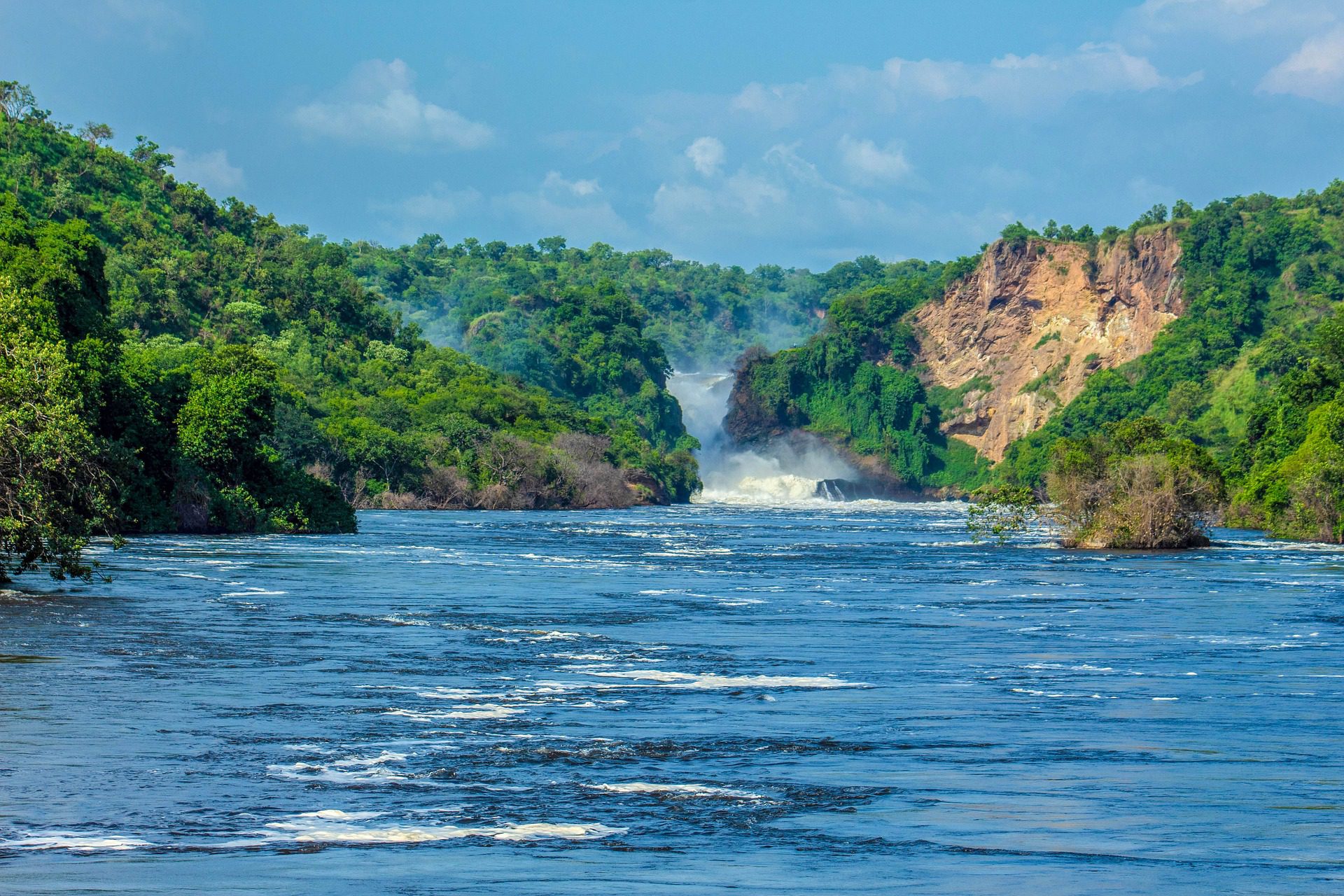
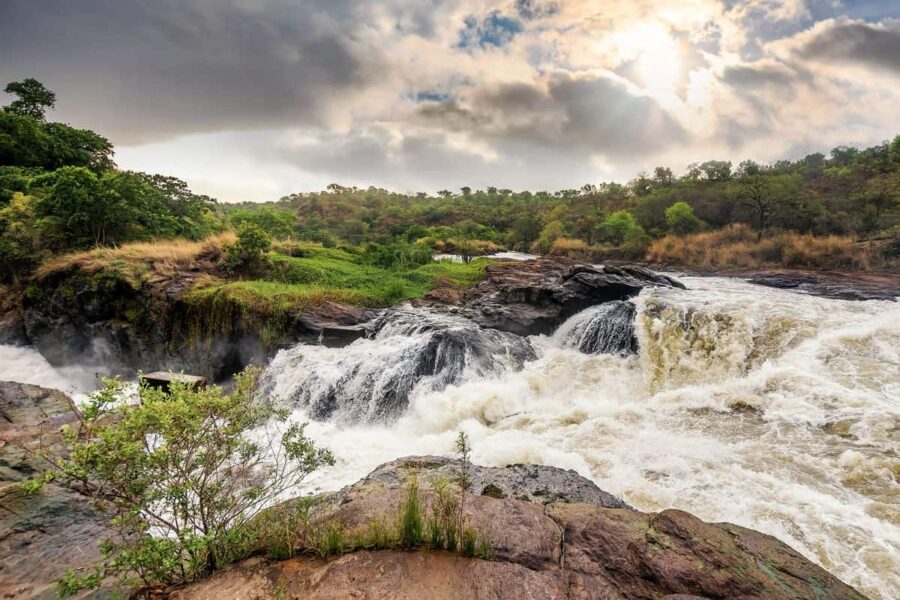
At the heart of the park lies its most iconic feature: Murchison Falls.
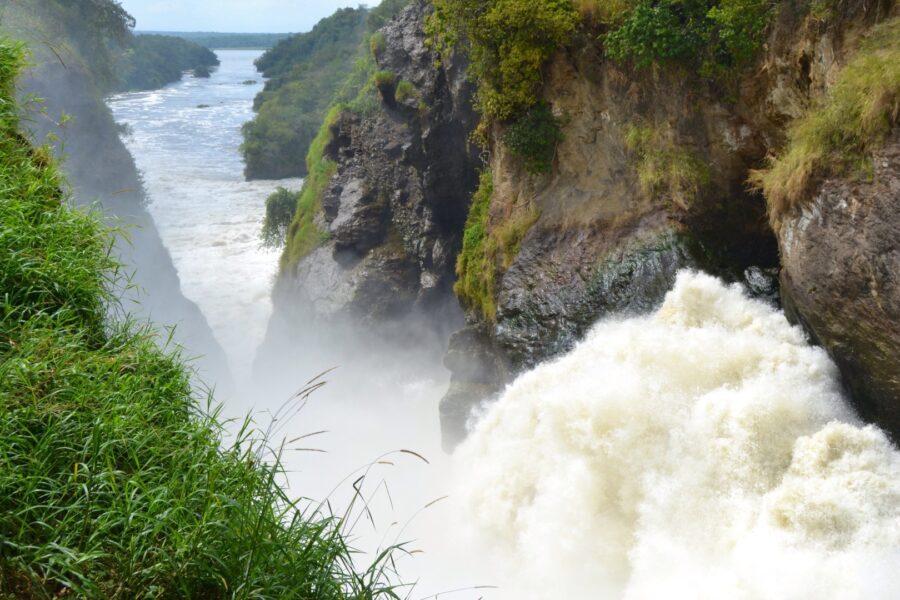
Here, the Victoria Nile is squeezed through a 7-meter-wide gorge before plunging 43 meters into the Devil’s Cauldron below. The result is one of the most powerful waterfalls in the world, where the sheer force and sound of the water create an unforgettable spectacle.
Visitors can experience the falls from multiple viewpoints, including:
-
The top of the falls (reached by hiking)
-
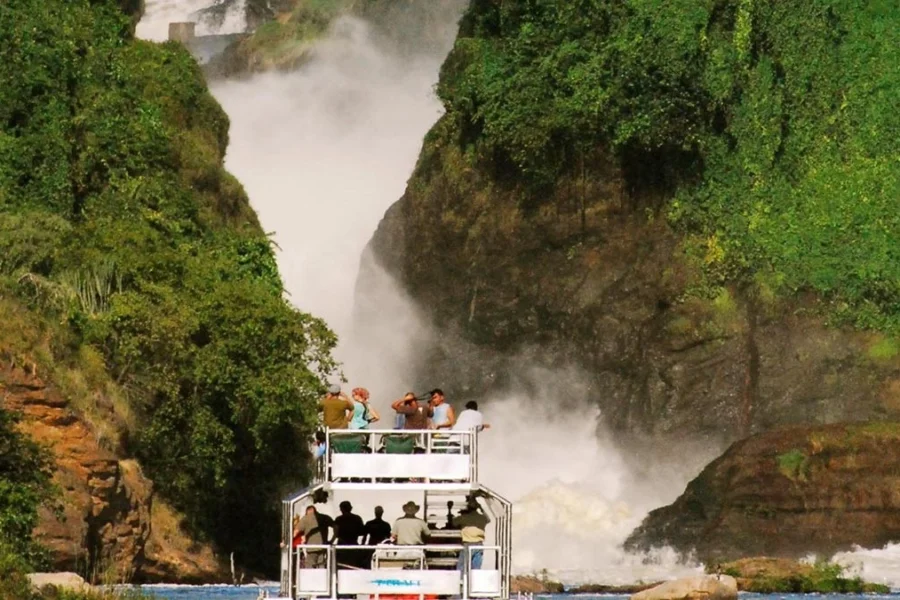
Boat cruises to the base of the falls
-
Scenic viewpoints along the gorge
This natural wonder sets Murchison Falls National Park apart from other safari destinations in Africa.
Wildlife of Murchison Falls National Park
Large Mammals
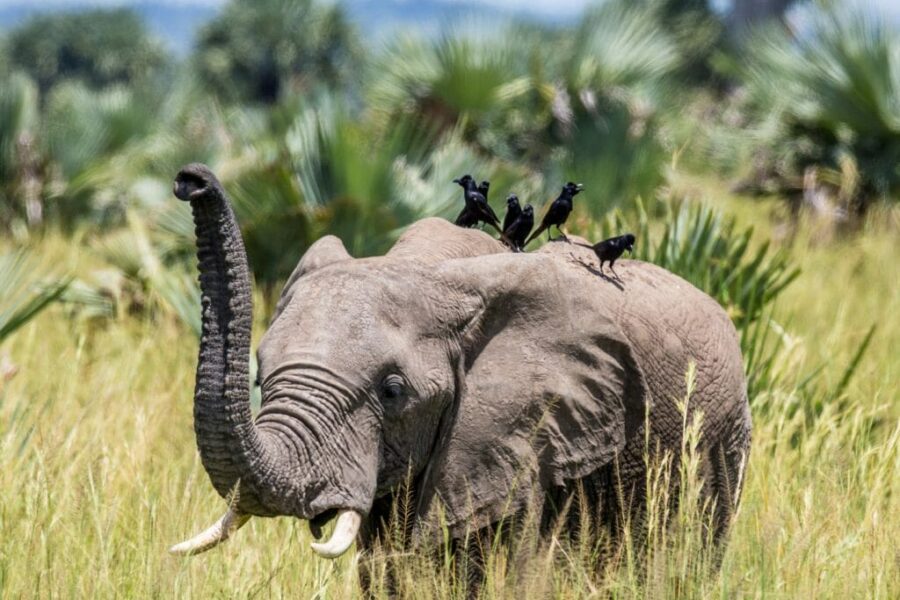
Murchison Falls National Park is home to over 76 mammal species, including:
-
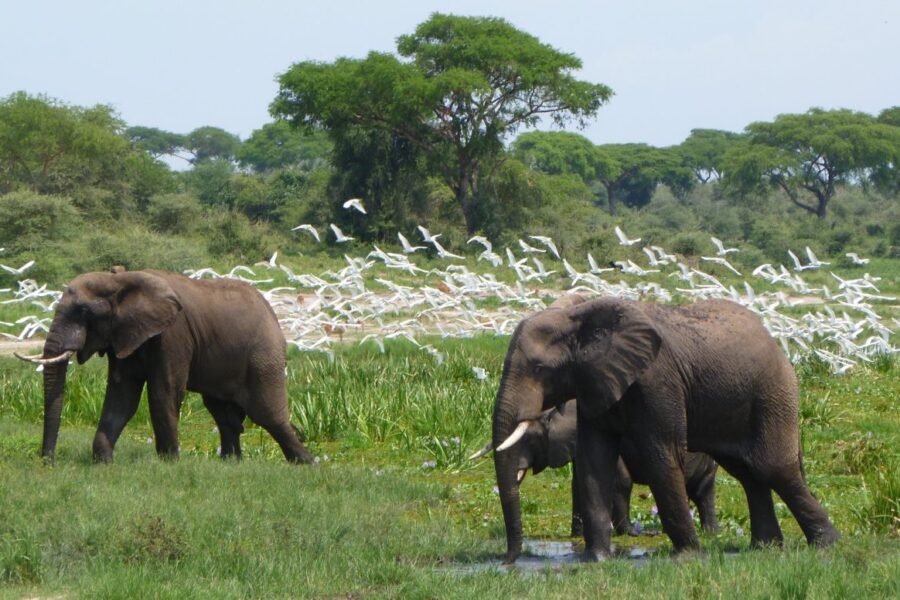
African elephants
-
African buffalo
-
Lions, including tree-climbing individuals
-
Leopards
-
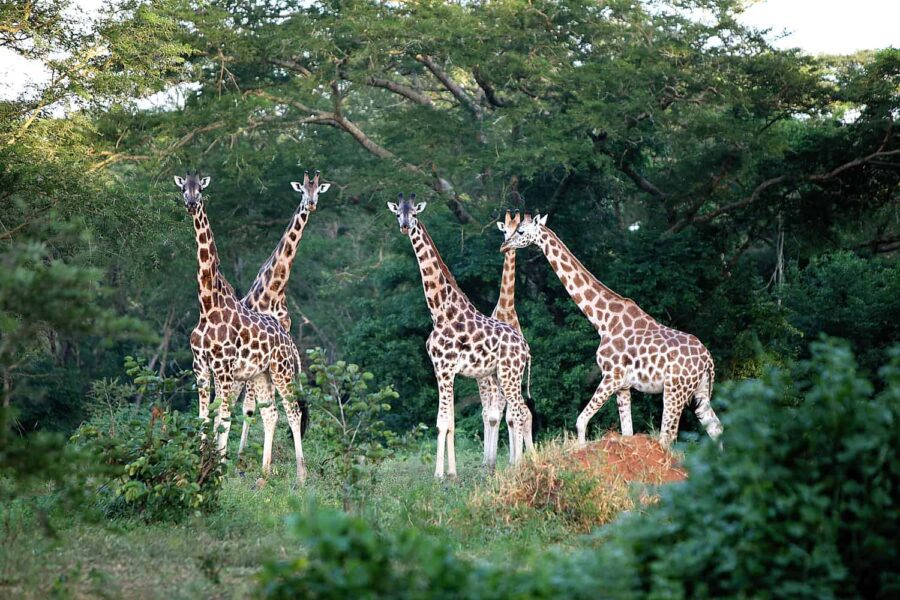
Rothschild’s giraffes, one of the park’s most iconic species
-
Ugandan kob, waterbuck, hartebeest, and warthog
The northern savannahs offer excellent game viewing, particularly during the dry season.
Hippos and Crocodiles
The Nile supports one of the largest populations of hippos in Africa, along with numerous Nile crocodiles. These species are best observed during boat safaris.
Primates
The southern part of the park includes Budongo Forest Reserve, renowned for its chimpanzee tracking experiences. Other primates include olive baboons, black-and-white colobus monkeys, and red-tailed monkeys.
Birdlife: A Birder’s Paradise
With over 450 recorded bird species, Murchison Falls National Park is one of Africa’s top birding destinations.
Notable Bird Species
Birdwatchers can spot:
-
Shoebill stork, the park’s most sought-after species
-
African fish eagle
-
Goliath heron
-
Saddle-billed stork
-
Abyssinian ground hornbill
-
Kingfishers, bee-eaters, and weavers
The Nile Delta, where the river enters Lake Albert, is particularly famous for shoebill sightings.
Safari Experiences in Murchison Falls National Park
Game Drives
Game drives are primarily conducted in the northern sector, where open savannah provides excellent visibility. Morning and evening drives offer opportunities to see predators and grazing animals.
Nile Boat Safaris
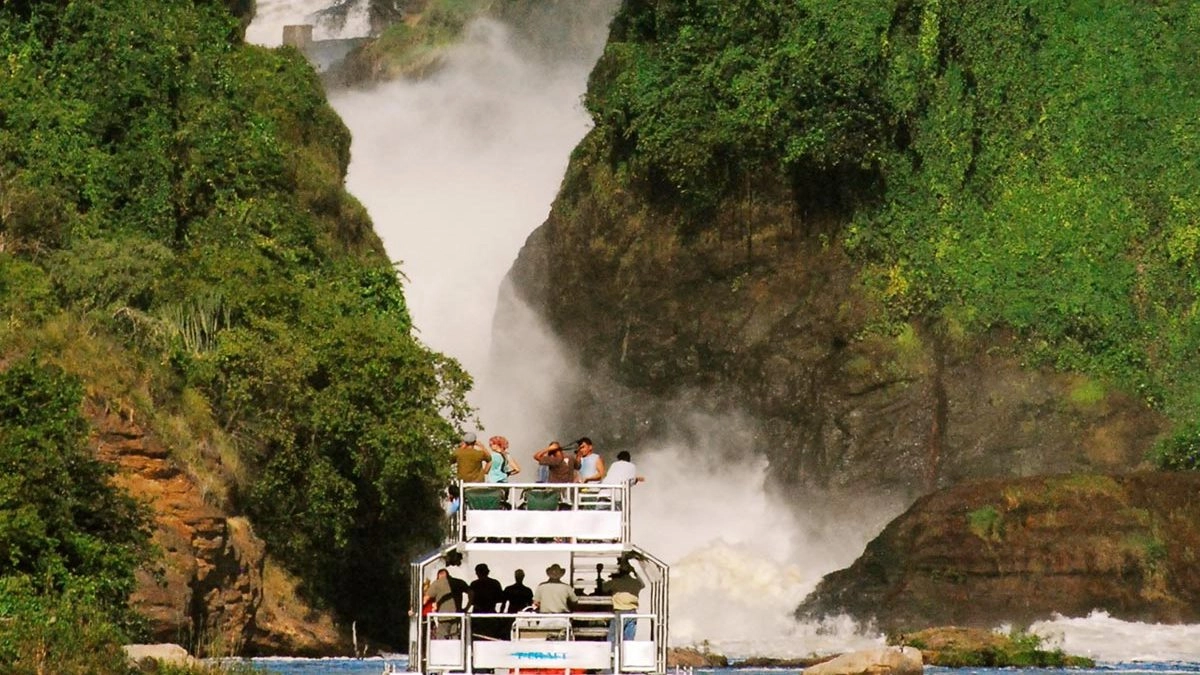
Boat safaris on the Nile are a highlight of any visit. Two main routes are offered:
-
Upstream to the base of Murchison Falls
-
Downstream to the Nile Delta
From the boat, visitors can observe hippos, crocodiles, elephants, buffalo, and countless bird species at close range.
Hiking to the Top of the Falls
A guided hike to the top of Murchison Falls allows visitors to experience the power of the Nile up close, with panoramic views and dramatic scenery.
Chimpanzee Tracking in Budongo Forest
Chimpanzee tracking in nearby Budongo Forest adds a primate-focused experience to a classic savannah safari, making Murchison Falls a diverse destination.
Accommodation in Murchison Falls National Park
The park offers a wide range of accommodation options.
Luxury and Mid-Range Lodges
Several lodges provide:
-
Scenic views of the Nile
-
Comfortable rooms and cottages
-
Guided safari activities
-
Eco-friendly operations
These lodges cater to travelers seeking comfort and immersive nature experiences.
Budget Lodges and Campsites
Budget lodges and campsites are available within and near the park, making Murchison Falls accessible to a wide range of travelers.
Best Time to Visit Murchison Falls National Park
Murchison Falls National Park is a year-round destination, but conditions vary by season.
Dry Seasons (December to February & June to September)
-
Best wildlife viewing
-
Easier road conditions
-
Ideal for game drives and boat safaris
Wet Seasons (March to May & October to November)
-
Lush landscapes
-
Excellent birding
-
Some roads may be challenging
The best overall time for safari experiences is during the dry seasons.
Conservation and Community Impact
Murchison Falls National Park plays a vital role in Uganda’s conservation efforts.
Biodiversity Protection
The park protects critical habitats within the Albertine Rift, supporting globally significant biodiversity.
Community Involvement
Tourism revenue supports local communities through employment, education, and development projects, helping foster positive attitudes toward conservation.
Murchison Falls National Park in the Context of Safari Destinations Africa
Compared to other African safari destinations, Murchison Falls National Park offers:
-
A dramatic natural landmark (Murchison Falls)
-
A powerful river-based safari experience
-
A mix of savannah, forest, and wetland ecosystems
-
Accessible wildlife viewing and diverse activities
This combination makes it one of Africa’s most well-rounded safari destinations.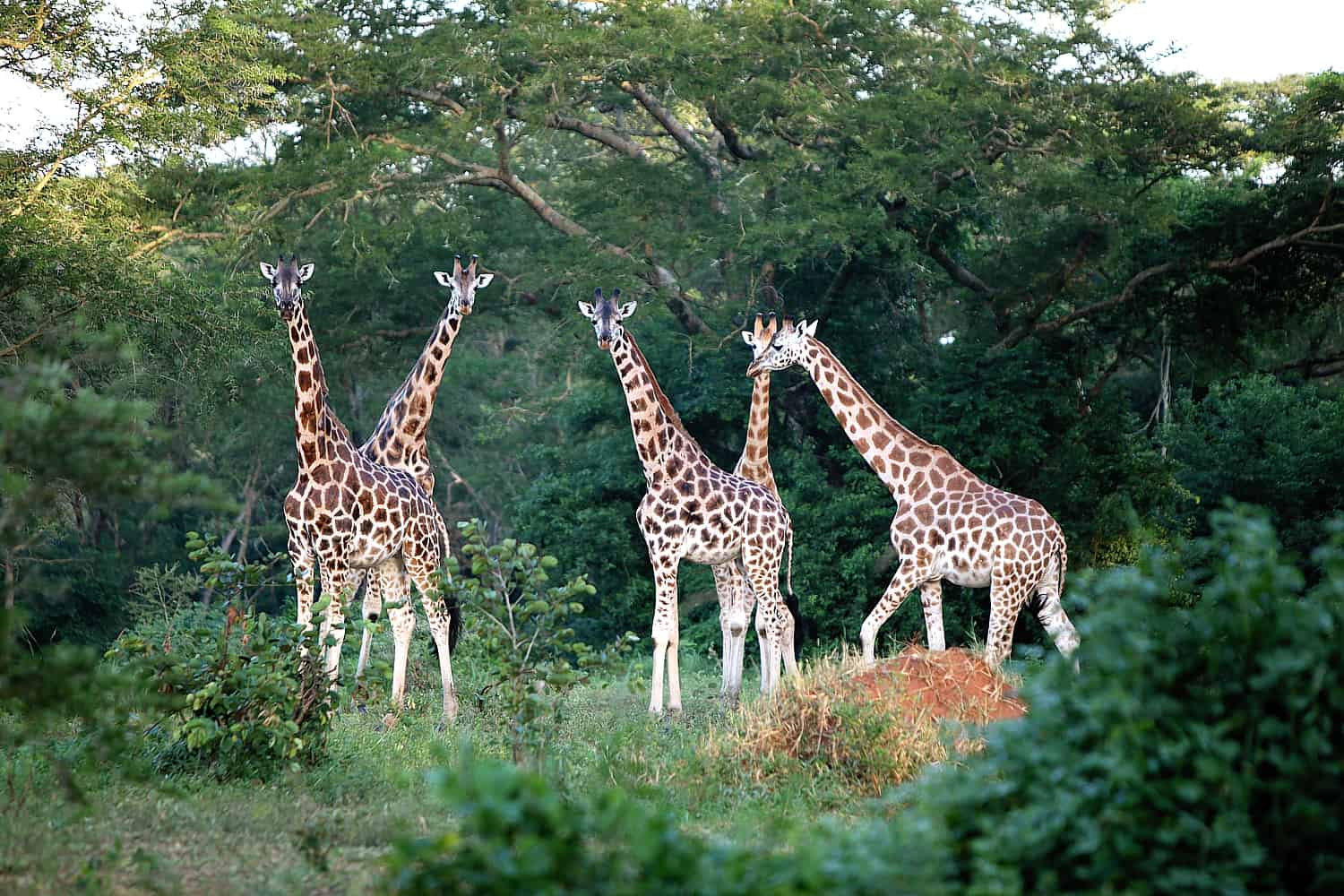
Who Should Visit Murchison Falls National Park?
Murchison Falls National Park is ideal for:
-
First-time safari travelers
-
Wildlife and birding enthusiasts
-
Families and couples
-
Photographers
-
Travelers combining primate tracking with classic safaris
Why Murchison Falls National Park Is a Top Safari Destination in Africa
Murchison Falls National Park is a place where Africa’s raw power and beauty are on full display. From the thunder of the falls to the tranquil flow of the Nile, from savannah game drives to forest primate encounters, the park offers a safari experience that is both dramatic and diverse.
In a continent rich with wildlife destinations, Murchison Falls National Park stands out for its iconic landscapes, abundant wildlife, and unique river-based safaris. For travelers seeking an unforgettable African safari, Murchison Falls National Park truly earns its place among Africa’s finest safari destinations.