Volcanoes National Park
Volcanoes National Park : Primates destination in africa
Volcanoes National Park is one of Africa’s most iconic wildlife destinations and the continent’s leading primate tourism stronghold. Located in northwestern Rwanda, this remarkable park is world‑famous for mountain gorilla trekking and plays a critical role in the conservation of some of the planet’s most endangered primates. Set within the dramatic Virunga Mountain range, Volcanoes National Park combines mist‑shrouded volcanoes, dense bamboo forests, rich biodiversity, and powerful conservation history, making it a must‑visit destination for travelers seeking meaningful, conservation‑focused safari experiences in Africa.
Often referred to as the birthplace of mountain gorilla conservation, Volcanoes National Park is more than just a wildlife reserve. It is a living symbol of successful conservation, community involvement, and sustainable tourism. This detailed article explores Volcanoes National Park in depth, covering its location, history, landscapes, ecosystems, primate species, other wildlife, conservation significance, trekking experiences, best time to visit, accommodation options, and practical travel information. By the end, it becomes clear why Volcanoes National Park is widely regarded as Africa’s premier primates destination.
Location and Geographic Setting
Volcanoes National Park is situated in the Musanze District of northwestern Rwanda, bordering Uganda’s Mgahinga Gorilla National Park and the Democratic Republic of Congo’s Virunga National Park. Together, these three protected areas form the greater Virunga Conservation Area, a transboundary ecosystem essential for the survival of mountain gorillas.
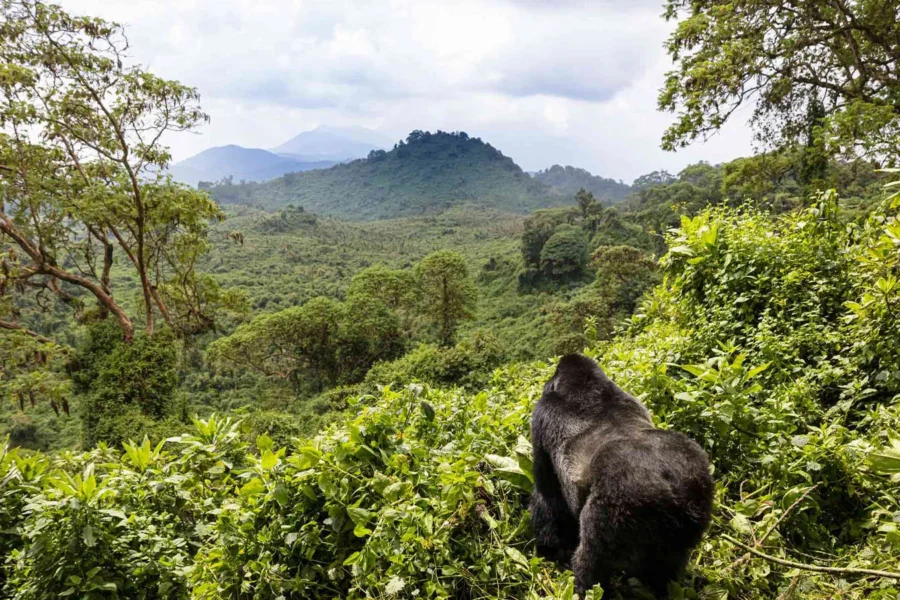
The park covers approximately 160 square kilometers and lies within the Virunga Mountains, a chain of eight volcanic peaks. Five of these volcanoes are located within the park’s boundaries: Mount Karisimbi, Mount Bisoke, Mount Muhabura, Mount Gahinga, and Mount Sabyinyo. These volcanoes create a dramatic and rugged landscape characterized by steep slopes, volcanic soils, and dense vegetation.
Volcanoes National Park is easily accessible by road from Kigali, Rwanda’s capital, with a driving time of about two to three hours, making it one of the most accessible gorilla trekking destinations in Africa.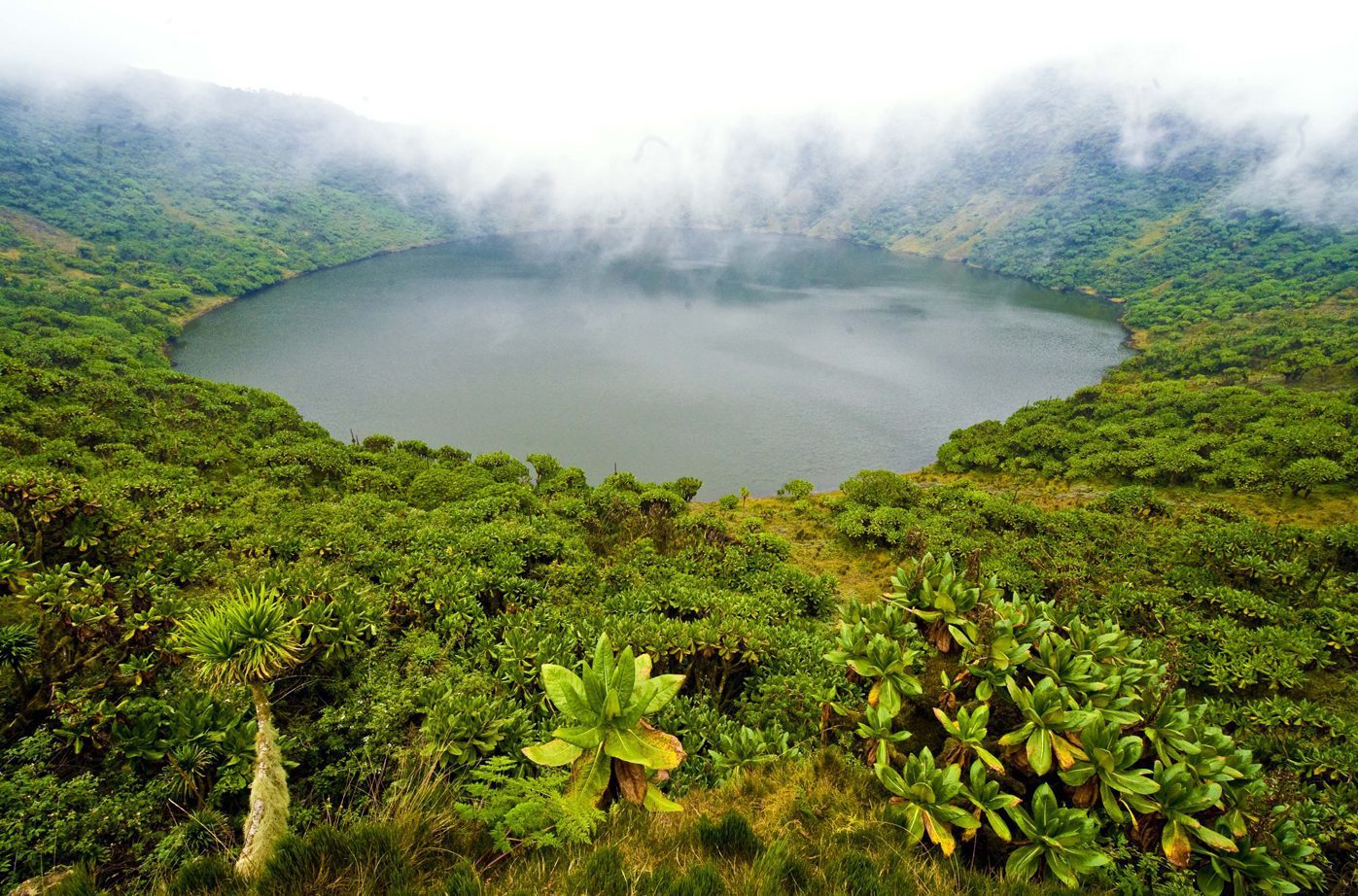
Historical Background and Park Establishment
Volcanoes National Park holds a unique place in conservation history. It was originally established in 1925 as Africa’s first national park, initially covering parts of Rwanda, Uganda, and the Democratic Republic of Congo. Its primary purpose was to protect mountain gorillas from poaching and habitat destruction.
The park gained international recognition through the work of primatologist Dian Fossey, who conducted groundbreaking research on mountain gorillas in the Virunga Mountains from the late 1960s until her death in 1985. Fossey’s research and passionate advocacy brought global attention to the plight of mountain gorillas and laid the foundation for modern gorilla conservation.
Today, Volcanoes National Park is managed by the Rwanda Development Board (RDB), which oversees conservation, tourism, and community engagement initiatives.
Landscape and Ecosystems
Despite its relatively small size, Volcanoes National Park contains a remarkable range of ecosystems shaped by altitude, volcanic activity, and climate.
Afro‑Montane Forests
The lower slopes of the volcanoes are covered in afro‑montane forests dominated by Hagenia, hypericum, and bamboo species. These forests provide critical habitat for mountain gorillas, golden monkeys, and a variety of bird species.
Bamboo Zones
Bamboo forests are particularly important during certain times of the year when gorillas and golden monkeys feed on young bamboo shoots. These zones are also home to forest elephants and numerous smaller mammals.
Heath and Moorland
At higher elevations, the vegetation transitions into heath and moorland, characterized by giant lobelias, senecios, and open grasslands. These areas offer stunning views and unique plant life adapted to cooler temperatures.
Volcanic Peaks and Crater Lakes
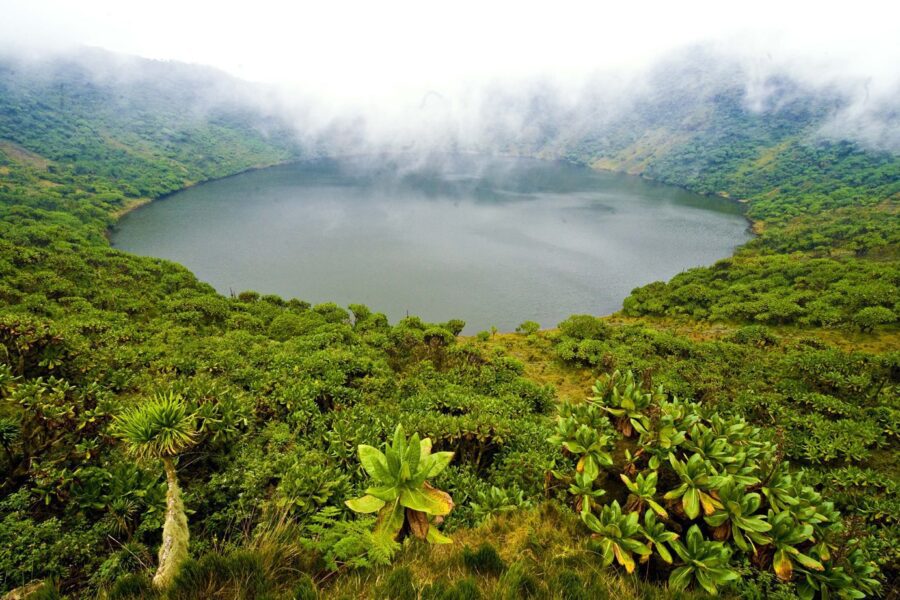
The volcanic origins of the park have created crater lakes, lava flows, and rugged terrain. Mount Bisoke, for example, features a beautiful crater lake at its summit, accessible via guided hikes.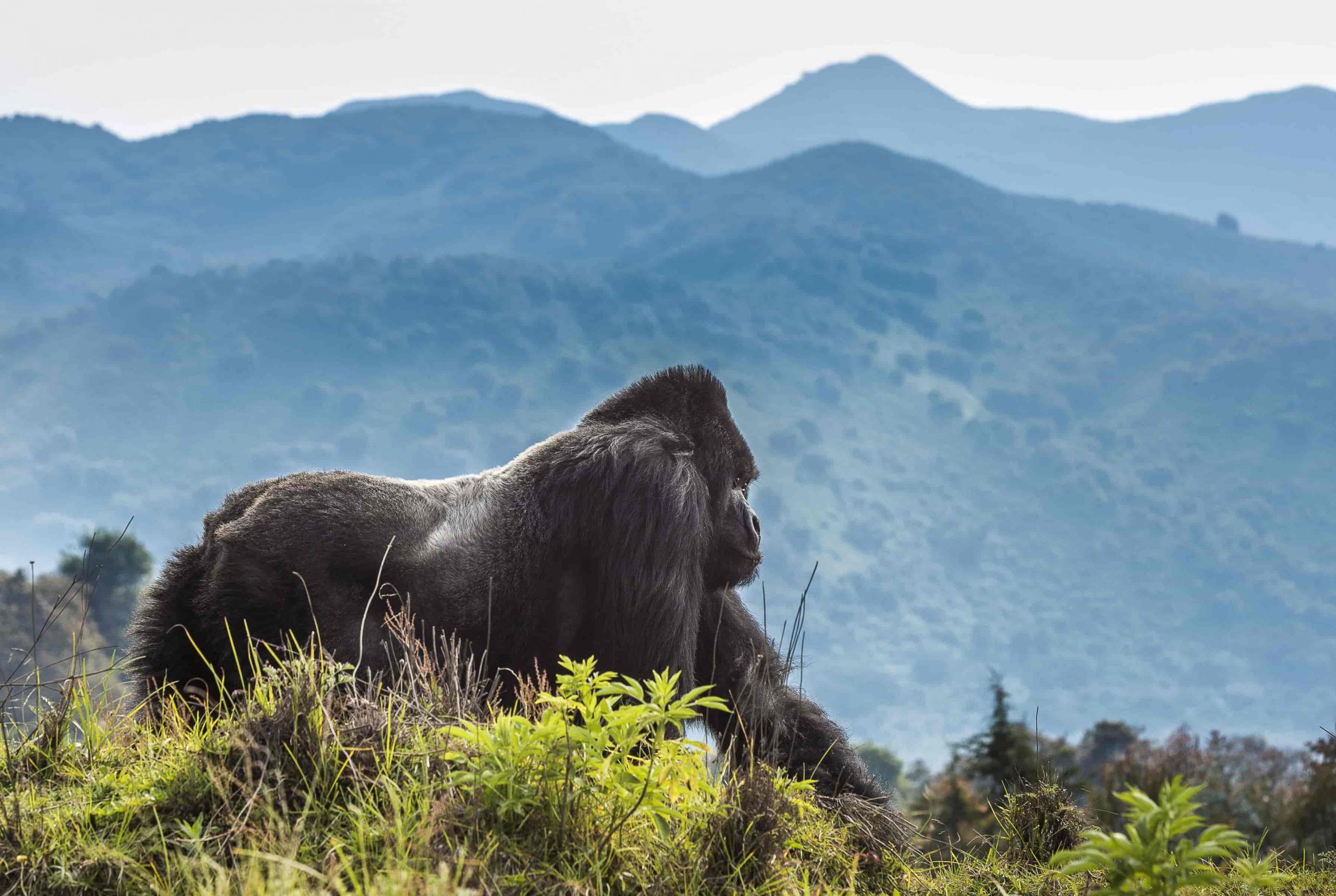
Primates of Volcanoes National Park
Volcanoes National Park is primarily celebrated as Africa’s leading primate destination, offering unparalleled opportunities to observe endangered primates in their natural habitat.
Mountain Gorillas
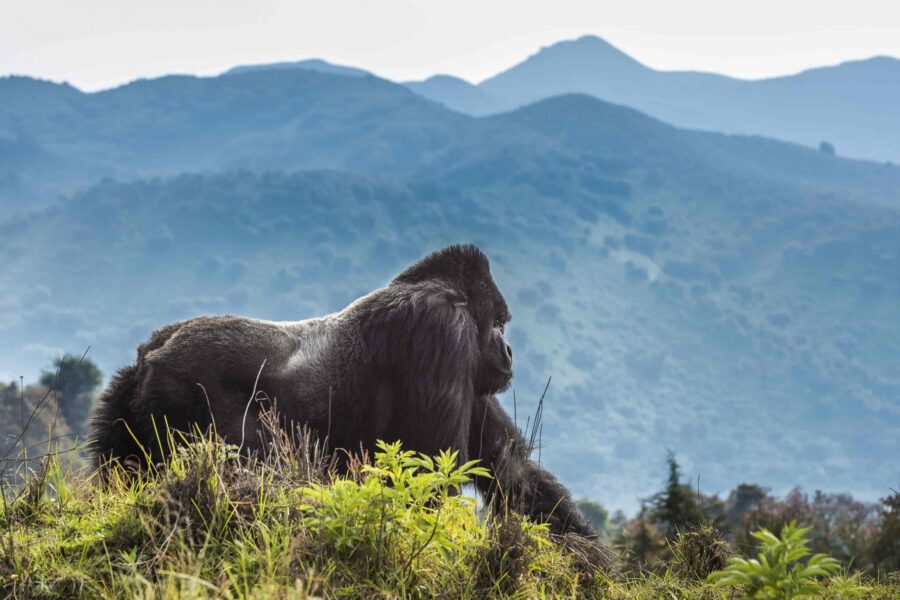
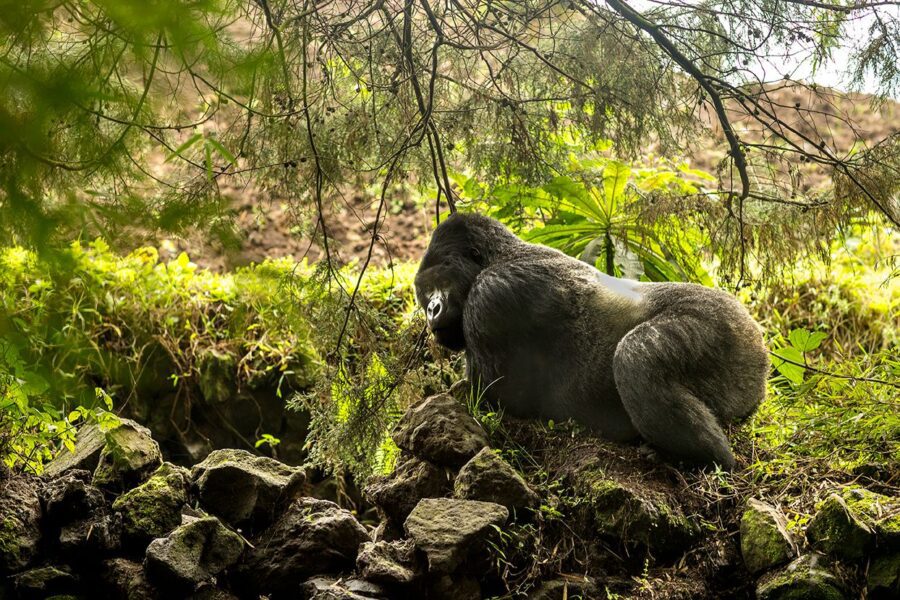
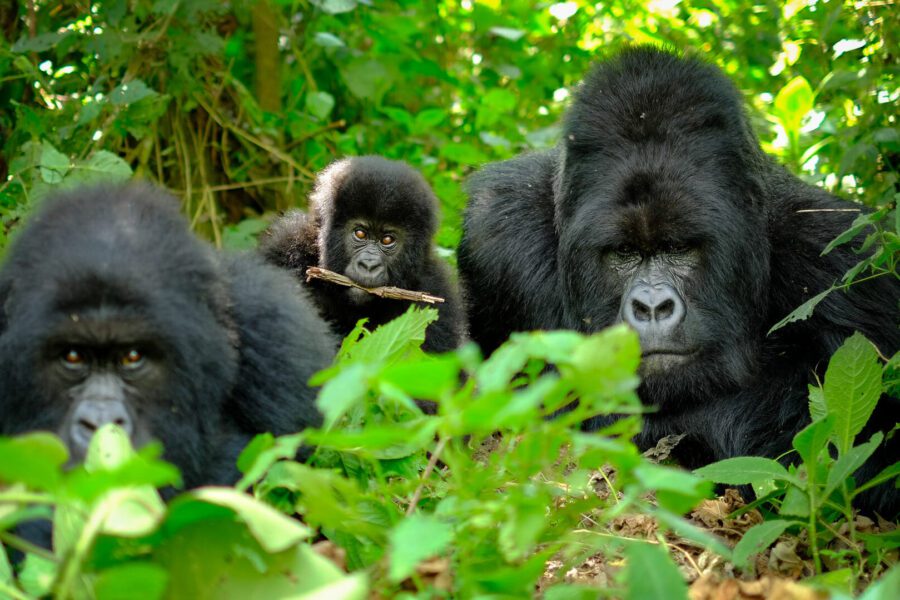
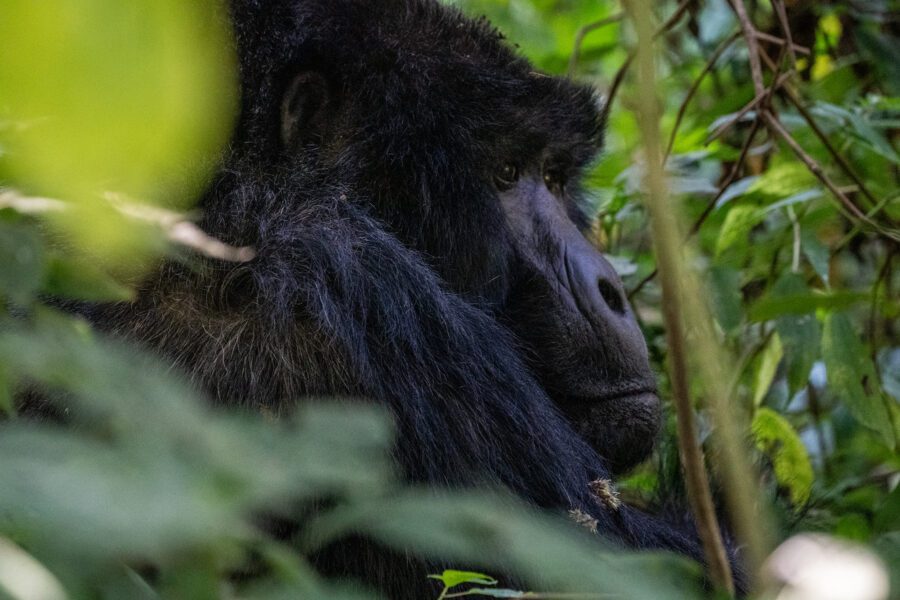
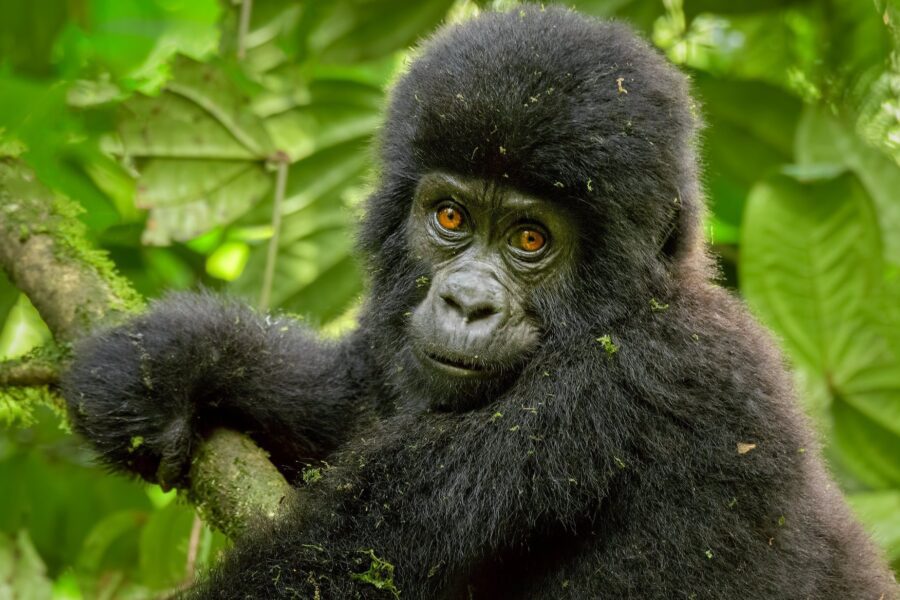
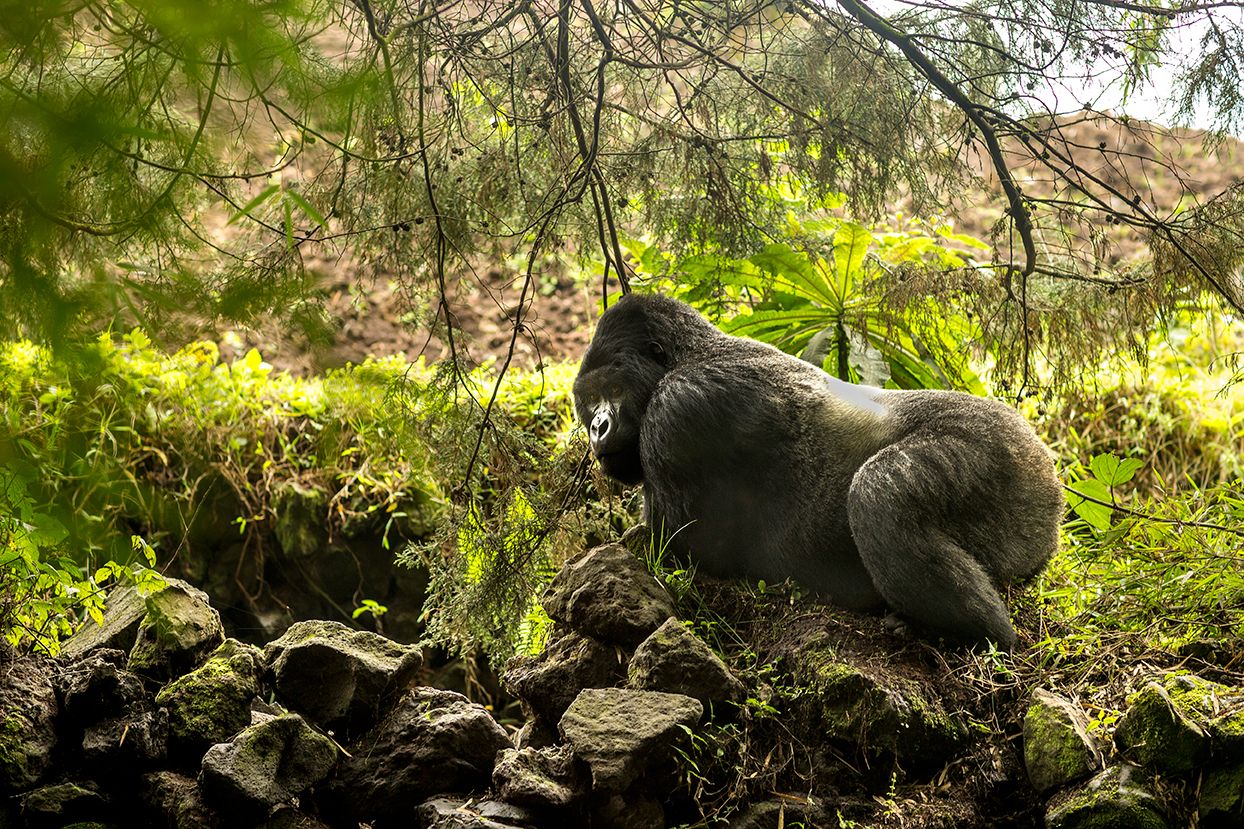
The mountain gorilla is the park’s flagship species and one of the world’s most endangered great apes. Volcanoes National Park is home to several habituated gorilla families that are visited daily by small groups of tourists under strict regulations.
Gorilla trekking involves hiking through dense forest and mountainous terrain to locate a gorilla family. Once found, visitors are allowed to spend one hour observing the gorillas as they feed, play, groom, and interact. This intimate experience is widely regarded as one of the most powerful wildlife encounters on Earth.
Golden Monkeys
The golden monkey is another major attraction of Volcanoes National Park. Endemic to the Virunga region, these playful and highly social primates are easily recognized by their golden‑orange fur. Golden monkey trekking is less physically demanding than gorilla trekking and offers excellent photography opportunities.
Other Primate Species
In addition to gorillas and golden monkeys, the park is home to other primates such as:
- L’Hoest’s monkey
- Blue monkey
- Vervet monkey
These species contribute to the park’s rich primate diversity and ecological balance.
Other Wildlife
While primates are the main focus, Volcanoes National Park supports a variety of other wildlife species.
Mammals
- Forest elephant
- Buffalo
- Bushbuck
- Giant forest hog
- Black‑fronted duiker
Many of these animals are shy and less frequently seen due to dense vegetation, but their presence highlights the park’s ecological richness.
Birdlife
Volcanoes National Park is home to over 200 bird species, including several Albertine Rift endemics. Notable birds include:
- Ruwenzori turaco
- Grauer’s rush warbler
- Dusky crimsonwing
- Archer’s robin‑chat
The park is a rewarding destination for birdwatchers seeking rare and endemic species.
Gorilla Trekking Experience
Gorilla trekking is the park’s signature activity and is carefully managed to ensure minimal impact on the animals.
Trekking Process
Visitors begin the day with a briefing at the park headquarters, where they are assigned to a gorilla family based on fitness level and group size. Treks can last from one to several hours depending on the gorillas’ location.
Regulations
- Maximum of eight visitors per gorilla group per day
- One hour spent with the gorillas
- Minimum distance maintained between visitors and gorillas
- Strict health guidelines to prevent disease transmission
These rules ensure both visitor safety and gorilla well‑being.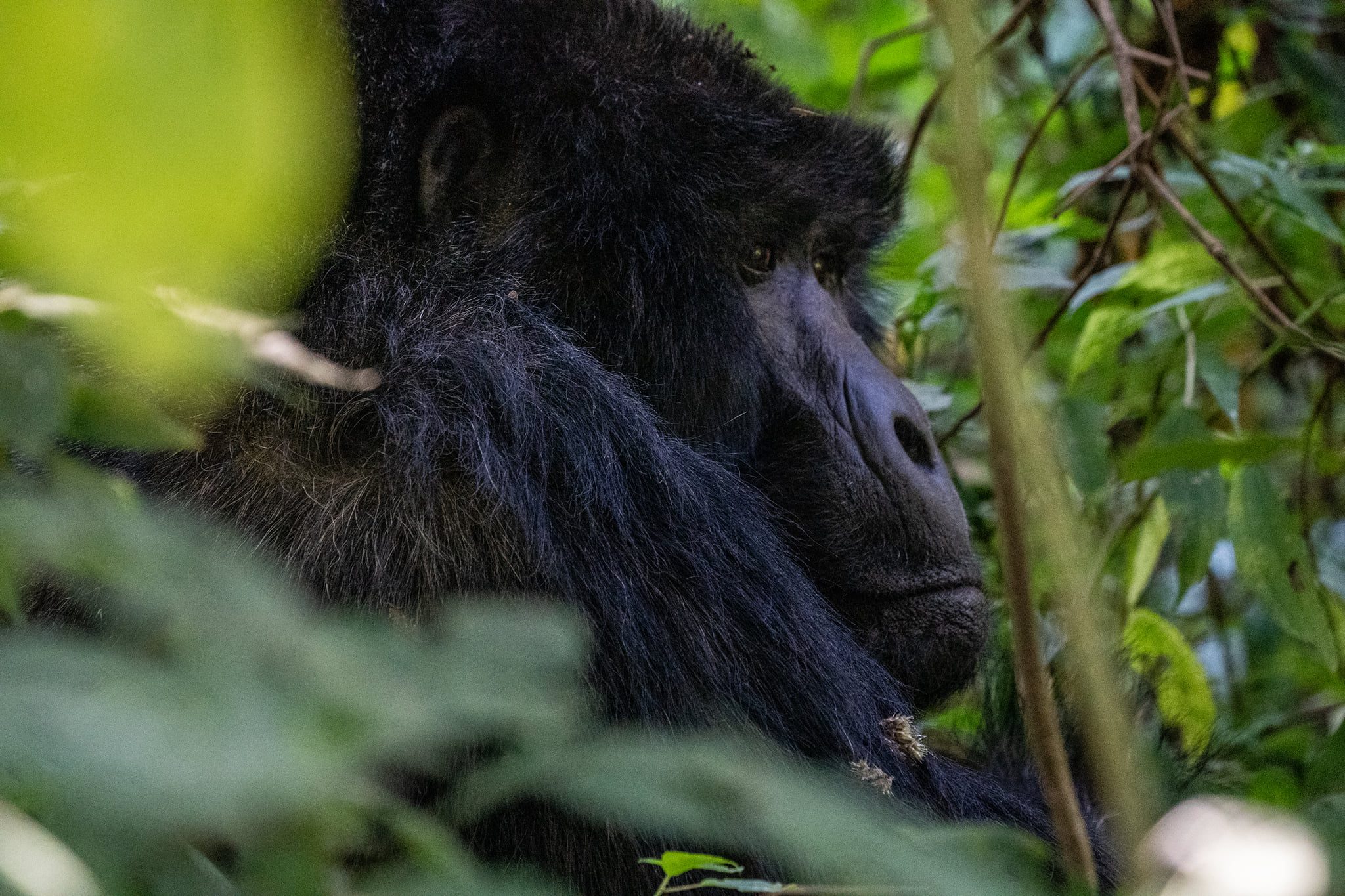
Cultural and Community Experiences
Volcanoes National Park is closely connected to surrounding communities, and tourism plays a vital role in local development.
Community‑Based Tourism
Revenue‑sharing programs allocate a portion of park fees to community projects such as schools, health centers, and infrastructure development.
Cultural Visits
Visitors can explore local culture through experiences such as the Iby’Iwacu Cultural Village, where former poachers now work as cultural guides, sharing traditional dances, crafts, and stories.
Conservation Importance and Success Story
Volcanoes National Park is a global conservation success story. Through collaborative efforts involving governments, conservation organizations, and local communities, mountain gorilla populations have steadily increased over the past decades.
Key conservation strategies include:
- Anti‑poaching patrols
- Veterinary interventions
- Community engagement
- Regulated tourism
These initiatives have transformed gorilla tourism into a sustainable model that benefits both wildlife and people.
Best Time to Visit Volcanoes National Park
Volcanoes National Park is a year‑round destination, but certain seasons offer more favorable conditions.
- Dry Seasons (June to September and December to February): Best for trekking, with drier trails and clearer views.
- Wet Seasons (March to May and October to November): Lush landscapes and fewer visitors, though trekking can be more challenging.
Accommodation Options
Accommodation around Volcanoes National Park ranges from ultra‑luxury lodges to comfortable mid‑range and budget options.
- Luxury Lodges: Offer premium service, stunning views, and exclusive experiences.
- Mid‑Range Lodges: Provide comfort and convenience close to the park.
- Budget Guesthouses: Suitable for travelers seeking affordability.

Practical Travel Information
- Getting There: Accessible by road from Kigali International Airport.
- Permits: Gorilla and golden monkey trekking require permits purchased in advance.
- What to Pack: Hiking boots, rain jacket, gloves, camera, and warm clothing.
- Health and Safety: Follow ranger instructions and respect wildlife at all times.
Why Volcanoes National Park Is Africa’s Premier Primates Destination
Volcanoes National Park offers an unmatched primate experience that blends adventure, conservation, culture, and breathtaking scenery. The opportunity to encounter mountain gorillas in the wild is life‑changing, while the park’s success in conservation provides hope for endangered species worldwide.
For travelers seeking meaningful wildlife encounters and a deeper connection to Africa’s natural heritage, Volcanoes National Park stands as the continent’s ultimate primates destination.