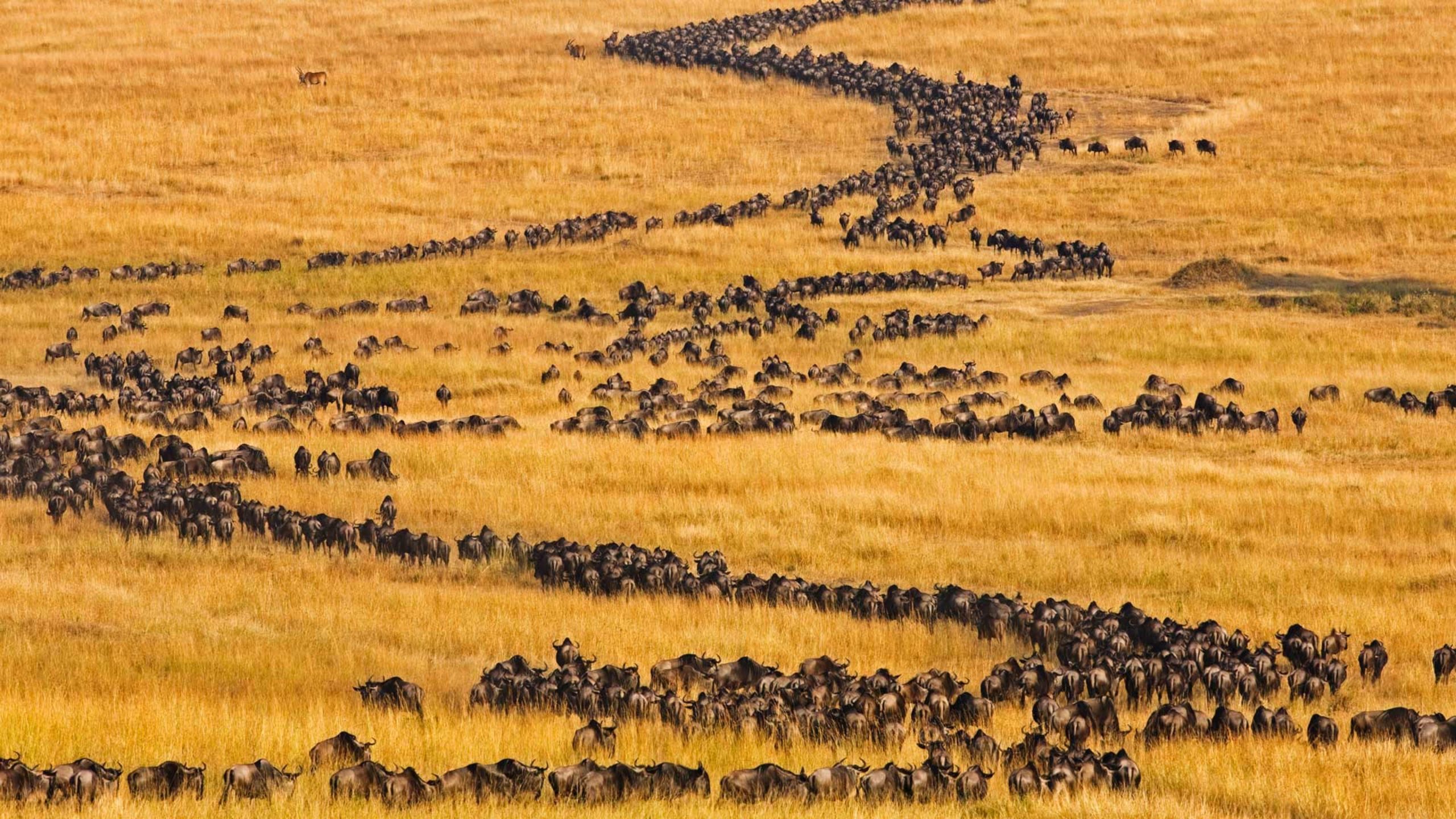
Wildebeest Migration in Tanzania
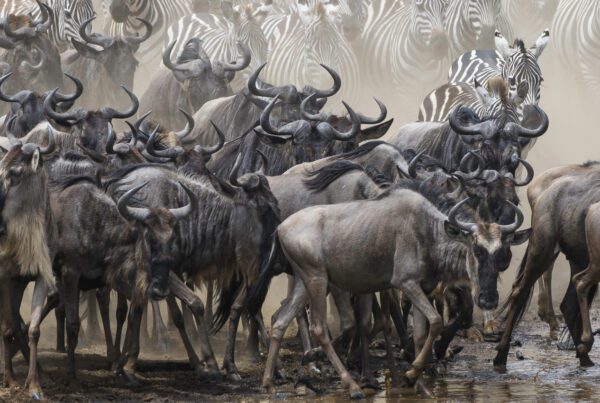
The wildebeest migration in Tanzania is one of the most powerful and enduring wildlife spectacles on the planet, representing nature in its purest and most dramatic form. Every year, more than 1.5 million wildebeest, accompanied by hundreds of thousands of zebras and gazelles, move in a continuous circular journey across Tanzania’s vast Serengeti ecosystem. This migration is not a single event but a year-round process driven by rainfall, fresh grass, and ancient survival instincts that have guided these animals for thousands of years.
For travelers, conservationists, and wildlife enthusiasts, the wildebeest migration in Tanzania offers an unmatched opportunity to witness raw natural processes at scale. From the explosive calving season on the southern plains to the perilous river crossings in the western and northern Serengeti, Tanzania hosts the most extensive and ecologically significant portions of the Great Wildebeest Migration. Understanding why Tanzania is the heart of this phenomenon reveals why it is often described as the greatest wildlife show on Earth.
Understanding the Wildebeest Migration in Tanzania
The wildebeest migration in Tanzania takes place almost entirely within the Serengeti ecosystem, a UNESCO World Heritage Site renowned for its biodiversity and vast open landscapes. Unlike many migrations that follow a linear route, this movement is circular, with herds constantly responding to changing rainfall patterns that determine grass growth.
Tanzania plays a central role in the migration because it hosts the starting point, the majority of the route, and some of the most critical life stages of the wildebeest. Approximately 70 percent of the entire migration occurs within Tanzania, making it the backbone of this natural wonder. The Serengeti’s unique volcanic soils produce nutrient-rich grasses that sustain the massive herds and support the entire ecosystem.
Why Tanzania Is the Core of the Migration
The wildebeest migration in Tanzania is defined by scale, continuity, and ecological importance. The southern Serengeti plains provide the ideal conditions for calving, while the central and western regions offer vital grazing corridors and water sources. The northern Serengeti connects the migration to Kenya, but Tanzania remains the foundation upon which the entire cycle depends.
Tanzania’s extensive protected areas, low human population density within the Serengeti, and long-standing conservation policies have helped preserve migration routes that would otherwise be lost. This makes Tanzania not just a host, but a guardian of one of Earth’s last intact large-scale animal migrations.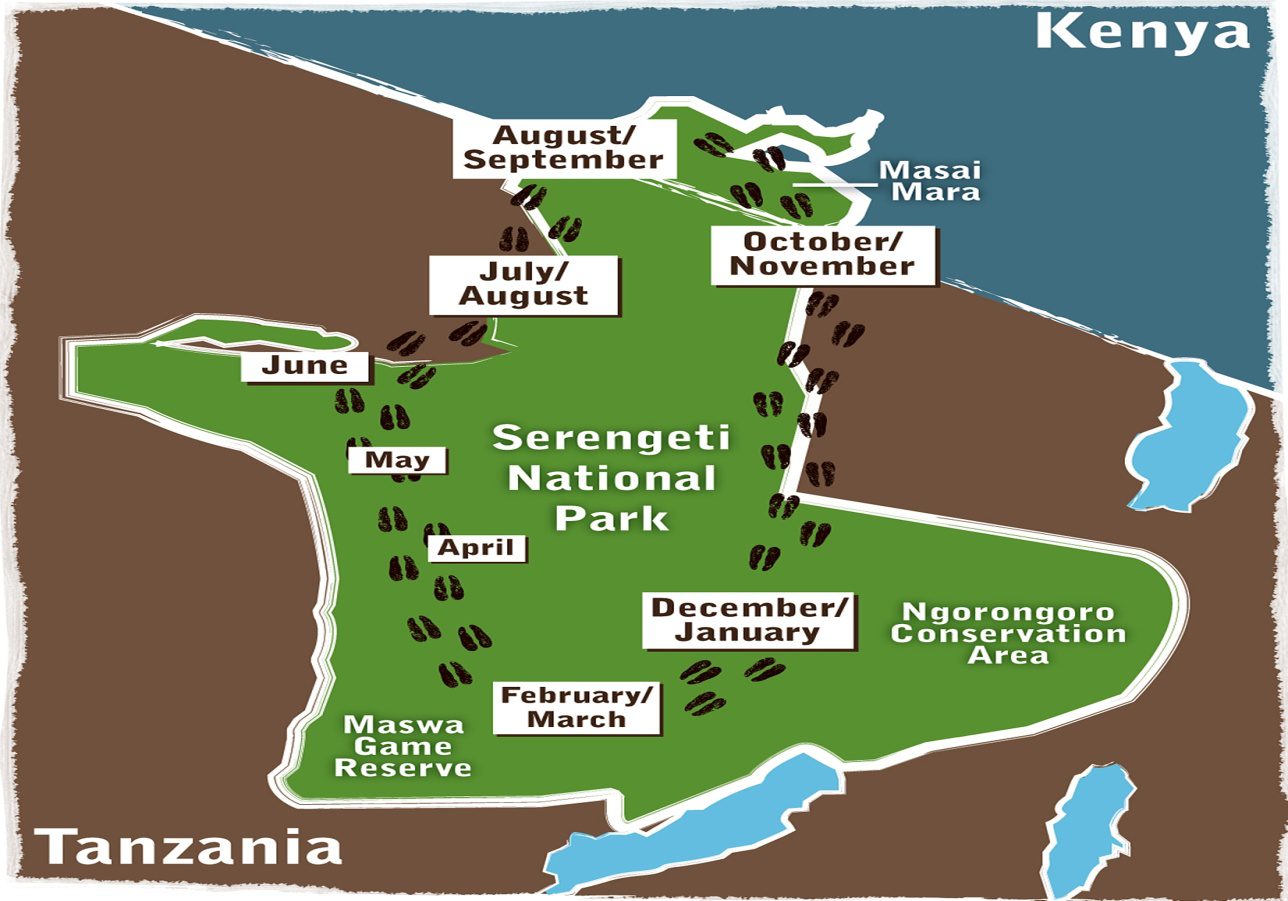
The Annual Cycle of the Wildebeest Migration in Tanzania
The wildebeest migration in Tanzania follows a broadly predictable annual cycle, although exact timing varies depending on rainfall. Each phase of the year offers a unique perspective on the migration, ensuring that Tanzania provides exceptional wildlife viewing throughout all seasons.
The migration begins in the southern Serengeti, moves westward and northward, and eventually loops back south, completing a natural cycle that has remained largely unchanged for millennia.
Calving Season in the Southern Serengeti
One of the most extraordinary chapters of the wildebeest migration in Tanzania occurs between January and March during the calving season. The herds gather on the short-grass plains of Ndutu and the southern Serengeti, where mineral-rich soils promote rapid grass growth following seasonal rains.
During this period, over 400,000 wildebeest calves are born within a few weeks. This synchronized birthing strategy overwhelms predators, increasing the survival rate of newborns. Calves are able to stand and run within minutes of birth, an essential adaptation in an environment filled with lions, cheetahs, hyenas, and leopards.
The calving season is a highlight for visitors seeking intense predator-prey interactions and intimate wildlife moments. It is also a critical phase that ensures the long-term sustainability of the migration.
Movement Through the Central Serengeti
As the southern plains begin to dry out around April and May, the wildebeest migration in Tanzania shifts toward the central Serengeti. This region acts as a vital transition zone, offering permanent water sources such as the Seronera River and a mix of grasslands and woodlands.
The central Serengeti supports a high density of resident predators, making this stage of the migration particularly dynamic. Long lines of wildebeest stretch across the plains, accompanied by zebras that often lead the herds to water. This phase emphasizes movement and endurance rather than dramatic obstacles, showcasing the sheer scale of the migration.
The Western Serengeti and Grumeti River Crossings
Between May and June, the wildebeest migration in Tanzania reaches the western Serengeti, where the Grumeti River presents the first major challenge of the year. Although less famous than the Mara River, Grumeti crossings are equally intense and often less crowded, offering a more exclusive viewing experience.
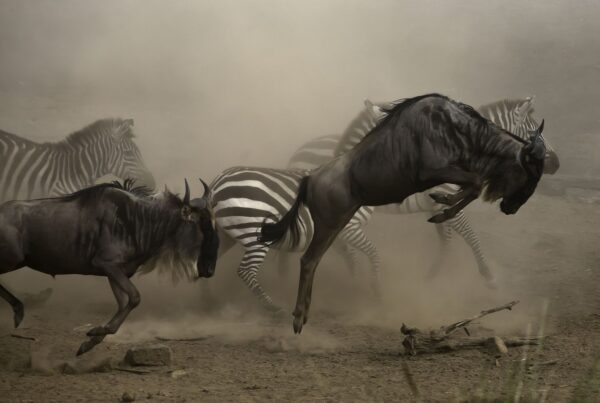
The Grumeti River is home to some of Africa’s largest Nile crocodiles, which have adapted to the annual arrival of the migration. Crossings are unpredictable, with herds sometimes waiting for days before attempting to cross. These moments reflect the raw uncertainty that defines the migration and reinforce why it is considered one of nature’s greatest spectacles.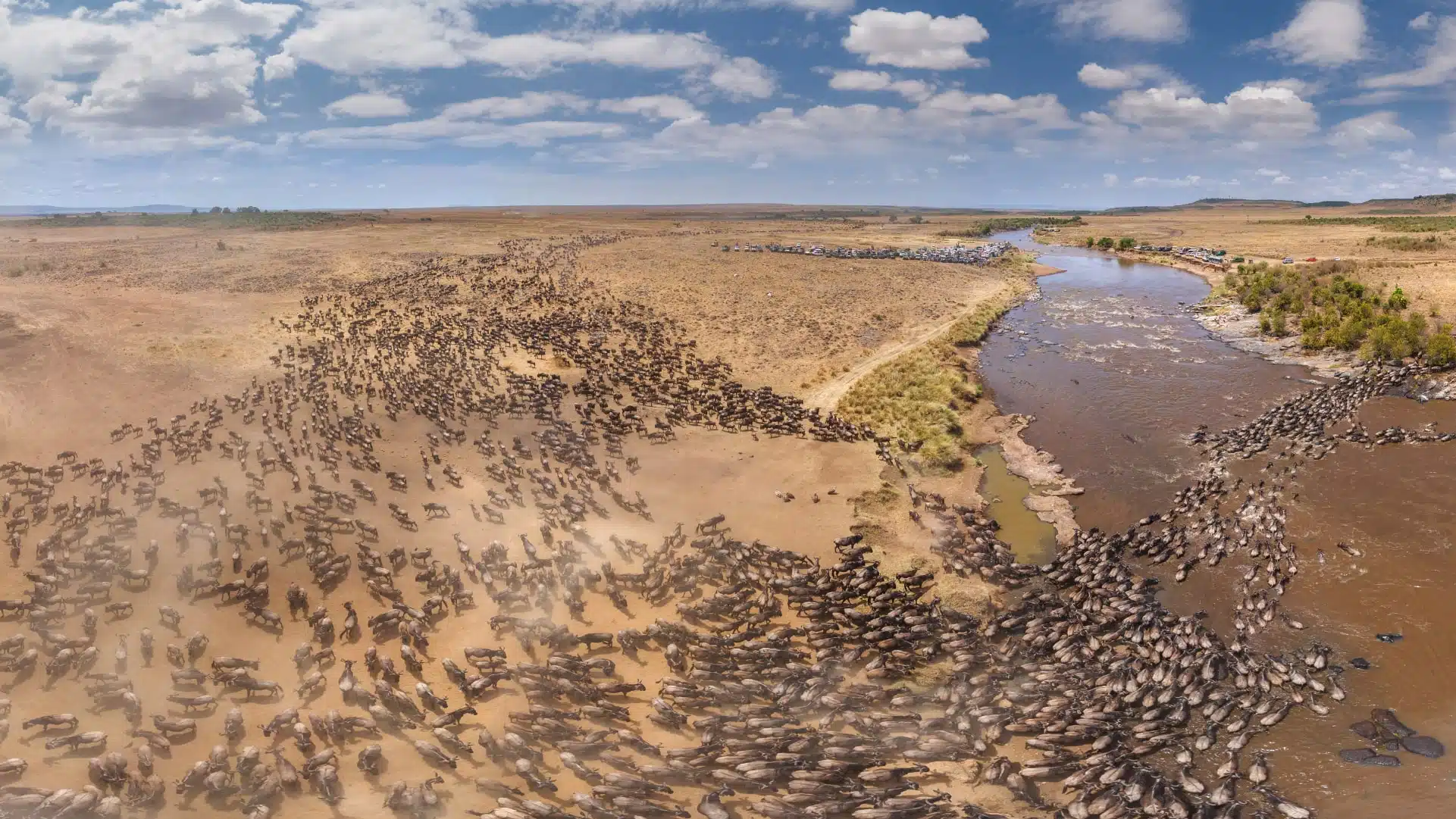
Northern Serengeti and the Approach to Kenya
By July and August, the wildebeest migration in Tanzania moves into the northern Serengeti near the Kenyan border. This region is characterized by rolling hills, open plains, and the Mara River, which forms a natural boundary between Tanzania and Kenya.
The northern Serengeti hosts some of the most dramatic scenes of the migration. River crossings here mirror those in Kenya but are often less congested with vehicles, providing a more immersive and natural experience. This phase marks the transition of the herds into Kenya’s Maasai Mara before they eventually return south.
The Return South and Renewal
As short rains begin in October and November, the wildebeest migration in Tanzania turns southward. The herds leave the northern regions and gradually move back through the central Serengeti toward the southern plains, completing the annual cycle.
This return journey is essential for ecosystem renewal. Grazed areas are allowed to recover, while the southern plains prepare to host the next calving season. The cyclical nature of the migration highlights the delicate balance that sustains both wildlife and landscape.
Predators and the Circle of Life
The wildebeest migration in Tanzania supports one of the most complex and balanced predator ecosystems in the world. Lions time their breeding cycles to coincide with peak prey availability, while cheetahs rely on open plains for high-speed hunts. Leopards exploit riverine forests, and hyenas demonstrate remarkable intelligence in both hunting and scavenging.
These predator-prey interactions are not random acts of violence, but essential processes that maintain healthy populations. Weak and injured animals are removed, strengthening future generations of wildebeest and ensuring the resilience of the migration.
Ecological Importance of the Wildebeest Migration in Tanzania
The wildebeest migration in Tanzania is a keystone ecological process. As millions of animals graze and move across the Serengeti, they prevent bush encroachment, stimulate new grass growth, and distribute nutrients through dung and urine.
Carcasses left behind during river crossings and predator hunts enrich soils and rivers, supporting insects, fish, birds, and scavengers. This nutrient cycling sustains biodiversity at every level, demonstrating how the migration underpins the health of the entire ecosystem.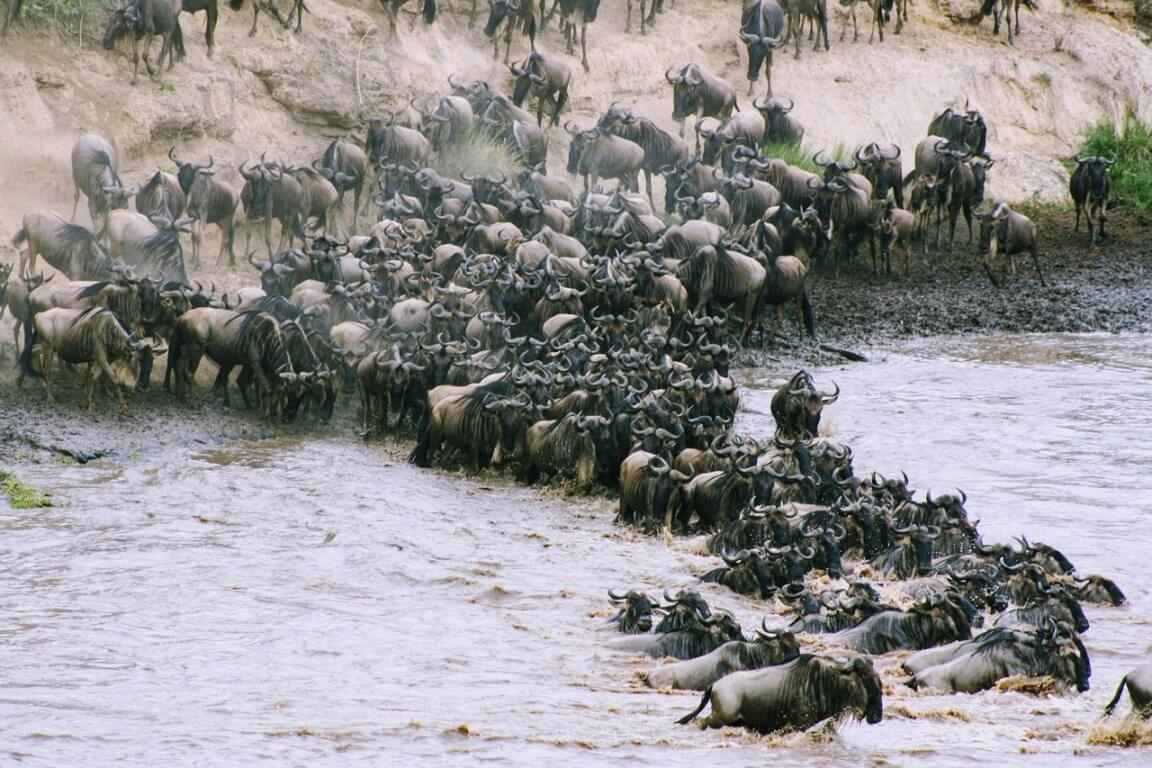
Cultural Significance and Local Communities
For communities living around the Serengeti, the wildebeest migration in Tanzania holds cultural, economic, and spiritual significance. Indigenous groups have long understood the rhythms of wildlife movement and adapted their livelihoods accordingly.
Today, community-based conservation initiatives play a crucial role in protecting migration corridors outside national parks. Sustainable tourism linked to the migration provides employment, education, and healthcare opportunities, ensuring that local people benefit directly from wildlife conservation.
Best Time to See the Wildebeest Migration in Tanzania
The best time to experience the wildebeest migration in Tanzania depends on which phase of the cycle visitors wish to witness. January to March is ideal for calving and predator activity in the south. May to June offers dramatic Grumeti River crossings in the west. July to October provides opportunities to see northern Serengeti crossings and large herd concentrations.
Because the migration is present in Tanzania year-round, it is possible to plan exceptional safari experiences at any time of the year with the right location and guidance.
Safari Experiences During the Migration
Safari experiences during the wildebeest migration in Tanzania range from luxury lodges overlooking rivers to mobile camps that follow the herds. Game drives during early morning and late afternoon offer the best light and wildlife activity.
Hot air balloon safaris provide breathtaking aerial views of the migration, revealing its immense scale. Walking safaris and cultural visits add depth, allowing visitors to connect with the land beyond wildlife sightings.
Photography and Filmmaking Opportunities
The wildebeest migration in Tanzania is a dream for wildlife photographers and documentary filmmakers. Dust-filled plains, dramatic skies, and intense interactions create endless creative possibilities. Capturing a river crossing or predator hunt requires patience, skill, and a deep understanding of animal behavior.
Ethical wildlife photography is essential to ensure minimal disturbance. Tanzania’s experienced guides and strict park regulations help preserve the integrity of the migration while enabling world-class documentation.
Threats Facing the Wildebeest Migration in Tanzania
Despite its resilience, the wildebeest migration in Tanzania faces growing threats. Climate change is altering rainfall patterns, affecting grass growth and migration timing. Human population growth, agriculture, fencing, and infrastructure development threaten to fragment traditional migration routes.
Protecting open corridors and maintaining ecosystem connectivity are critical to ensuring the future of the migration. Without coordinated conservation efforts, this ancient journey could be disrupted with far-reaching ecological consequences.
Conservation Efforts and the Future
Tanzania has long been a leader in wildlife conservation, and ongoing efforts continue to safeguard the wildebeest migration. National parks, conservation areas, and wildlife management zones work together to protect critical habitats.
International organizations, local communities, and government agencies collaborate on research, anti-poaching initiatives, and land-use planning. The future of the wildebeest migration in Tanzania depends on sustained commitment to conservation and responsible tourism.
Why the Wildebeest Migration in Tanzania Matters
The wildebeest migration in Tanzania matters because it represents one of the last remaining large-scale natural migrations on Earth. It is a symbol of ecological integrity, resilience, and the power of intact ecosystems.
For humanity, the migration offers inspiration and perspective, reminding us of our responsibility to protect the natural world. Preserving this phenomenon ensures that future generations can continue to learn from and be inspired by one of nature’s greatest achievements.
Tanzania as the Heart of the Migration
The wildebeest migration in Tanzania is not merely a seasonal attraction, but a living system that sustains landscapes, wildlife, and communities. From the first newborn calves on the southern plains to the perilous river crossings in the north, Tanzania hosts the most vital chapters of this epic journey.
As pressures on natural ecosystems increase worldwide, Tanzania’s role as the heart of the Great Wildebeest Migration becomes ever more important. Protecting this natural wonder is a global responsibility, and experiencing it is a privilege that leaves a lasting impression on all who witness it.